
There’s something quietly magical about a ginger bug. With just fresh ginger, sugar, and water, you can cultivate a living starter that transforms simple juices and herbal infusions into lively, effervescent drinks. It’s an old-fashioned method—part kitchen craft, part science experiment—and once you have one going, nearly any flavor you love can become a naturally sparkling soda, with sweetness entirely in your control.
A Brief History of Ginger Bugs
Ginger bug fermentation dates back to the 18th and 19th centuries, when naturally fermented beverages like ginger beer were widely consumed in England and colonial America. Long before commercial yeast and carbonation systems, home cooks relied on wild cultures—yeasts and beneficial bacteria present on fresh ingredients—to create lightly alcoholic, fizzy drinks.
By the mid-1800s, “ginger beer plants” (a symbiotic culture of yeast and bacteria) were commonly shared and passed between households, much like sourdough starters. These traditions faded with the rise of commercial soft drinks in the early 20th century, but in recent years, ginger bugs have reemerged alongside renewed interest in fermentation, gut health, and self-sufficient kitchen practices.
Why Make a Ginger Bug?
A ginger bug is a gateway to endless homemade sodas. Once active, it can be used to ferment fruit juices, sweetened teas, and herbal infusions into naturally carbonated drinks.
- Flavor freedom: Use whatever is in season—berries, citrus, stone fruit, or even herbs from the garden
- Control the sweetness: Fermentation consumes sugar, so you can create drinks that are lightly sweet or nearly dry
- A living tradition: A simple way to reconnect with time-tested kitchen skills
Are There Health Benefits?
Ginger bug sodas are lightly fermented, which means they may contain small amounts of beneficial microbes, similar to other traditional ferments. However, they are not as potent as foods like yogurt or sauerkraut.
That said, they offer a few gentle advantages:
- Ginger itself is known for supporting digestion and reducing inflammation
- Lower sugar potential compared to commercial sodas, since some sugar is consumed during fermentation
- No artificial additives or preservatives
Think of these drinks less as a probiotic powerhouse and more as a clean, lively alternative to store-bought soda—with a bit of microbial life along for the ride.
How to Make a Ginger Bug
INGREDIENTS:
1 tablespoon grated unpeeled organic ginger
1 tablespoon granulated sugar
1 1/2 cups filtered water
To Feed Daily
1 tablespoon grated unpeeled organic ginger
1 tablespoon granulated sugar
*Organic ginger is recommended, as conventional ginger is often irradiated, which can inhibit natural fermentation.
METHOD:
Day 1:
In a glass jar, combine 1 tablespoon grated ginger and 1 tablespoon sugar. Add the water and stir vigorously to dissolve. Cover loosely (see note below) and place at room temperature, out of direct sunlight.
Days 2–5:
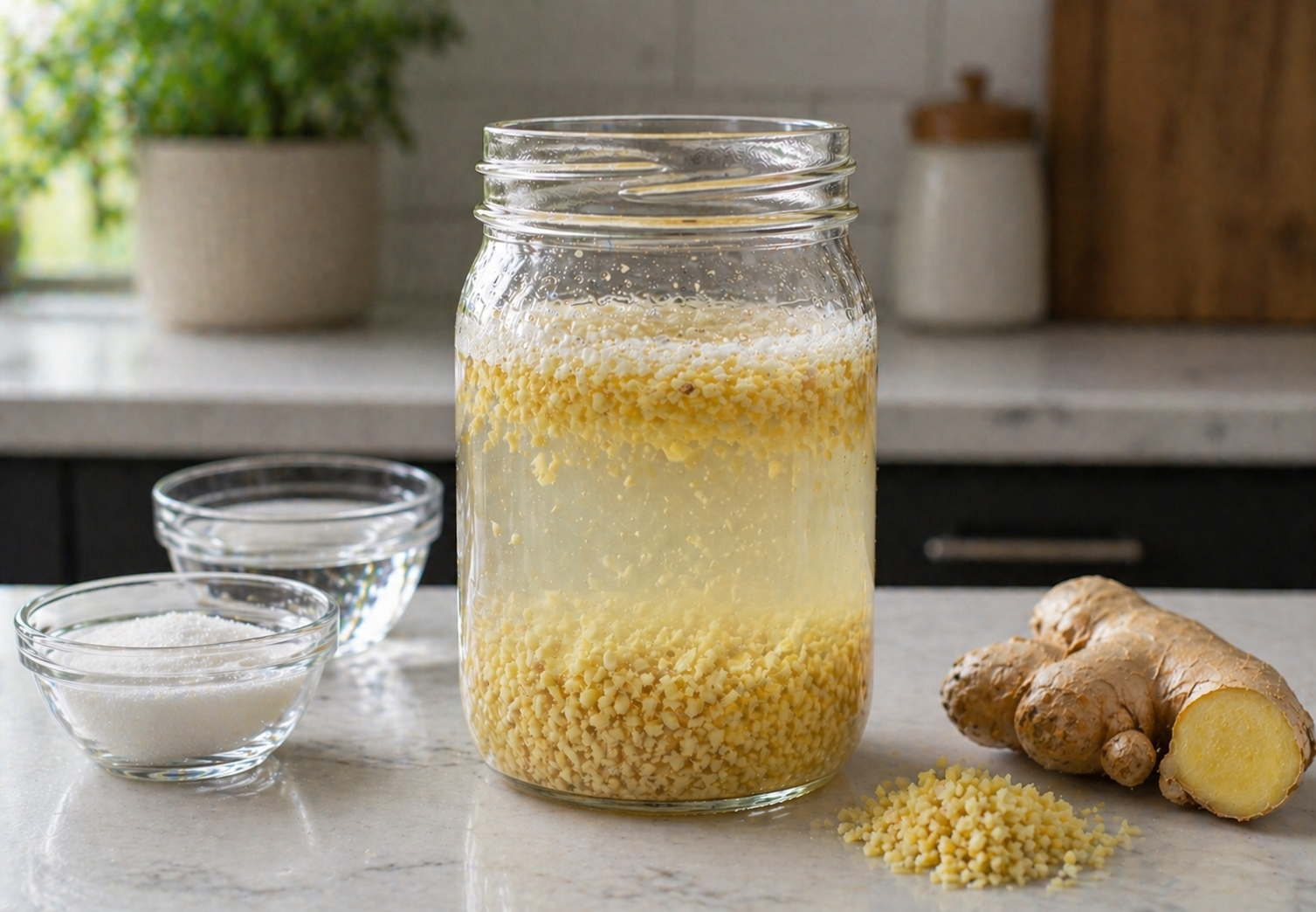
Each day, add 1 tablespoon grated ginger and 1 tablespoon sugar. Stir or shake vigorously. Within about 3 to 5 days, your ginger bug should become active. You’ll notice:
- Bubbles rising to the surface
- A lightly yeasty, fresh aroma
- A cloudy, golden appearance
- Sediment collecting at the bottom
Once bubbly and lively, it’s ready to use.
Lid or Cloth? (What’s Best?)
This is one of the most common questions—and the answer is simpler than it seems: A loose-fitting lid is preferred. Here’s why:
- A ginger bug relies primarily on wild yeasts (which do not require oxygen once active)
- A loose lid allows gases to escape while protecting the mixture from dust and contaminants
- Cloth covers can allow too much airflow and increase the risk of unwanted microbes
A tightly sealed lid, however, is not recommended during the active phase, as pressure can build.
Best practice: Use a lid set on loosely or screwed on lightly so gas can escape.
Using Your Ginger Bug
To make a naturally fizzy soda:
- Strain about 1/4 to 1/2 cup of active ginger bug liquid
- Add it to sweetened juice, tea, or herbal infusion
- Bottle in a sealed container and ferment at room temperature for 1 to 3 days
- Refrigerate once carbonated
You’ll soon have a pantry full of possibilities—sparkling lemonade, berry sodas, herb-infused spritzes, and more.
Resting or Reusing Your Ginger Bug
Once you’ve used some of your starter, you have two options:
- Keep It Active: Replace any liquid you’ve removed with fresh, non-chlorinated water. Continue feeding daily with ginger and sugar. It will stay active and ready for your next batch.
- Let It Rest: Store your ginger bug in the refrigerator. Feed it once a week with ginger and sugar, allowing it to sit at room temperature for a few hours before returning it to the fridge.
When ready to use again, bring it back to room temperature, resume daily feedings, and wait until it becomes bubbly and active.
A ginger bug is one of those simple, satisfying kitchen rituals that quietly expands what’s possible at home. With just a jar on the counter, you’re creating something alive—something that turns the season’s harvest into sparkling, shareable drinks.
And once you start, it’s hard to stop.