
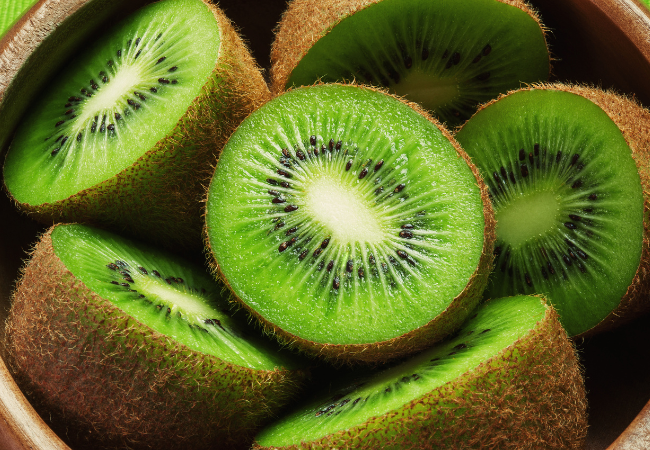
Sweet-tart, vibrant, and refreshingly juicy, kiwi fruit is a welcome burst of green (or golden!) during the cooler months on the California Central Coast. While often associated with New Zealand, kiwi fruit has a longer and more global story — one that fits beautifully into our local winter fruit landscape.
A Brief History
Kiwi fruit originated in China, where it was known as yang tao and prized for both its flavor and medicinal qualities. The fruit made its way to New Zealand in the early 1900s, where growers refined the varieties we recognize today and introduced the name “kiwifruit.” From there, cultivation spread to temperate regions around the world, including California. Thanks to our mild winters and coastal influence, kiwi fruit thrives here and is typically harvested from late fall through early spring.
Health Benefits
Kiwi fruit may be small, but it is mighty and packed with nutrients:
- Vitamin C powerhouse – One kiwi contains more vitamin C than an orange, supporting immune health during winter months.
- Digestive support – Naturally rich in fiber and containing an enzyme called actinidin, kiwi can aid digestion and help break down proteins.
- Heart health – Potassium, antioxidants, and fiber work together to support healthy blood pressure and cardiovascular function.
- Skin and eye health – Vitamins C and E, along with carotenoids, help protect cells from oxidative stress.
Kiwi fruit is also naturally low in calories, making it a nourishing and refreshing addition to winter meals.
Simple Serving Suggestions
Kiwi fruit’s bright flavor pairs easily with both sweet and savory dishes:
- Slice and add to winter fruit salads with citrus, apples, or pomegranate.
- Spoon over yogurt or cottage cheese with a drizzle of local honey.
- Blend into smoothies for a fresh counterpoint to richer winter ingredients.
- Dice and toss into salsas with avocado, lime, and cilantro for fish or chicken.
- Use as a natural meat tenderizer (briefly!) in marinades, thanks to its enzymes.
How to Select Kiwi Fruit
When shopping or selecting kiwi fruit at the market:
- Look for fruit that is plump and evenly shaped, without shriveled skin.
- Gently squeeze—ripe kiwi should yield slightly, similar to a ripe avocado.
- Avoid fruit with soft spots, wrinkles, or signs of mold.
- Both green and golden varieties should have a clean, fresh aroma.
Best Ways to Store Kiwi Fruit
- Unripe kiwi: Store at room temperature until softened. To speed ripening, place in a paper bag with an apple or banana.
- Ripe kiwi: Refrigerate to extend freshness; they will keep for up to two weeks.
- Cut kiwi: Store in an airtight container in the refrigerator and use within two to three days.
You’ll find kiwi fruit at Murakami Farms booth at the Aptos Farmers Market. Kiwi fruit brings color, nutrition, and versatility to winter cooking on the Central Coast. Whether eaten out of hand or added to simple dishes, it’s a reminder that even in the quieter seasons, fresh, local flavor is still abundant.
RECIPES: Enjoy these kiwi fruit recipes!