
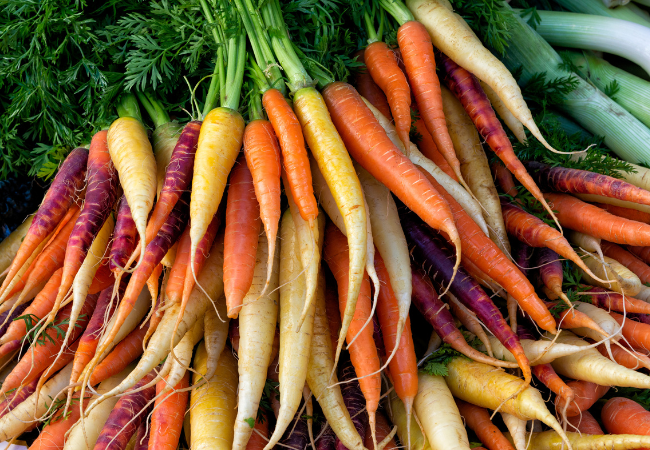
From vibrant purples and sunny yellows to sweet reds and classic orange, carrots offer far more than meets the eye. Discover the flavors, health benefits, and simple ways to enjoy this farmers market favorite — roots, tops, and all.
Carrots may be one of the most familiar vegetables in our kitchens, but they’re also wonderfully diverse. Beyond the classic orange variety, today’s farmers grow carrots in shades of purple, yellow, red, and white — each with its own flavor, nutritional strengths, and best uses.
These colorful roots are a reminder that carrots weren’t always orange. Early carrots were purple and yellow, with orange varieties developed later in Europe. Many of those heirloom types are now back at the farmers market, offering both beauty and nourishment in every bunch.
A Rainbow of Carrot Varieties
Purple carrots are deep violet on the outside and often orange or yellow within. Slightly earthy and spicy, they’re rich in anthocyanins, antioxidants linked to heart health and reduced inflammation. Best for roasting, salads, juicing, or pickling.
Yellow carrots are mild, sweet, and sunny in color. They contain lutein, an antioxidant associated with eye health, and are especially appealing raw. Best for snacking, salads, soups, and purées.
Red carrots have a deeper hue and are high in lycopene, the antioxidant also found in tomatoes. They’re sweet with a subtle peppery finish. Best roasted, grilled, or shaved for slaws.
White carrots have a clean, mild flavor and firmer texture. While lower in pigments, they still offer fiber, potassium, and vitamin C. Best in soups, stews, and roasted dishes.
Orange carrots remain a favorite for their sweetness and versatility. They’re rich in beta-carotene, which supports vision, immune health, and skin health. Excellent raw, roasted, steamed, baked, or blended.
Health Benefits of Carrots
All carrot varieties offer impressive nutritional benefits:
- High in fiber for digestive health
- Rich in antioxidants that help reduce inflammation
- Provide vitamin A, vitamin C, potassium, and B vitamins
- Naturally low in calories and fat
Eating a mix of carrot colors ensures a broader range of phytonutrients.
How to Store Carrots
To keep carrots fresh and crisp:
- Remove leafy tops promptly to prevent moisture loss
- Store unwashed carrots in a sealed container or produce bag in the refrigerator
- Keep slightly damp, but not wet
- Properly stored, carrots last two to three weeks
If carrots soften, a short soak in cold water can revive their crunch.
Easy Ways to Cook Carrots
Carrots are endlessly adaptable:
- Roasted: Toss with olive oil, salt, and herbs until caramelized
- Sautéed: Cook with butter, garlic, and thyme
- Steamed: Finish with lemon zest or honey
- Grilled: Slice lengthwise for smoky sweetness
- Puréed: Blend into soups or sauces
Flavor pairings and seasoning: thyme, dill, parsley, cumin, coriander, honey, miso, tahini, yogurt, or goat cheese
Yes — You Can Eat Carrot Tops
Carrot greens are edible and flavorful, with a fresh, herbaceous taste similar to parsley or celery leaves. They contain vitamin C, vitamin K, calcium, chlorophyll, and antioxidants. Use carrot tops:
- Blended into pesto
- Chopped into chimichurri or herb sauces
- Stirred into soups or stews
- Sautéed lightly with garlic
- Mixed with softer herbs
Store greens separately from roots and use within a few days.
You’ll find carrots available at Pinnacle, Spade & Plow Organics, Borba Family Farms, and Blue Heron Farms.
Explore our favorite carrot recipes and discover just how versatile this humble root can be.