
The humble green you probably won’t find at the farmers market—but can easily grow yourself.
For years, kale has enjoyed superstar status.
It’s been blended into smoothies, baked into chips, tucked into salads, and celebrated as one of nature’s healthiest foods. So when I recently learned that researchers had identified an entirely different leafy green as one of the world’s most nutrient-dense vegetables, I did a double take.
It wasn’t kale.
It wasn’t spinach.
It wasn’t Swiss chard.
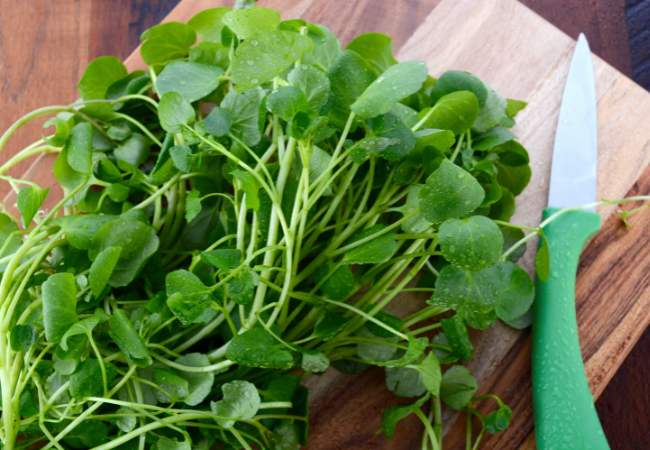
It was watercress.
That surprised me. What surprised me even more was something much closer to home.
After years of writing about our local farmers markets, chatting with growers, and cooking with seasonal produce, I realized I’d never seen anyone selling watercress.
Why Watercress Tops the List
So what makes this unassuming leafy green so special?
Watercress has earned its reputation because it delivers an extraordinary amount of nutrition in a remarkably small package. Researchers evaluating the nutrient density of fruits and vegetables found that watercress ranked at the very top, thanks to its exceptional concentration of vitamins and minerals relative to the calories it contains.
A handful of fresh watercress is naturally rich in vitamins A, C, and K, along with folate, calcium, potassium, and antioxidants. These nutrients help support healthy bones, immune function, vision, and normal blood clotting. Like kale, broccoli, and other members of the cabbage family, watercress also contains glucosinolates—naturally occurring plant compounds that continue to be studied for their potential role in supporting long-term health.
Perhaps the best part is that watercress doesn’t ask you to choose between healthy and delicious. Its crisp texture and mild peppery flavor make it just as enjoyable as it is nutritious.
Of course, this doesn’t diminish the nutritional value of kale, spinach, Swiss chard, beet greens, arugula, or the many beautiful leafy greens our local farmers grow throughout the year. Eating a variety of greens will always be one of the healthiest choices you can make.
And if you’re wondering about microgreens, you’re thinking exactly what I was. While watercress currently holds the crown among mature leafy greens, research has found that many microgreens—including kale, broccoli, red cabbage, and arugula—can contain even higher concentrations of certain vitamins and antioxidants than their fully grown counterparts. That’s a fascinating topic we’ll save for another day.
A Curious Discovery
Unlike lettuce or kale, watercress has very particular growing requirements. It naturally thrives in cool, clean, slow-moving water, making it a specialty crop that requires far more management than most leafy greens. For diversified vegetable farms, it’s simply not a practical crop compared with vegetables that are easier to grow, harvest, and transport.
Its absence from our farmers markets isn’t a reflection of its quality. It’s simply one of those wonderful quirks of agriculture.
Then I discovered something even more surprising.
You Can Grow It Yourself
Commercial production may be specialized, but home growing is refreshingly simple. In fact, if you have a bright patio, a shady corner of the garden, or even a sunny kitchen window, you’re already halfway there.
Watercress doesn’t ask for much:
- A shallow container
- Quality potting mix
- Consistent moisture
- A little patience
Within a few weeks, you’ll be harvesting one of the most nutritious greens you can grow.
Why It’s Worth Growing
Beyond its impressive nutritional reputation, watercress is simply delicious.
Its small, tender leaves have a fresh, peppery bite that’s somewhere between arugula and young mustard greens without being overpowering.
Try it:
- Scattered over avocado toast
- Folded into scrambled eggs or omelets
- Layered into sandwiches and wraps
- Stirred into soups just before serving
- Mixed with other salad greens
- Blended into pesto or smoothies
Because you’ll harvest only what you need, it doesn’t spend days in the refrigerator losing freshness. It goes from container to plate in just a few minutes.
Next in Beyond the Recipe: How to Grow Watercress at Home