
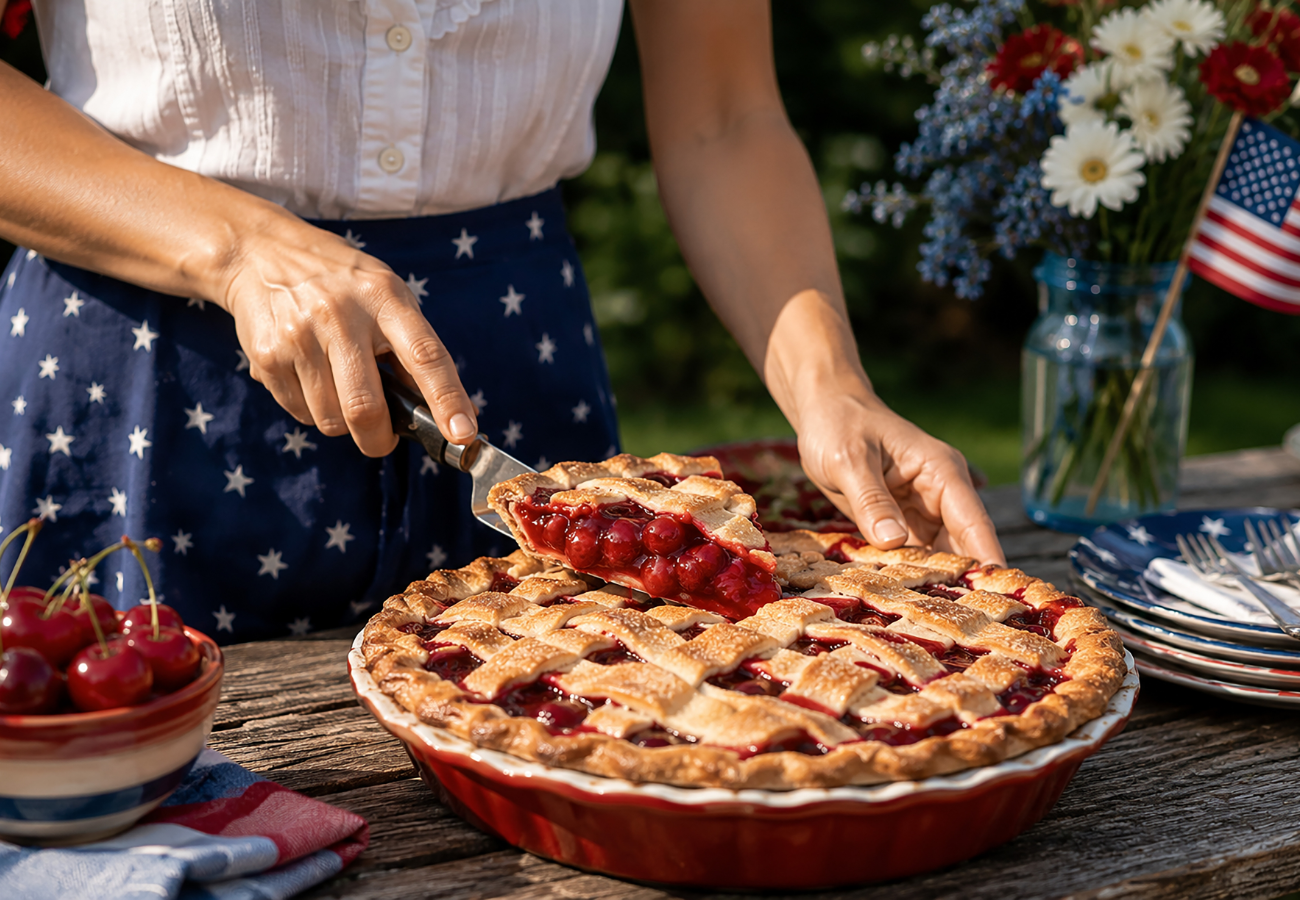
The best summer pies begin long before you turn on the oven. They begin at the farmers’ market, where fruit is often picked just a day or two before you bring it home. Unlike fruit harvested early for long-distance shipping, locally grown peaches, berries, apricots, and plums develop their fullest flavor on the tree or vine—meaning your pie needs less sugar and tastes more like summer.
Maybe it’s the scent of ripe peaches bubbling beneath a golden crust. Or the deep purple juices of blackberries staining the edges of a slice. Perhaps it’s the first bite of a warm strawberry-rhubarb pie topped with a scoop of vanilla ice cream.
While pumpkin pie tends to steal the spotlight during the holidays, summer may actually be the best season for pie. Farmers’ markets are overflowing with tree-ripened peaches, nectarines, apricots, cherries, berries, plums, figs, and countless other fruits that require little more than a beautiful crust to become dessert.
And that’s where many home bakers hesitate.
The filling is easy. The crust? That’s the part that makes people nervous.
The good news is that pie crust isn’t difficult—it simply rewards a gentle touch and a few time-tested techniques. Skip the refrigerated supermarket crust just once, and you may never go back. A homemade crust is buttery, flaky, tender, and every bit as memorable as the fruit inside.
If you’re new to pie baking, don’t make your first crust an hour before company arrives. Choose a quiet afternoon, turn on some music, and make the dough simply for practice. Like bread or biscuits, pie crust becomes easier—and more enjoyable—every time you make it.
Here are a 11 of our favorite pie crust secrets that will help you succeed.
- Keep Everything Cold
Cold ingredients are the foundation of flaky pastry. Chill your butter, refrigerate the flour if your kitchen is warm, and use ice-cold water. Some bakers even chill their mixing bowl before getting started. - Butter Is Flavor—But a Blend Makes Beautiful Layers
Many experienced pie bakers use a combination of cold butter and vegetable shortening. Butter provides incomparable flavor, while shortening helps create an exceptionally flaky texture because the two fats melt at different temperatures during baking. - Leave the Butter in Small Pieces
When cutting the butter into the flour, aim for a mixture of coarse crumbs with some pea-sized pieces remaining. Those little pockets of butter become tiny layers of steam in the oven, creating the flaky texture everyone loves. - Add Just Enough Water
Less is more. Sprinkle in ice water a tablespoon at a time until the dough barely comes together when squeezed. It should look slightly shaggy—not smooth or sticky. - Handle the Dough Gently
Overworking develops gluten, which makes crust tough instead of tender. Mix only until the dough holds together, then stop. - Let the Dough Rest
Shape the dough into a disk, wrap it well, and refrigerate it for at least 30 minutes—longer is even better. Resting relaxes the gluten and makes rolling much easier. - Roll from the Center Out
Lightly flour your work surface and rolling pin. Roll outward from the center, giving the dough a quarter turn every few strokes to help maintain a round shape. - Don’t Stretch the Dough
Ease the crust gently into the pie plate. Stretching it may seem harmless, but it often causes the crust to shrink during baking. - Use a Professional Baker’s Trick
If you’re making a juicy fruit pie, place a heavy baking sheet or pizza stone in the oven while it preheats. Set the pie directly on the hot surface when you begin baking. The burst of heat helps the bottom crust cook quickly, creating a crisp, golden base instead of the soggy bottom that can happen with fruit pies. It’s a simple technique professional bakers have relied on for years. - Give It a Beautiful Finish
Fold the edges under, crimp with your fingers or a fork, brush with a light egg wash, and sprinkle with coarse sugar for a sparkling bakery-style finish. - The Best Fruit Deserves a Great Crust
One of the joys of shopping at the farmers’ market is discovering fruit that was picked at the peak of ripeness, often just a day or two before it reaches your kitchen. That freshness means sweeter flavor, better texture, and pies that hardly need embellishment.
Whether you’re filling your pie with juicy peaches, sun-ripened nectarines, tart blackberries, sweet cherries, figs, or a colorful mixture of seasonal fruit, a homemade crust lets those flavors shine.
Don’t worry if your first pie isn’t picture-perfect. Rustic pies have a charm all their own, and once they’re filled with fragrant, sun-ripened fruit, no one will notice a less-than-perfect crimped edge.
Bring home a basket of beautiful fruit, dust the counter with a little flour, and rediscover one of the simplest—and most satisfying—traditions of the season.
RECIPES: Basic Pie Crust, French Butter Pie Crust, Cream Cheese Pie Crust, Gluten Free Pie Crust, Lard Pie Crust, Pâte Brisée (Classic Savory Pastry Crust)
SEE ALSO: Kitchen Wisdom: Five Summer Pie Mistakes (and How to Avoid Them)