
A few containers of homemade tomato sauce in the freezer can feel like money in the bank. They’re the beginning of a quick pasta dinner, a pot of vegetable soup, or something warm and comforting on an evening when cooking feels like one task too many.
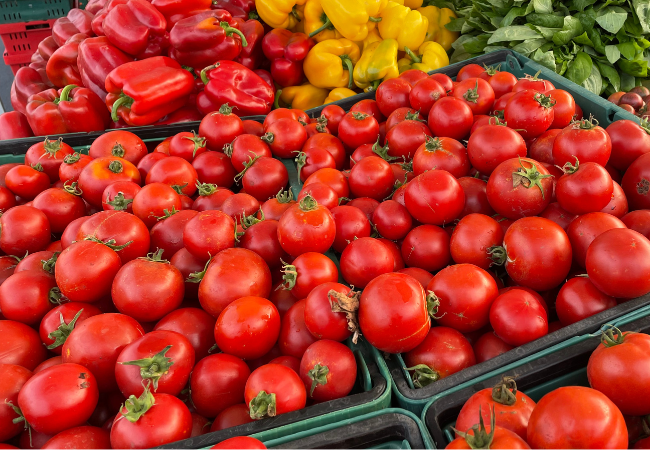
While ripe tomatoes are still available at the farmers market, bring home a few extra pounds and put a pot on the stove. This simple sauce needs only tomatoes, olive oil, garlic, and salt. Keeping the seasoning light makes it easy to take the sauce in different directions when you’re ready to use it.
Choosing Your Tomatoes
Meaty plum and paste tomatoes, such as Roma and San Marzano types, are especially useful for sauce. Juicier slicing tomatoes and heirlooms work well, too; they simply need more simmering to reach the same consistency. A mixture is welcome.
Choose ripe, flavorful tomatoes that are sound and free of mold or decay.
Simple Stovetop Tomato Sauce
INGREDIENTS:
5 pounds ripe tomatoes
2 tablespoons extra-virgin olive oil
3 garlic cloves, finely chopped
1 teaspoon fine sea salt, plus more to taste
METHOD:
Prepare the tomatoes.
Wash the tomatoes and remove the cores. For a smoother sauce, dip tomatoes into boiling water for 30–60 seconds, until the skins loosen, then transfer to cold water and slip off the skins. Coarsely chop, reserving their juices.
If you plan to pass the cooked sauce through a food mill, you can leave the skins on.
Gently cook the garlic.
Heat the olive oil in a wide, heavy-bottomed, nonreactive pot over medium-low heat. Add the garlic and cook, stirring, for about 30–60 seconds, just until fragrant. Avoid browning it.
Add the tomatoes.
Stir in the tomatoes, their juices, and the salt. Bring to a gentle simmer, stirring occasionally.
Simmer until thickened.
Cook uncovered over low to medium-low heat, stirring periodically and breaking up the tomatoes with a wooden spoon. Allow approximately 45–90 minutes, depending on the tomatoes and the width of your pot. Very juicy tomatoes may take longer.
As the sauce thickens, stir more frequently to prevent scorching. It is ready when it has a spoonable consistency and no longer looks watery around the edges.
Finish the texture.
Leave the sauce chunky, or use an immersion blender for a more uniform texture. For a smooth sauce without skins or seeds, pass it through a food mill, then return it to the pot and simmer a little longer if needed.
Taste and adjust the salt. Measure the finished yield before dividing into portions.
YIELD: Approximately 4 cups, depending on the tomatoes and how much the sauce is reduced. Measure the finished sauce before portioning.
Cool the Sauce Promptly
Begin cooling as soon as cooking is finished. Set the pot in a basin of ice water, keeping the water out of the sauce, and stir frequently. Divide into shallow containers, with the sauce no more than about 2 inches deep, to speed cooling.
Refrigerate promptly, within two hours of finishing cooking—or within one hour if the room temperature is above 90°F. Don’t leave a large pot on the counter to cool completely. Chill thoroughly before packing into freezer bags.
Freeze in Useful Portions
Think about how you’ll use the sauce before choosing containers.
|
Portion |
Useful for |
|
½ cup |
Pizza, a small pan sauce, or adding tomato flavor to beans |
|
1 cup |
A small pasta meal or the beginning of a soup |
|
2 cups |
A larger pasta meal, braise, or casserole |
Pack chilled sauce into freezer-safe containers, leaving room for expansion. If using freezer-safe glass jars, follow the manufacturer’s fill line and freezing instructions.
For bags, press out excess air, seal securely, and freeze flat on a rimmed baking sheet. Once solid, stack them. Label everything with the name, date, and amount. Packaging designed for freezing helps protect food from moisture loss and freezer burn.
Storage and Reheating
Refrigerate sauce at 40°F or below and use within 3–4 days. For longer storage, freeze at 0°F or below; aim to use this cooked sauce within 3–4 months for best quality.
Thaw overnight in the refrigerator, then reheat in a saucepan, stirring frequently, until it reaches a rolling boil. Add a splash of water if needed to loosen it.
One Sauce, Many Dinners
Add fresh basil and a little butter for pasta. Stir in oregano for pizza, red pepper flakes for a spicy sauce, or a spoonful of cream for a richer finish. Use it to start a vegetable soup, simmer white beans, or bring together a pan of braised vegetables.
Keeping the base simple gives you choices later—and lets those ripe market tomatoes do most of the work.
PRESERVING NOTE: This recipe is intended for refrigeration or freezing. For shelf-stable canning, use a research-tested tomato sauce recipe and follow its ingredients, acidification, and processing instructions exactly.