
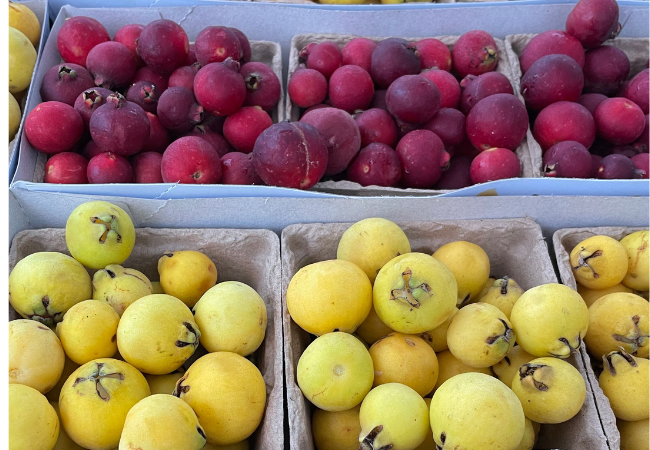
Every so often, something unexpected appears at the farmers market that makes us stop and take a closer look. This season, it’s the beautiful little cherry and lemon guavas from Borba Family Farms.
These petite, colorful fruits may look like miniature apples or oversized cherries, but their flavor tells a different story. Fragrant, sweet-tart, and delightfully tropical, guavas are one of those small seasonal treasures worth discovering.
If you’ve never tasted a fresh guava, you’re in for a treat. And while they’re delicious eaten straight from the basket, these little fruits offer plenty of possibilities in the kitchen — from preserves and fruit sauces to refreshing drinks and savory dressings.
What Are Cherry and Lemon Guavas?
Cherry guavas and lemon guavas are closely related members of the myrtle family, which also includes cloves and allspice. Native to South America, these subtropical fruits thrive in regions with mild winters, including parts of California’s Central Coast.
Cherry guava, also commonly called strawberry guava, is known botanically as Psidium cattleianum. The small yellow-fruited lemon guava is generally classified as Psidium cattleianum var. lucidum, although botanical naming conventions vary.
Unlike the larger tropical guavas commonly found in supermarkets, these guavas are petite, often about the size of a large cherry or small plum. Their smooth, edible skins surround fragrant, juicy flesh containing numerous small, firm seeds.
They’re easy to eat, wonderfully aromatic, and surprisingly versatile.
Two Colors, Two Different Flavor Experiences
Cherry Guava: Ruby Red and Fragrant
The deep ruby-red cherry guava is as beautiful as it is delicious. Its flavor is pleasantly sweet-tart, with notes reminiscent of strawberries and a distinctive tropical fragrance.
When fully ripe, the fruit becomes aromatic and slightly soft, with a juicy interior. The skin is edible, and the small seeds can be swallowed, although some people prefer to remove them when preparing sauces and preserves.
Best uses: Eating fresh, fruit salads, jam, jelly, compotes, dessert sauces, and colorful fruit syrups.
Lemon Guava: Golden and Bright
The sunny yellow lemon guava has a slightly different personality. Its flavor is often described as sweet and fragrant, with bright, citrusy notes and a gentle tartness.
Despite its name, lemon guava isn’t a citrus fruit. The name refers to its yellow color and refreshing flavor.
Depending on ripeness, lemon guavas may taste mellow and sweet or distinctly tangy. Their fragrance and acidity make them particularly appealing in both sweet and savory preparations.
Best uses: Eating fresh, yogurt toppings, fruit sauces, sorbets, syrups, citrus-inspired desserts, and vinaigrettes.
How to Choose and Store Fresh Guavas
At the farmers market, look for guavas with good color, smooth skins, and a pleasant fruity fragrance.
Ripe guavas should yield slightly to gentle pressure, much like a ripe plum. Fruit that is still quite firm may benefit from a day or two at room temperature to finish ripening.
Once ripe, refrigerate the guavas in a loosely covered container and enjoy them within a few days. Their delicate skins bruise easily, so handle them gently.
Wash just before eating.
Farmers Market Tip: Don’t hesitate to ask the Borba team which guavas are ripest and ready to enjoy. Farmers know their fruit, and a little advice can make all the difference when trying something unfamiliar.
How Do You Eat Fresh Guavas?
It’s remarkably simple. Rinse the fruit, remove any remaining stem, and eat it whole — skin, flesh, and seeds.
If you’re new to guavas, try cutting one in half first. You’ll notice the fragrant interior and the cluster of small seeds.
The seeds are edible but quite firm. Some people swallow them whole rather than chew them. When preparing guava purée, sauces, or preserves, a fine-mesh strainer or food mill makes quick work of separating the flavorful pulp from the seeds.
Beyond Eating Out of Hand: Eight Delicious Ways to Use Fresh Guavas
- Spoon over yogurt. Simmer guavas with a little honey to make a fragrant compote for thick Greek-style yogurt. Add toasted nuts or homemade granola for a delicious breakfast.
- Make a small batch of jam or jelly. Guavas have a distinctive sweet-tart flavor that lends itself beautifully to preserves. Cherry guavas are especially appealing for their gorgeous rosy color.
- Create a dessert sauce. Cook and strain the fruit for a smooth sauce to spoon over panna cotta, cheesecake, pound cake, or vanilla ice cream.
- Add to a fresh fruit salad. Combine sliced guavas with ripe pears, citrus, kiwi, or other seasonal fruits. A little lime juice and finely chopped mint make a refreshing dressing.
- Make a fragrant fruit syrup. Simmer the guavas with water and sugar, then strain. Add the syrup to sparkling water, lemonade, or iced tea.
- Prepare a fruity vinaigrette. Lemon guava purée makes an unexpectedly delicious salad dressing, especially paired with peppery greens, toasted nuts, and goat cheese.
- Freeze into sorbet or granita. The fruit’s bright acidity and natural sweetness are perfect for simple frozen desserts.
- Serve with cheese. A thick cherry guava compote is delicious alongside brie, aged cheddar, or creamy goat cheese. Add a few toasted walnuts and crisp crackers for an easy appetizer.
A Little Tropical Surprise from Borba Family Farms
One of the pleasures of shopping at a farmers market is discovering produce that rarely makes it into conventional grocery stores.
Borba Family Farms brings an impressive assortment of seasonal fruits and vegetables to our local markets, including some delightful specialty crops. Their cherry and lemon guavas are a wonderful example of why it’s worth exploring beyond the familiar apples, pears, and berries.
These small fruits are especially enjoyable when tasted side by side. The cherry guavas offer their distinctive berry-like sweetness, while the golden lemon guavas bring a bright, citrusy contrast.
Look for them at Borba Family Farms’ stand at the local farmers markets during their harvest season. Availability varies with the weather and ripening conditions.
If you see them, take home a basket of each. Enjoy a few fresh, then try using the rest in one of the simple recipes below.
Sometimes the most interesting culinary discoveries come in the smallest packages.