
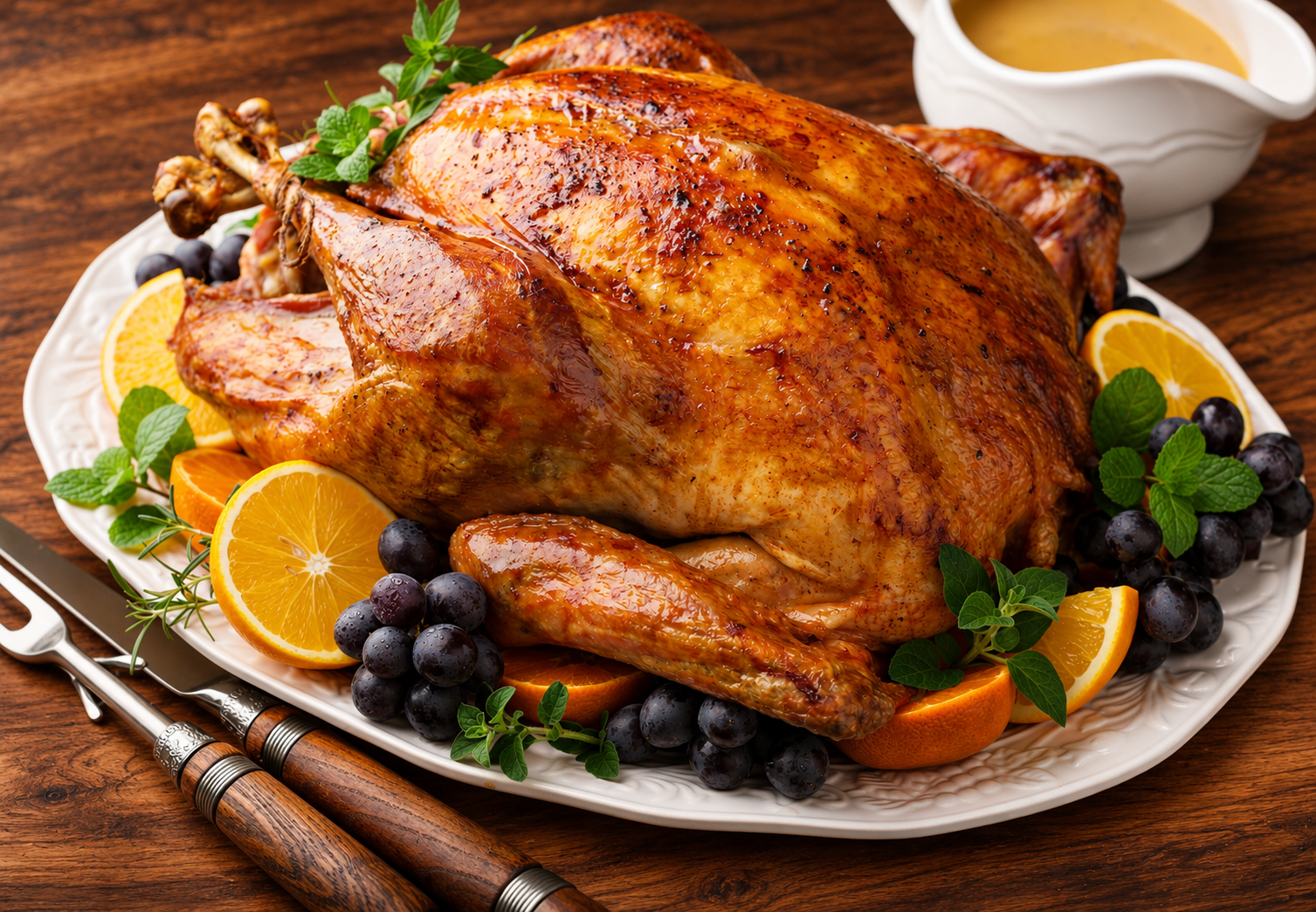
There’s something wonderfully traditional about bringing a beautifully roasted turkey to the Thanksgiving table. With its golden, crisp skin, fragrant herbs, and savory pan drippings, it’s a centerpiece that never goes out of style. Yet for many home cooks, roasting the holiday turkey can feel like the most intimidating part of preparing Thanksgiving dinner.
The good news? A delicious roast turkey doesn’t require complicated techniques, constant basting, or an elaborate list of ingredients. A few fresh herbs, good butter or olive oil, a reliable meat thermometer, and a little patience are all you need.
Our tried-and-true roasting method keeps things simple, allowing the natural flavor of the turkey to shine. And those delicious pan drippings? They’re the beginning of a truly wonderful homemade gravy.
Preparing the Turkey
If you’re starting with a frozen turkey, allow plenty of time for thawing. The safest method is to thaw it in the refrigerator, allowing approximately 24 hours for every 4 to 5 pounds. Place the turkey on a tray or in a roasting pan to catch any juices.
Once completely thawed, remove the neck and giblets from the cavities. There’s no need to rinse the turkey; simply pat the skin dry with paper towels. Dry skin helps produce a beautifully golden, crisp finish.
To flavor the turkey from the inside out, loosely fill the cavity with a generous handful of fresh herbs, such as thyme, rosemary, sage, and parsley. Add a quartered onion, a head of garlic (optional), and several halved Meyer lemons. These aromatics gently perfume the meat as the turkey roasts.
Rub the skin generously with softened butter or olive oil, then season well with salt and freshly ground black pepper. If your turkey has been brined or is labeled self-basting, use a lighter hand with the salt.
We recommend baking your stuffing separately rather than cooking it inside the bird. Not only is it easier to achieve perfectly cooked turkey, but you’ll have more control over the texture and flavor of the dressing.
Roasting the Turkey
Preheat the oven to 325°F.
Place the turkey, breast-side up, on a roasting rack in a large, shallow roasting pan. The rack allows hot air to circulate around the bird, encouraging more even cooking.
Use the chart below as a general guide for planning your roasting time.
|
Weight of Bird |
Roasting Time (Unstuffed) |
Roasting Time (Stuffed) |
|
8 to 12 pounds |
2-3/4 to 3 hours |
3 to 3-1/2 hours |
|
12 to 14 pounds |
3 to 3-3/4 hours |
3-1/2 to 4 hours |
|
14 to 18 pounds |
3-3/4 to 4-1/4 hours |
4 to 4-1/4 hours |
|
18 to 20 pounds |
4-1/4 to 4-1/2 hours |
4-1/4 to 4-3/4 hours |
|
20 to 24 pounds |
4-1/2 to 5 hours |
4-3/4 to 5-1/4 hours |
Note:Roasting times are approximate and apply to fully thawed turkeys. Always use a meat thermometer to determine doneness. The turkey is safely cooked when the thickest part of the breast, innermost thigh, and innermost wing each reach 165°F. If roasting a stuffed turkey, the center of the stuffing must also reach 165°F.
As the turkey roasts, watch the color of the skin. Once it develops a lovely light golden appearance, loosely tent the bird with aluminum foil to prevent excessive browning.
During the final 30 to 45 minutes of roasting, remove the foil if the skin needs additional color. If it’s already beautifully browned, leave the foil in place.
And here’s some good news: constant basting isn’t necessary! In fact, repeatedly opening the oven door can slow the roasting process. The butter or olive oil on the skin helps promote browning without much fuss.
How to Know When Your Turkey Is Done
The most reliable way to determine doneness is with an instant-read meat thermometer. Don’t rely on the color of the skin, the juices, or the little pop-up timer that sometimes comes with a turkey.
The USDA recommends that turkey reach a minimum internal temperature of 165°F in the thickest part of the breast, the innermost portion of the thigh, and the innermost portion of the wing. Be careful not to touch bone when inserting the thermometer.
If you’ve cooked stuffing inside the turkey, the center of the stuffing must also reach 165°F.
Once the turkey reaches the proper temperature, remove it from the oven.
The Secret to Juicy Turkey: Let It Rest
One of the most important steps happens after the turkey comes out of the oven.
Allow the bird to rest for approximately 30 minutes before carving. This gives the juices time to redistribute throughout the meat, making for moister, more flavorful slices.
Loosely tent the turkey with foil while it rests. There’s no need to wrap it tightly, which can trap steam and soften the crisp skin.
This resting period is also the perfect opportunity to finish your gravy, warm the side dishes, and gather everyone around the table.
Don’t Throw Away Those Delicious Drippings!
The flavorful juices and browned bits left in the roasting pan are culinary gold. Use them to prepare a rich turkey gravy, adding a little homemade stock if needed.
And after dinner, don’t discard the turkey carcass!
Remove the remaining meat from the bones and refrigerate it in shallow containers within two hours of cooking. Leftover turkey is wonderful for sandwiches, pot pies, casseroles, and soups.
Save the bones and carcass for homemade turkey stock. Refrigerate them promptly or freeze them until you’re ready to make a deeply flavorful broth for winter soups and stews.
Why We Prefer Dressing Baked Separately
Although stuffing baked inside the turkey is a long-standing holiday tradition, we much prefer preparing it in a separate casserole dish.
Here’s why: stuffing inside a turkey must reach 165°F to be safe to eat. Depending on the size of the bird, the turkey meat may become overcooked before the center of the stuffing reaches that temperature.
Baking dressing separately eliminates that problem and gives you an added bonus: those delicious golden, slightly crisp edges that everyone loves.
For wonderful turkey flavor, moisten the dressing with a little homemade turkey stock before baking. After the turkey is finished roasting, spoon a little of the hot, flavorful pan drippings over the dressing and return it to the oven briefly, if desired.
It’s easier, more reliable, and every bit as delicious.
One final tip: Don’t let the turkey dictate your entire Thanksgiving schedule. Once it’s safely cooked and resting, use those precious 30 minutes to finish the vegetables, warm the rolls, and prepare the gravy. A relaxed cook is one of the best ingredients for a memorable holiday meal.