
Many of the people who stopped by the Edible Paradise booth this past weekend at the Aptos Farmers Market asked about the focaccia we used for sampling. It is a bread I’ve made for years and years, and one of those dependable recipes I return to again and again — so, as promised, here is the recipe.
Focaccia may look impressive, but it is truly one of the easiest breads you can make. The dough is soft and forgiving, a stand mixer does most of the work, and there is no elaborate shaping involved. Even better, it freezes beautifully and reheats remarkably well.
Over the years, I’ve made a couple of small changes to my original recipe. One is the addition of about ½ cup of sourdough starter or discard. It is completely optional and the bread is delicious without it, but I’ve discovered that a little sourdough helps the focaccia stay tender and keeps it from staling quite as quickly.
I also add dry milk powder. It certainly isn’t a classic Italian focaccia ingredient, but I like what it does for the bread: it contributes a little extra protein while helping create a soft, tender crumb beneath that crisp, olive-oil-rich crust.
Thin, Thick — or Somewhere in Between
Focaccia preferences are a little like pizza preferences. Some people love a thin, crisp version, while others want a tall, pillowy slab of bread.
This recipe lands right in the middle, which is my favorite — substantial enough to split for sandwiches, but not so thick that it becomes heavy. I bake it in a rimmed half-sheet pan for a focaccia that is neither too thin nor too thick.
If you prefer a much taller focaccia, you can certainly bake the dough in a well-oiled 9 x 13-inch pan. Just keep in mind that the thicker loaf may require additional baking time.
So Many Ways to Serve It
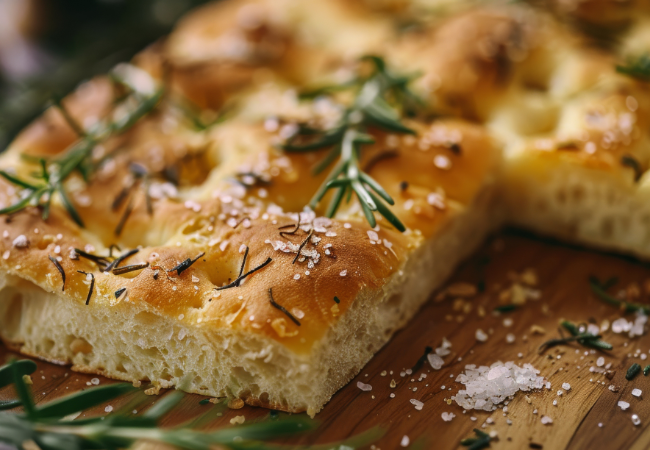
Fresh rosemary, fennel seed, coarse sea salt and plenty of good olive oil make this version flavorful enough to eat all by itself.
It is also wonderful served with pesto, olive tapenade or other spreads on a charcuterie board, alongside a bowl of soup, or split and filled for a rustic sandwich.
And once you have the basic dough down, it is easy to make it your own. Try Kalamata olives, sun-dried tomatoes and thyme, or brush the focaccia with a little garlicky pesto during the final minutes of baking.
If you’ve never made bread before, start here. Focaccia is forgiving, wonderfully satisfying to make, and very difficult to resist while it is still warm from the oven.
Rosemary Focaccia Bread
The secret to this recipe is to let the stand mixer do most of the work. The dough should remain soft and slightly sticky — resist the temptation to keep adding flour.
INGREDIENTS:
1 tablespoon active dry yeast
1 tablespoon sugar
2¼ cups warm water, about 110°F
¼ cup dry milk powder
½ cup sourdough starter or discard, optional
5 cups all-purpose flour, plus a little more for shaping if needed
2½ teaspoons salt
3 tablespoons extra-virgin olive oil
1 tablespoon extra-virgin olive oil, for coating the dough
3 tablespoons fennel seed
3 tablespoons fresh rosemary leaves
1 tablespoon coarse sea salt
Additional extra-virgin olive oil, for the pan and finishing
Water, for lightly misting the dough
METHOD:
In the bowl of a stand mixer, combine the yeast, sugar and warm water. Let stand for 5 to 10 minutes, or until the mixture is foamy.
Add the dry milk powder, sourdough starter or discard, if using, half of the flour, the salt and 3 tablespoons olive oil. Beat for about 5 minutes.
Allow the mixture to rest for 30 minutes. This gives the flour time to absorb the liquid and helps create a tender, well-hydrated dough.
Add the remaining flour about 1 cup at a time, beating well after each addition. The finished dough should be very soft and may remain slightly sticky. Do not add excessive flour — sticky is okay.
Leave the dough in the mixing bowl. Scrape down the sides and drizzle 1 tablespoon olive oil over the dough and around the inside of the bowl. Cover and place in a warm spot for about 1½ hours, or until doubled in size. Rising time may vary depending on room temperature.
Turn the dough onto a lightly floured work surface and gently form it into a ball. Let rest for 5 minutes.
Generously oil a rimmed half-sheet pan, approximately 15½ x 10 inches. Press and stretch the dough into a large rectangle, transfer it to the prepared pan and gently stretch it toward the edges.Cover loosely with plastic wrap and let rise in a warm place for 35 to 45 minutes, or until nearly doubled in bulk.
Preheat the oven to 450°F. Once the focaccia goes into the oven, reduce the temperature to 400°F.
Sprinkle the fennel seed and rosemary leaves evenly over the dough. Using your fingertips, make deep dimples across the surface. Drizzle generously with olive oil and sprinkle with coarse sea salt.
Lightly mist the surface with water. Alternatively, place a pan of hot water in the bottom of the oven for the first 15 minutes of baking.
Place the focaccia in the lower third of the oven and immediately reduce the temperature to 400°F.
Bake for 20 minutes, then rotate the pan. Continue baking for about 10 minutes more, or until the top is crisp and deeply golden brown.
Let the focaccia cool in the pan on a wire rack before slicing.
Variations
Kalamata Olive: Scatter pitted Kalamata olives over the dough, lightly pressing them into the dough, before baking.
Sun-Dried Tomato and Thyme: Add chopped sun-dried tomatoes and fresh thyme in place of the rosemary and fennel.
Garlic-Pesto: Brush the focaccia with a thin layer of garlicky pesto during the final few minutes of baking.