
Preserved lemons are one of those small kitchen projects that reward a little patience with an ingredient you’ll reach for again and again. A few fresh lemons, salt, and a clean jar transform into a deeply aromatic condiment with a flavor that is both bright and mellow, salty and savory. The sharpness of fresh lemon softens during curing, while the rind becomes tender and develops a complexity that fresh juice alone cannot provide.
A staple of Moroccan and Middle Eastern cooking, preserved lemons are especially wonderful in tagines, braised dishes, grain salads, and sauces. But their usefulness extends far beyond traditional recipes. Finely chopped rind can bring a lively citrus note to roasted vegetables, seafood, chicken, and even a simple bowl of beans. Stir a little into vinaigrette, blend it into salsa verde, or add it to a creamy smoked trout dip. Once you have a jar in the refrigerator, you’ll discover that a small amount can make an everyday dish taste remarkably special.
Meyer lemons are particularly lovely for preserving because of their thin skins and fragrant, slightly floral flavor, but ordinary lemons work beautifully, too. The hands-on preparation takes about 30 minutes; the real transformation happens slowly as the lemons cure in their own salted juices. This version combines the simplicity of traditional salt preservation with a short initial cure and refrigerated storage for a dependable homemade condiment.
INGREDIENTS:
4–5 unwaxed Meyer lemons, or regular lemons, for preserving
2–4 additional lemons, or as many as needed for fresh juice
5 tablespoons pickling or canning salt, divided
1 dried bay leaf (optional)
12 whole black peppercorns (optional)
METHOD:
Wash a quart-size glass jar and its lid thoroughly in hot, soapy water, rinse well, and allow to dry. Scrub the lemons under running water and dry them. Choose a jar that will hold the lemons snugly, with enough room for the juice to cover them.
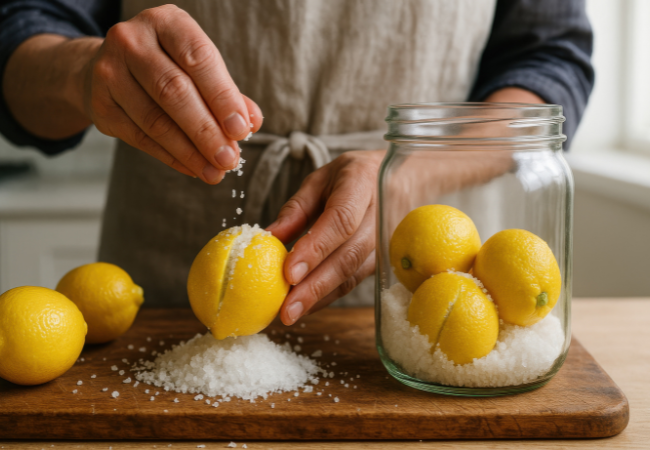
Trim a thin slice from the stem end of each lemon. Starting at the opposite end, cut lengthwise almost to the base, stopping about ½ inch before cutting through. Rotate the lemon and make a second cut so it opens into four quarters that remain attached at the base. Sprinkle 1 tablespoon of salt into the bottom of the jar. Open each lemon and pack about 1 tablespoon of salt between the quarters.
Press the salted lemons firmly into the jar, squeezing them together to release their juices. Tuck the optional dried bay leaf and peppercorns between the lemons. Pour in enough freshly squeezed lemon juice to cover the fruit completely, leaving about ½ inch of headspace. If necessary, use a smaller jar or a clean food-safe weight to keep the lemons submerged.
Cover the jar and leave it in a cool, dark place for 2–3 days to allow the salt to dissolve and the lemons to release more juice. Gently turn or shake the jar daily to redistribute the salt. Open the lid if pressure develops, and press the lemons down with a clean utensil. Add fresh lemon juice whenever necessary to maintain complete submersion.
Transfer the jar to the refrigerator after the initial cure. Allow the lemons to mature for 3–4 weeks, turning the jar occasionally. They are ready when the rinds are tender and the flavor has become mellow, intensely citrusy, and pleasantly salty.
How to Use Preserved Lemons
Preserved lemons are potent, so begin with a small amount and adjust to taste. The rind is the most commonly used part, although the softened pulp and brine can also be useful in recipes that benefit from their concentrated salt and acidity.
To prepare for cooking
Remove a lemon with a clean utensil. Rinse briefly if you prefer a less salty flavor, then separate the rind from the pulp. Finely chop, mince, or slice the rind as needed. Taste before adding additional salt to the dish.
Favorite ways to enjoy them
- Stir finely chopped rind into vinaigrettes, aioli, or creamy dressings.
- Add to Moroccan tagines, braised chicken, lentils, or slow-cooked beans.
- Blend with parsley, garlic, and olive oil for a bright salsa verde.
- Mix into smoked trout dip, seafood salads, or a lemony herb sauce for fish.
- Fold into couscous, rice, grain salads, or roasted vegetables.
- Combine with herbs and olive oil for a marinade for chicken or seafood.
Chef’s Notes
Salt matters: Use pickling or canning salt for a consistent measurement. Large-flake kosher salts vary considerably in density, so tablespoons are not interchangeable between brands. Do not reduce the salt in this preservation recipe.
Keep the lemons submerged: Fresh lemon juice, rather than water, should fill any air spaces. The salt and acidity are the preserving agents, so an olive-oil layer is not necessary for this refrigerated version.
Storage: Keep the finished lemons refrigerated in their brine and use clean utensils.
Plan to use them within 6 months: Discard the entire batch if you notice mold, sliminess, or an unpleasant odor. Do not assume that a white film is harmless.
A note on fermentation: Preserved lemons are often called fermented lemons, but the principal preservation method is salt and acid curing. Their flavor develops over time, and they should not be treated as a shelf-stable canned product.