
Once your ginger bug is active and bubbling, the real fun begins. This lively starter becomes the foundation for a wide range of naturally carbonated drinks—simple juices transformed into bright, effervescent sodas with just a little time and patience.
The process is beautifully adaptable. You can work with whatever is in season—fresh berries, citrus, stone fruit, or even garden herbs—creating drinks that reflect the moment. A ginger bug also gives you complete control over sweetness, allowing you to craft beverages that are lightly sweet, pleasantly tart, or nearly dry.
At its core, this is a gentle, old-world method of fermentation: combining a sweet liquid with your ginger bug, bottling it, and allowing natural carbonation to develop over a day or two. The result is a refreshing, lightly fizzy drink with a subtle complexity you simply won’t find in commercial sodas.
Below you’ll find a collection of recipes to get you started. Think of them as a foundation—once you get comfortable with the process, you’ll find yourself experimenting freely, turning your favorite flavors into sparkling, homemade sodas.
Basic Ginger Bug Soda Formula
For 1 quart (4 cups) of soda:
- 3 to 3 1/2 cups juice, sweetened tea, or herbal infusion
- 1/4 to 1/2 cup active ginger bug liquid
- 1 to 2 tablespoons sugar (optional, depending on sweetness of your base)
Method (Quick Guide)
- Start with a sweet base
Your liquid should taste slightly sweeter than you want the final drink, as some sugar will be consumed during fermentation. - Add ginger bug
Stir in the ginger bug liquid (strained or unstrained). - Bottle and seal
Pour into a swing-top bottle or other airtight container. - Ferment at room temperature
Let sit for 1 to 3 days, depending on temperature and desired carbonation. - Check daily
“Burp” the bottle carefully to release pressure and prevent over-carbonation. - Refrigerate
Once fizzy, move to the refrigerator to slow fermentation. Serve chilled.
Helpful Notes
- Warmer kitchens ferment faster; cooler rooms may take an extra day
- More sugar = more carbonation, but also a slightly sweeter finish
- Always use sturdy bottles designed for carbonation
- Strain for a cleaner soda, or leave ginger bits for a more rustic style
Troubleshooting Your Ginger Bug Sodas
Not fizzy enough?
- Your ginger bug may not be fully active—look for strong bubbling before using
- The room may be too cool; move to a slightly warmer spot
- Your base may not contain enough sugar for fermentation
- Give it more time—some batches take up to 3 days
Too fizzy or foaming over?
- Fermented too long at room temperature
- Open bottles slowly over the sink to release pressure
- Next time, ferment for a shorter period or refrigerate sooner
Too sweet?
- Fermentation time was too short
- Let it sit another day to allow more sugar to be consumed
Too sour or overly tangy?
- Fermented too long
- Reduce fermentation time or use a slightly sweeter base next time
No activity at all?
- Your ginger bug may be inactive—continue feeding daily until bubbly
- Chlorinated water can inhibit fermentation; use filtered water
- Very clean, peeled, or non-organic ginger may lack the natural microbes needed
Cloudy or sediment at the bottom?
- Completely normal—this is a natural result of fermentation
- Strain before drinking if you prefer a clearer soda
Is it safe?
- A fresh, slightly yeasty, citrusy aroma is normal
- If you notice mold, an unpleasant rotten smell, or unusual discoloration, discard and start fresh
Ginger Bug Drink Recipes
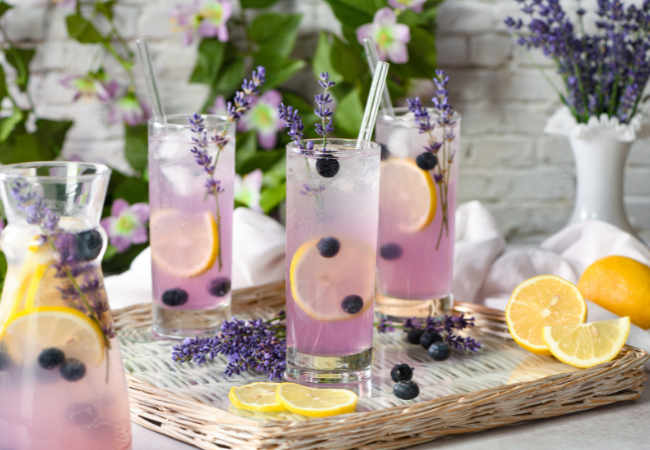
Blueberry Lavender Ginger Bug Soda (Floral and Deeply Fruity)
A beautifully aromatic soda—sweet blueberries balanced with a subtle lavender note. Elegant, lightly herbal, and perfect for summer.
Ingredients
- 1 cup fresh or frozen blueberries
- 1 teaspoon dried culinary lavender buds
- 1/3 cup sugar
- 4 cups filtered water, divided
- 1/4 cup active ginger bug liquid
- 1 tablespoon lemon juice (optional, for brightness)
Method
- In a small pot, combine blueberries, lavender, sugar, and 1 cup water. Bring to a gentle simmer for 10 minutes, lightly mashing the berries.
- Strain through a fine mesh sieve, pressing to extract juice. Stir in remaining 3 cups water and cool to room temperature.
- Stir in ginger bug liquid and lemon juice, if using.
- Pour into flip-top bottles, leaving about 1 inch headspace. Seal and ferment at room temperature for 2 to 3 days.
- Burp daily. Once lightly fizzy and balanced, refrigerate to slow fermentation.
Notes
- Use culinary lavender sparingly—too much can taste soapy
- Frozen blueberries work beautifully and deepen the color
- This pairs especially well with a splash of sparkling water at serving for a lighter finish
Strawberry Shrub Soda (Bright and Tangy)
A beautiful spring drink that highlights peak berries—perfect for your booth, too.
Ingredients
- 1 cup fresh organic strawberries, sliced
- 2 tablespoons sugar
- 1 tablespoon apple cider vinegar
- 2 cups filtered water
- 1/4 cup active ginger bug liquid
Method
- In a bowl, mash strawberries with sugar and vinegar. Let sit 20–30 minutes to release juices.
- Strain into a jar, pressing gently to extract liquid.
- Stir in water and ginger bug liquid.
- Pour into a swing-top bottle and seal.
- Ferment at room temperature 1 to 2 days, until lightly carbonated.
- Refrigerate and serve chilled.
Serving Note:
Serve over ice with a sprig of mint. The balance of sweet, tart, and effervescent is incredibly refreshing.
Homemade Ginger Ale (Classic and Comforting)
A traditional ginger ale with a warm, spicy depth and lively natural fizz. Adjust the citrus for brightness or leave it out for a more old-fashioned profile.
Ingredients
- 8 cups filtered water
- 2/3 cup sugar
- 4 to 6-inch piece fresh organic ginger root, thinly sliced
- 1/2 cup active ginger bug liquid
- 1/3 cup fresh lime or lemon juice (optional)
Method
- In a pot, combine water, sugar, and sliced ginger. Bring to a boil, then reduce heat and simmer for 5 minutes.
- Remove from heat and allow the mixture to cool to room temperature. (Hot liquid will damage the ginger bug culture.)
- Strain out the ginger using a fine mesh strainer and transfer the liquid to a clean bowl or jar.
- Stir in the ginger bug liquid and citrus juice, if using.
- Pour into flip-top bottles, leaving about 1 inch of headspace. Seal and ferment at room temperature for 2 to 4 days, depending on temperature.
- “Burp” bottles daily to release pressure. Once fizzy and balanced (not overly sweet), transfer to the refrigerator to slow fermentation.
Notes
- Open bottles slowly over the sink, especially if highly carbonated
- Warmer temperatures will speed up fermentation
- For a stronger ginger flavor, increase the amount of fresh ginger or simmer slightly longer
Hibiscus Ginger Bug Soda (Bright and Tart)
A jewel-toned soda with a refreshing tang—hibiscus adds a cranberry-like brightness and beautiful color.
Ingredients
- 2 heaping tablespoons dried hibiscus flowers
- 1/2 cup sugar
- 4 cups water, divided
- 1/4 cup active ginger bug liquid
Method
- Steep hibiscus in 2 cups hot water for 30 minutes. Strain and stir in sugar.
- Add remaining 2 cups water and let cool to room temperature.
- Stir in ginger bug liquid.
- Pour into flip-top bottles, leaving about 1 inch headspace. Seal and ferment at room temperature for 2 to 3 days.
- Burp bottles daily. Once fizzy and balanced, refrigerate to slow fermentation.
Notes
- Longer fermentation will increase tang and reduce sweetness
- Open bottles slowly to avoid overflow
- Serve chilled—excellent with a squeeze of citrus
Lemon Herb Garden Soda (Fresh and Aromatic)
A lovely way to use spring herbs—mint, tarragon, or lemon balm all work beautifully.
Ingredients
- 2 cups water
- 2 tablespoons honey or sugar
- Zest and juice of 1 lemon
- Small handful fresh herbs (mint, lemon balm, or tarragon)
- 1/4 cup active ginger bug liquid
Method
- Warm the water slightly and dissolve the honey or sugar. Cool to room temperature.
- Add lemon zest, juice, and herbs. Let steep 15–20 minutes.
- Strain into a bottle and stir in ginger bug liquid.
- Seal and ferment 1 to 2 days at room temperature.
- Refrigerate once fizzy.
Serving Note:
This one feels almost like a homemade botanical soda—clean, lightly floral, and not too sweet.
Peach Sunset Soda (Soft and Summer-Ripe)
When stone fruit arrives, this becomes a favorite.
Ingredients
- 1 cup ripe peaches, chopped
- 2 tablespoons sugar
- 2 cups filtered water
- 1/4 cup active ginger bug liquid
Method
- Blend or mash peaches with sugar until juicy.
- Strain into a jar, pressing to extract as much liquid as possible.
- Stir in water and ginger bug liquid.
- Bottle, seal, and ferment 1 to 3 days until carbonated.
- Refrigerate before serving.
Serving Note:
Serve chilled with a squeeze of lime to brighten the sweetness.
Simple Citrus Ginger Soda (Classic and Versatile)
A great base recipe to build on.
Ingredients
- 2 cups fresh orange juice (or a mix of citrus)
- 1 tablespoon sugar (optional, depending on sweetness of juice)
- 1/4 cup active ginger bug liquid
Method
- Combine juice, sugar (if using), and ginger bug liquid.
- Pour into a bottle and seal.
- Ferment 1 to 2 days at room temperature.
- Refrigerate when fizzy.
Serving Note:
Lightly spicy from the ginger bug, with a clean citrus finish—very approachable.