
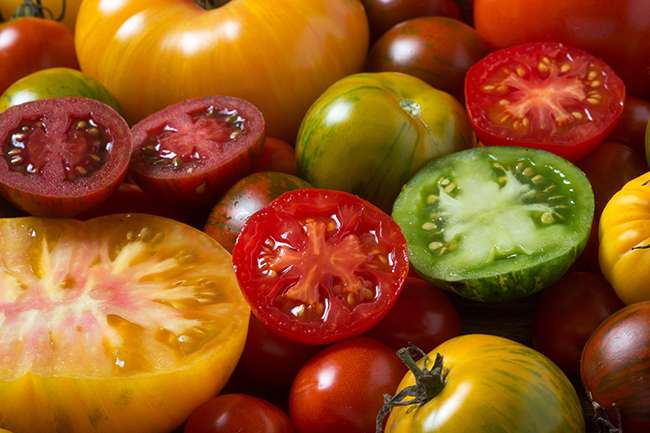
There is something about a truly ripe tomato that makes you stop and pay attention.
Juicy, fragrant, sun-warmed, and full of flavor, late-summer tomatoes bear very little resemblance to the pale, firm tomatoes found in supermarkets during the rest of the year. And here on the Central Coast, some of the very best tomatoes arrive just as summer begins to wind down.
Late August and September are prime tomato months in the Monterey Bay region, when our long growing season give local tomatoes plenty of time to develop exceptional sweetness and flavor.
At the farmers market, tables are piled high with tomatoes in nearly every imaginable shape, size, and color — deep red slicing tomatoes, golden and orange varieties, tiny cherry and grape tomatoes, meaty paste tomatoes, and wonderfully irregular heirlooms streaked with green, purple, pink, and yellow.
This is the moment to enjoy them.
Why Local Tomatoes Taste So Much Better
Tomatoes destined for conventional grocery-store distribution are often harvested before they are fully ripe so they can withstand packing, shipping, and storage.
Farmers market tomatoes have a distinct advantage: they are grown nearby and can remain on the plant longer, allowing their sugars, acids, aromas, and complex flavors to develop naturally.
That difference becomes obvious with the first bite.
Heirloom tomatoes are especially prized for their distinctive personalities. Some are intensely sweet, others pleasantly tart, rich and savory, or almost fruity. Their unusual shapes, delicate skins, and occasional cracks may not meet supermarket standards for uniformity — but flavor has never cared much about appearances.
The Simplest Preparations Are Often the Best
When tomatoes are this good, they need very little help.
Slice them and sprinkle with flaky salt and freshly ground pepper. Drizzle with good olive oil from Belle Farms. Add torn basil or a spoonful of pesto. And how about a splash of balsamic vinegar?
Layer thick slices with fresh mozzarella for a classic Caprese salad, or pair tomatoes with burrata, feta, goat cheese, or ricotta.
Pile them onto toasted bread rubbed with garlic for bruschetta. Tuck thick slices into sandwiches. Chop them for salsa, spoon them over grilled fish or chicken, or toss them with warm pasta.
And when the tomatoes become almost too abundant to keep up with, turn them into gazpacho, fresh tomato sauce, roasted tomatoes, tomato jam, or preserve them for winter.
A perfectly ripe tomato may be one of summer’s simplest luxuries.
How to Select the Best Tomatoes
- Pick them up. A good tomato should feel relatively heavy for its size and should feel firm but not hard.
- Look beyond perfection. Farmers market tomatoes — especially heirlooms — may have scars, cracks, uneven shoulders, or unusual shapes. Minor healed cracking is generally cosmetic and can simply be trimmed away.
- Use your nose. Smell the tomato near the stem end. A ripe, flavorful tomato should have a noticeable fresh tomato aroma.
- Check the texture. Gently press the tomato with your fingers. A ripe tomato should give slightly under pressure without feeling mushy.
- Don’t judge by color alone. Not every ripe tomato is red. Depending on the variety, a perfectly ripe tomato might be yellow, orange, pink, green, purple, mahogany, or striped.
- Tell the farmer what you’re making. One of the advantages of shopping at the farmers market is being able to ask which varieties are best for slicing, salads, sauce, roasting, salsa, or preserving. Farmers know their tomatoes — and often their favorites are worth trying.
A Tomato for Every Purpose
Different tomatoes shine in different preparations.
Beefsteak and large slicing tomatoes are wonderful for sandwiches, burgers, salads, and eating simply with salt and olive oil.
Heirloom tomatoes are ideal when you want the tomato itself to be the centerpiece of the dish.
Cherry and grape tomatoes are naturally sweet and excellent for salads, snacking, roasting, and quick pasta dishes.
Paste tomatoes, such as Roma and San Marzano types, contain more flesh and less water, making them particularly useful for sauces, roasting, and preserving.
Of course, these aren’t rules. When tomatoes are beautifully ripe, use whatever tastes best.
How to Store Tomatoes
Whenever possible, keep ripe tomatoes at room temperature rather than in the refrigerator. Refrigeration can dull their aroma and flavor and affect their texture.
Store tomatoes in a single layer on the counter, away from direct sunlight, where they won’t be bruised or crushed.
If a tomato becomes extremely ripe and you aren’t ready to use it, refrigeration can help prevent spoilage. Bring it back to room temperature before eating for the best flavor.
And one more tip: don’t wash tomatoes until you’re ready to use them.
Don’t Miss the Season
Tomato season never seems quite long enough.
Late August and September are an especially wonderful time to visit our markets, taste unfamiliar varieties, talk with the farmers who grow them, and enjoy tomatoes when they are exactly as tomatoes should be.
You’ll find an impressive selection throughout the season from farmers including Borba Family Farms, KT Farms, Prevedelli Farm, Spade & Plow Organics, Cabrillo College Horticulture, Molino Creek Farm, Munak Ranch, Phil Foster Ranch/Pinnacle Organic Produce, and others.
Buy a few varieties you’ve never tried before. Take them home, slice them onto a plate, add a little salt and olive oil — and consider dinner underway.
Looking for inspiration? Explore Edible Paradise tomato recipes.