
Basil may be best known as the fragrant green herb tucked into pesto or layered with ripe tomatoes, but “basil” is not a single flavor.
Depending on the variety, basil can taste sweet and peppery, spicy and anise-like, bright with citrus, warmly aromatic, or even slightly clove-like. Leaves may be broad and crinkled, tiny and compact, or dramatically purple. Some varieties are best suited to pesto and tomato dishes, while others shine in curries, noodle bowls, fruit salads, herbal teas, syrups, and desserts.
Basil belongs to the mint family, which helps explain its square stems, aromatic leaves, and remarkable range of fragrances. Most culinary basils are grown as warm-season annuals and are at their most flavorful during summer.
Here are some of the most delicious and distinctive basil varieties you may encounter at the farmers market.
SWEET BASIL
Flavor: Sweet, peppery, gently clove-like
Best for: Tomatoes, salads, pasta, sauces, vegetables, eggs, sandwiches and pesto
Sweet basil is the familiar green basil most often found in grocery stores, gardens, and farmers markets. Its tender leaves have the classic flavor associated with Italian and Mediterranean cooking.
The term “sweet basil” covers a broad group of cultivars. Some have medium-size leaves, while others grow especially large or compact. Sweet basil is versatile enough to use raw or cooked, although its freshest flavor is best preserved when it is added near the end of cooking.
Try it:
- Layered with tomatoes and mozzarella
- Torn into salads
- Blended into pesto
- Stirred into tomato sauce just before serving
- Added to sandwiches
- Scattered over roasted vegetables
- Paired with peaches, strawberries or watermelon
GENOVESE BASIL
Flavor: Sweet, aromatic and peppery
Best for: Traditional pesto, bruschetta, pasta and tomato dishes
Genovese basil is one of the best-known sweet basil cultivars. It is closely associated with the cuisine of Liguria, Italy, and is the classic choice for pesto alla Genovese.
The leaves are generally broad, tender, and intensely fragrant. Compared with some other basils, Genovese basil has the rounded sweetness and rich aroma that marry especially well with garlic, olive oil, Parmesan, and nuts.
Try it:
- In classic pesto
- With fresh or roasted tomatoes
- Folded into pasta salad
- Added to minestrone
- Layered into focaccia sandwiches
- Blended into basil butter or finishing salt
ITALIAN LARGE-LEAF AND LETTUCE-LEAF BASIL
Flavor: Mild, sweet and aromatic
Best for: Wraps, sandwiches, salads and dishes that call for generous amounts of basil
Italian Large-Leaf, Napoletano, Lettuce Leaf, and Mammoth are sweet basil cultivars known for producing unusually large leaves. Some are smooth, while others are ruffled or slightly crinkled.
Their size makes them particularly useful when basil is treated as more than a garnish.
Try the large leaves:
- As wraps for cheese, vegetables or grilled chicken
- Layered into sandwiches
- Torn into substantial salads
- Arranged beneath sliced tomatoes
- Used in place of lettuce on a burger
- Filled with a spoonful of ricotta or goat cheese
The flavor is generally similar to familiar sweet basil, although individual cultivars vary in strength and texture.
GREEK OR BUSH BASIL
Flavor: Concentrated, sweet, spicy and peppery
Best for: Garnishing, salads, vegetables, eggs and container growing
Greek and bush basils form compact, rounded plants covered with many small leaves. Cultivars such as Spicy Globe, Green Globe, Spicy Bush, and Minette are valued for both their flavor and tidy growing habit.
The tiny leaves can often be used whole, eliminating the need for chopping. Their concentrated flavor makes them an excellent finishing herb.
Try them:
- Scattered over tomato salads
- Added to scrambled eggs
- Sprinkled over roasted vegetables
- Stirred into couscous or rice
- Used as a garnish for soup
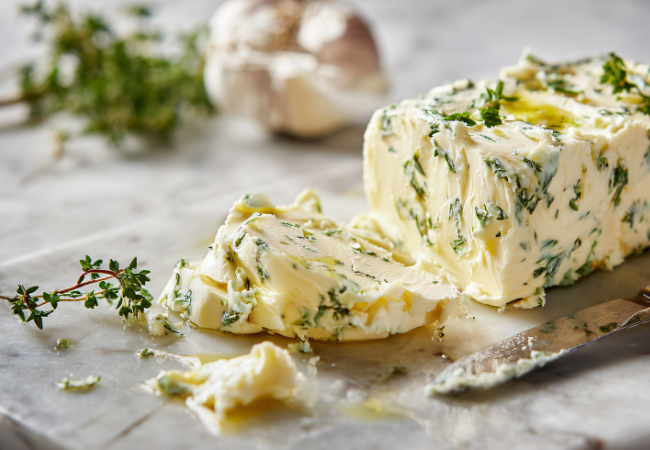
- Mixed into softened butter
- Added whole to vinaigrettes
Small-leaf basils are also attractive in pots and edible landscapes.
THAI BASIL
Flavor: Spicy, peppery, and distinctly anise- or licorice-like
Best for: Curries, stir-fries, noodle dishes, soups and Southeast Asian cooking
Thai basil is easy to recognize by its narrower green leaves, purplish stems, and often purple flower spikes. Its flavor is more assertive than that of sweet basil, with a spicy character and a pronounced anise or licorice note.
Thai basil also tends to hold its flavor better in cooked dishes than delicate Italian basil. Add it near the end so the leaves soften without losing all their fragrance.
Try it:
- Torn over Thai curry
- Added to pho or other noodle soups
- Stirred into fried rice
- Tossed into vegetable or chicken stir-fries
- Paired with eggplant
- Added to lettuce wraps
- Combined with mint, cilantro, lime and chiles in fresh salads
Thai basil and holy basil are sometimes confused, but they are distinct plants with different flavors and traditional uses.
LEMON BASIL
Flavor: Sweet basil with a clear lemon fragrance
Best for: Fish, poultry, rice, vegetables, fruit, syrups and tea
Lemon basil brings together the familiar fragrance of basil and the brightness of citrus. Some varieties are gently lemony, while cultivars such as Mrs. Burns’ Lemon are known for a particularly strong citrus aroma and flavor.
Its refreshing character makes lemon basil one of the easiest specialty basils to use.
Try it:
- With grilled or roasted fish
- In chicken salad
- Tossed with rice or couscous
- Added to summer vegetables
- Blended into pesto
- Mixed with peaches, berries or melon
- Steeped in simple syrup
- Added to iced tea or lemonade
- Combined with butter and lemon zest
Lemon basil can often replace sweet basil in a recipe when a brighter, more citrus-forward result is desired.
LIME BASIL
Flavor: Bright, tangy and distinctly lime-like
Best for: Seafood, fruit, rice, drinks and Southeast Asian-inspired dishes
Lime basil offers a sharper citrus fragrance than lemon basil. It can be used anywhere lime zest or lime juice would complement the other ingredients.
Try it:
- With shrimp or grilled fish
- In coconut rice
- With mango, pineapple or melon
- In cucumber salad
- Added to salsa
- Steeped in syrup for sparkling water
- Combined with mint in iced tea
- Added to noodle bowls or lettuce wraps
Because its fragrance is delicate, lime basil is especially good when used raw or added at the end of cooking. Citrus-flavored basil varieties are recognized for their bright aromas and flavors, which distinguish them from traditional sweet basil.
CINNAMON BASIL
Flavor: Warm, spicy and gently cinnamon-like
Best for: Fruit, baked goods, syrups, tea, rice dishes and savory-sweet preparations
Cinnamon basil combines basil’s familiar peppery fragrance with warm spice notes. Despite the name, it does not taste exactly like ground cinnamon. Its aroma is subtler and more herbal.
The flavor works particularly well in recipes that cross the line between savory and sweet. The Royal Horticultural Society includes cinnamon among the distinctive flavor profiles found within the basil family.
Try it:
- With peaches, plums or berries
- In fruit salad
- Steeped into simple syrup
- Added to iced tea
- Infused into honey
- Mixed into rice or grain dishes
- Paired with roasted squash or carrots
- Added to chocolate desserts
- Used as an aromatic garnish for drinks
Cinnamon basil flowers can also make an attractive edible garnish when they have been grown without unsuitable garden chemicals.
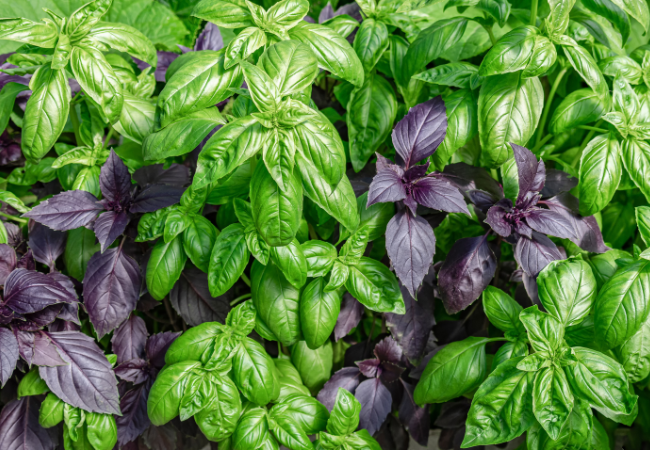
PURPLE BASIL
Flavor: Peppery, clove-like and generally less sweet than common basil
Best for: Salads, vinegars, garnishes, drinks and colorful pesto
Purple basil varieties—including Dark Opal, Red Rubin, Amethyst, Osmin, and Red Genovese—bring dramatic color to both the garden and the plate. Their leaves range from reddish purple to deep burgundy.
Purple basil is often a little less sweet and more assertive than green sweet basil. Its color can darken or fade with prolonged cooking, so it is especially effective when used fresh.
Try it:
- Torn into green salads
- Paired with tomatoes and stone fruit
- Added to herb vinegar
- Used as a garnish
- Floated in lemonade
- Blended with green basil in pesto
- Added to compound butter
- Scattered over goat cheese or ricotta
A few purple leaves mixed with green basil create a striking farmers market salad.
HOLY BASIL OR TULSI
Flavor: Strongly aromatic, spicy, clove-like, and sometimes peppery
Best for: Herbal tea and selected South and Southeast Asian preparations
Holy basil, commonly called tulsi, is botanically distinct from the sweet basils generally used for Italian cooking. It has highly aromatic, often slightly serrated leaves that may be green or purple-green. It also carries deep religious and cultural significance in India.
Tulsi’s assertive flavor does not make it a direct substitute for Genovese basil in every recipe. It is particularly well known as an herbal infusion.
Try it:
- Steeped alone as an herbal tea
- Combined with mint or ginger in tea
- Added thoughtfully to curries
- Used in aromatic broths
- Combined with honey and citrus in warm drinks
Because tulsi is sometimes promoted with broad health claims, it is helpful to distinguish its traditional and culinary uses from claims that would require medical evidence.
AFRICAN BLUE BASIL
Flavor: Strong, aromatic and somewhat camphor-like
Best for: Edible flowers, bouquets, pollinator gardens, vinegars and selective culinary uses
African Blue basil is a striking hybrid with green-purple foliage and tall purple flower spikes. It is particularly valued as an ornamental and pollinator-friendly basil. Penn State describes it as having a camphor-like scent and notes that it is highly attractive to bees.
Its flavor is stronger and less conventionally sweet than Genovese basil, so it is best used with some restraint.
Try it:
- As an edible flower garnish
- Infused into vinegar
- Added sparingly to herbal tea
- Combined with other herbs in bouquets
- Grown near vegetables to attract pollinators
Taste a leaf before adding a large amount to a recipe; the flavor can be much more pronounced than expected.
Can Basil Flowers Be Eaten?
Yes. Basil flowers are edible and generally carry a flavor similar to the leaves, although they may be milder, more floral, or slightly more intense depending on the variety.
Use the flowers:
- As a garnish for salads
- Scattered over tomatoes
- Floated on chilled soup
- Added to fruit
- Sprinkled over cheese
- Frozen into decorative ice cubes
- Infused into vinegar
- Added to herb bouquets
Only eat flowers that have been grown and handled as edible produce.
How to Choose Basil at the Farmers Market
Look for basil with:
- Vibrant color
- Supple, unwilted leaves
- A fresh, distinctive fragrance
- Stems that are not slimy or badly blackened
- Leaves free of extensive spotting or damage
A few flowers do not make a bunch unusable, but basil that has flowered heavily may have firmer leaves and a stronger flavor.
Ask the farmer which variety you are buying. One quick conversation can reveal whether the basil is best suited to pesto, curries, tea, fruit, or another preparation.
How to Store Fresh Basil
Basil is tender and can be damaged by cold temperatures. For short-term storage, trim the stems and place the bunch in a glass of water, much as you would a bouquet. Keep it at room temperature and use it within several days.
Another method is to wrap the basil gently in a paper towel and place it in a bag in the refrigerator, although results may vary depending on the variety and refrigerator temperature. Penn State notes that cut stems may be held in water at room temperature or wrapped and refrigerated for short storage.
Do not wash basil until you are ready to use it unless you can dry it thoroughly. Excess moisture encourages deterioration.
For longer storage, basil can be chopped and frozen with water or olive oil in ice cube trays. Pesto also freezes well in small portions.
Which Basil Should You Choose?
- Choose Genovese or Italian basil for pesto, tomatoes, pasta, and familiar Mediterranean dishes.
- Choose large-leaf basil for sandwiches, wraps, and salads.
- Choose Greek or bush basil when you want small leaves with concentrated flavor.
- Choose Thai basil for curries, noodle soups, stir-fries, and dishes that welcome anise-like flavor.
- Choose lemon or lime basil for seafood, fruit, drinks, rice, and citrusy sauces.
- Choose cinnamon basil for fruit, tea, syrups, honey, and warm-spiced dishes.
- Choose purple basil when color and a slightly bolder flavor are part of the presentation.
- Choose tulsi primarily for tea and dishes in which its distinctive spicy fragrance is welcome.
Taste Before You Cook
The most enjoyable way to understand basil is to taste the varieties side by side.
Take a small leaf of each and notice:
- Is it sweet or spicy?
- Does it suggest lemon, lime, cinnamon, clove, or licorice?
- Is the flavor soft or assertive?
- Would it pair better with tomatoes, fruit, fish, tea, or a curry?
Those differences are exactly what make basil so exciting. A bunch of Genovese basil may become pesto, while Thai basil transforms a noodle bowl and lemon basil brightens a pitcher of iced tea.
Once you move beyond the idea that all basil tastes the same, an entire world of flavor opens up.
Here’s where to find basil at our farmers markets: KT Farms, Borba Family Farms, Blue Heron Farm, Spade & Plow Organics, and Cabrillo Horticulture.
SEE ALSO: 12 Delicious Ways to Use Fresh Basil