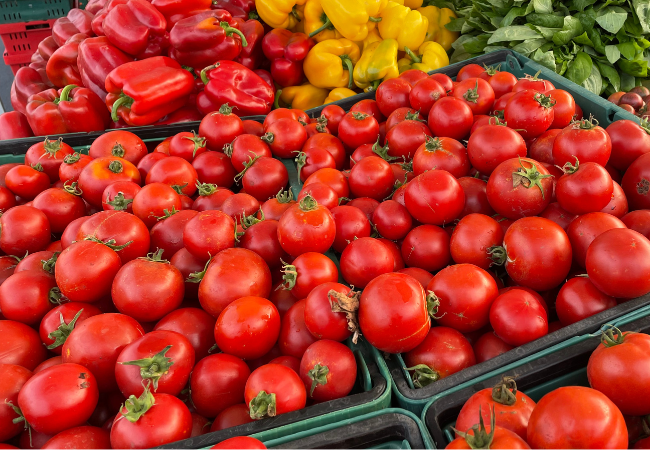

There’s still time to bring home a few extra pounds of ripe tomatoes from the farmers market—and your winter self will thank you.
Freezing is one of the easiest ways to preserve tomatoes, whether you have a basket of Romas or a handful of heirlooms that need using. You can put them away now and make sauce when you have more time.
There is one thing to know before you begin: frozen tomatoes lose their firm texture when thawed. Save your fresh tomatoes for sandwiches and salads; use your frozen stash for soups, sauces, stews, and other cooked dishes.
Start with Good Tomatoes
Choose ripe, sound tomatoes with good flavor. Freezing won’t improve a disappointing tomato, and it won’t rescue spoiled fruit. Discard any tomatoes showing mold or decay.
Wash tomatoes under cool running water, gently rubbing their surfaces clean. Remove stems and cut out the cores.
The Easiest Method: Freeze Them Whole
Short on time? You can freeze whole tomatoes with their skins on—no blanching required.
- Wash, core, and dry the tomatoes.
- Arrange them on a baking sheet in a single layer.
- Freeze until solid.
- Transfer to freezer bags, pressing out excess air before sealing.
Freezing them individually makes it easier to take out just a few at a time.
Prefer Them Peeled?
If you know you’ll want peeled tomatoes for cooking, you can do that preparation before freezing.
Dip washed tomatoes into boiling water for about 30–60 seconds, just until the skins loosen or begin to split. Transfer immediately to cold water, then slip off the skins and remove the cores.
Leave the tomatoes whole or cut them into pieces. Pack into freezer-safe containers, leaving 1 inch of headspace for expansion. Seal and freeze.
Save Freezer Space with Cooked Tomatoes
Whole tomatoes are convenient, but they take up room. Cooking them first gives you a more compact starting point for winter meals.
Peel, core, and quarter the tomatoes. Place them in a saucepan, cover, and cook until tender, about 10–20 minutes. Cool promptly by setting the pan in cold water, then package in freezer containers with room for expansion.
For a ready-made sauce, try our Easy Roasted Tomato Sauce, which combines ripe tomatoes with garlic, olive oil, and herbs.
Package for the Way You Cook
Small portions are often more useful than one large container. Think about how much tomato you usually need for a pot of soup, a quick sauce, or a braise.
Use bags or containers specifically intended for freezing. Label each package with the contents, amount, and date. Leave space between newly added packages so cold air can circulate; once frozen, consolidate them to save room.
How Long Will Frozen Tomatoes Keep?
Keep your freezer at 0°F or below. Properly prepared and packaged fruits and vegetables generally maintain good quality for 8–12 months, although using them toward the earlier end of that range gives the best results. Longer storage affects quality rather than creating an automatic expiration date when food remains continuously frozen.
Bringing Them Back to the Kitchen
Thaw tomatoes in the refrigerator, placing the package in a bowl to catch leaks. If you use the microwave to thaw them, cook them promptly afterward.
Then put them to work:
- Simmer into tomato sauce for pasta or polenta.
- Blend into tomato soup.
- Add to beans, lentils, or vegetable stews.
- Use as the tomato base for braised chicken or beef.
- Cook down with onion, garlic, and spices for a warming curry.
A few packages of tomatoes won’t take care of every winter dinner—but on a chilly evening, they’re a very good place to start.
Next time you’re at the market, ask your farmer about tomatoes for sauce or freezing. Bring home a little extra while the season is still giving.