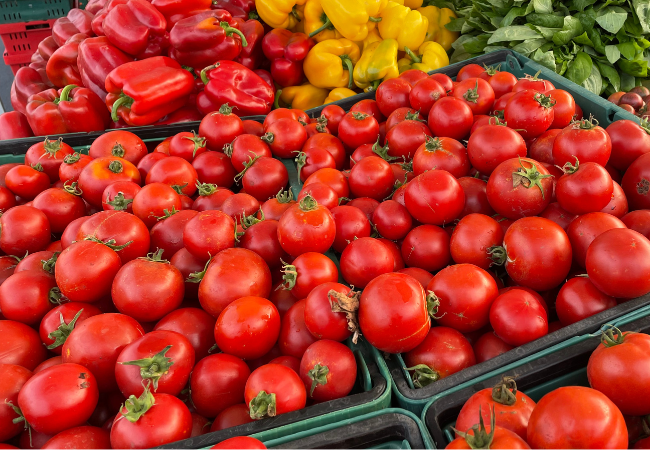

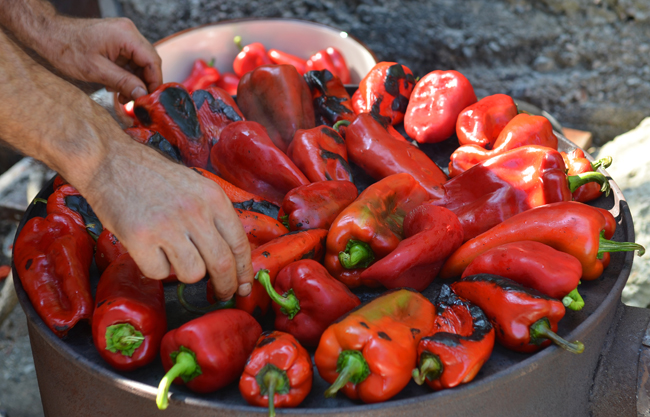
Roasting peppers brings out their natural sweetness, deepens their flavor, and gives them a silky, supple texture. Once roasted and peeled, peppers can be used in salads, sandwiches, sauces, soups, pasta dishes, antipasto platters, salsas, and spreads.
You can roast peppers over a direct flame on the stove, over coals or gas flame on the grill, under the broiler, or even with a propane torch. The method may vary, but the goal is the same: blister the skins, steam the peppers briefly, then peel away the charred outer layer.
What You’ll Need
- Peppers — as many as you’d like to roast
- A little olive oil or grapeseed oil
- A heat source, such as a grill, broiler, open burner, or propane torch
- A large heat-resistant bowl or sturdy paper sack
- A lid, plate, or plastic wrap to cover the bowl
- Long tongs or a long fork
- A sharp paring knife
How to Roast Peppers
Rub the peppers with a little oil — just enough to give them a light sheen. This helps the skins blister more evenly.
Place the peppers over your chosen heat source. You can set them directly on the grill, hold them over a gas flame with long tongs, place them under the broiler in a rimmed non-reactive metal pan, or use a propane torch.
As the peppers roast, the skins will begin to blacken and blister. They may even make little popping sounds — this is completely normal. Turn the peppers often so they blister evenly and do not burn through in any one spot.
Once the peppers are blistered all over, transfer them to a heat-resistant bowl and cover the bowl with a lid, plate, or plastic wrap. You can also place them in a sturdy paper sack, but check the bag occasionally for wet spots or leaks, especially if you are roasting a large batch.
Let the peppers steam until they are cool enough to handle. This resting period loosens the skins and makes peeling much easier.
Working with one pepper at a time, peel away the loosened skin with your fingers. If you are roasting spicy peppers, wear gloves to protect your hands. Use the tip of a paring knife to flick away stubborn bits of skin, or gently scrape them off with the edge of the blade.
If a pepper is difficult to peel, cut around the stem, slit the pepper down one side, and open it flat. Save any juices that collect inside — they are full of flavor. Use the knife to scrape away the seeds and ribs, then turn the pepper over and scrape away the remaining skin.
How Long Should You Roast Them?
A light blistering will leave the pepper flesh a little firmer, which is useful for salads, salsas, and dishes where you want more texture.
A longer roast will make the peppers softer and silkier, ideal for sauces, spreads, soups, pasta, and antipasto.
How long you roast them depends on how you plan to use them — but in general, the skins should be well blistered and loosened before steaming.
Storing Roasted Peppers
Once peeled, roasted peppers are ready to use. Store them in a covered container in the refrigerator for about 4 days. For best flavor, drizzle them with a little olive oil and add a pinch of salt before refrigerating.
Roasted peppers are one of those simple kitchen preparations that instantly make a dish feel more generous. Keep a container in the refrigerator during pepper season, and you’ll find endless ways to use them.
Here’s a guide for more cooking ideas and a guide to local growers for peppers.