
If you think sous vide cooking is mainly about producing a perfectly medium-rare steak, think again.
A precision-controlled water bath is one of the most versatile tools in the kitchen. It can gently cook poultry, fish, meat, eggs, vegetables, fruit, custards, and cheesecakes; incubate homemade yogurt; and handle other foods and kitchen projects where accurate temperature makes a noticeable difference.
The real advantage of sous vide is not simply cooking food “in a bag.” It is precise temperature control.
Instead of surrounding food with the much higher heat of an oven, skillet, or grill, sous vide cooking uses a water bath held at a carefully selected temperature. The food heats gradually and evenly, giving the cook far more control over texture and doneness.
For home cooks, that can mean fewer overcooked chicken breasts, more tender fish, beautifully textured eggs, exceptionally flavorful vegetables, silky custards—and homemade yogurt incubated at a steady, reliable temperature.
What Is Sous Vide?
Sous vide is French for “under vacuum.” Traditionally, food is vacuum-sealed in a food-safe bag and then cooked in a precisely temperature-controlled water bath.
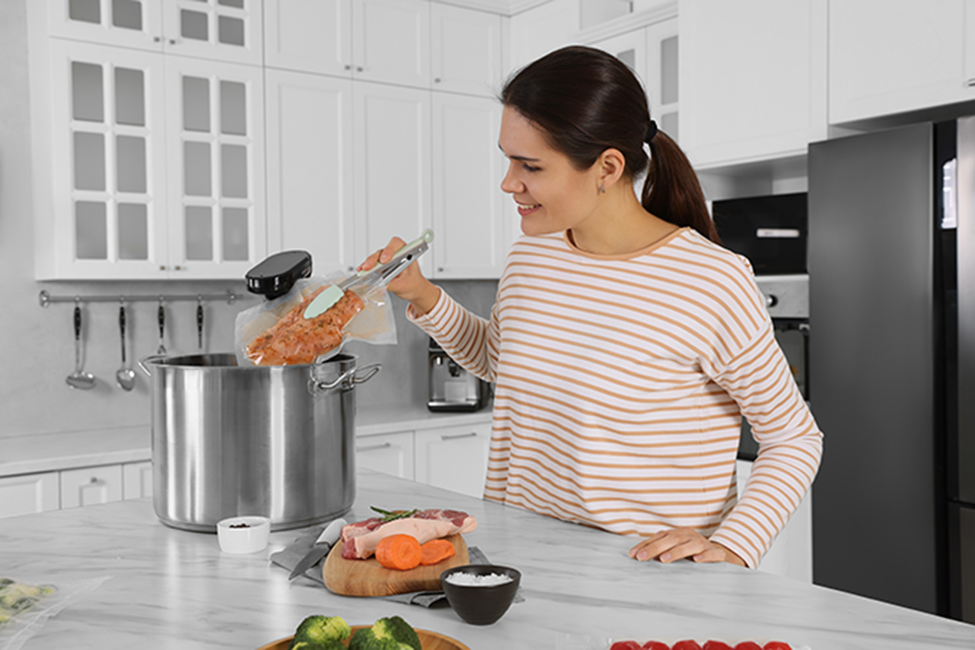
An immersion circulator heats the water and keeps it moving, maintaining an even temperature throughout the container.
Despite the name, however, vacuum sealing is not always necessary.
Many foods can be cooked in sturdy freezer-weight zip-top bags using the water-displacement method, while custards, cheesecakes, egg dishes, yogurt, and other recipes can be prepared in heat-safe jars.
For that reason, it can be helpful to think of sous vide more broadly as controlled water-bath cooking.
Why Water Makes Such a Difference
Traditional cooking usually involves temperatures much hotter than the final temperature you want the food to reach.
A steak might cook in a very hot skillet. Chicken may roast in a 400°F oven. Fish might be placed beneath a broiler.
All of these methods work beautifully, but they also require careful timing because heat continues moving rapidly from the exterior toward the center of the food.
Sous vide works differently.
The water bath is set close to the temperature you ultimately want the food to reach. Because water transfers heat efficiently and surrounds the food evenly, cooking happens slowly and predictably.
Instead of trying to catch the food at exactly the right moment, you have a much wider margin for error.
That is especially valuable with foods that can go from perfectly cooked to disappointing in just a few minutes.
It’s Not Just for Meat
Steak may have helped make sous vide famous among home cooks, but meat is only one small part of what an immersion circulator can do.
Poultry, Meat, and Seafood
Sous vide is particularly useful for proteins because it provides excellent control over doneness.
Chicken breasts can remain moist and tender. Pork chops can cook evenly from edge to edge. Tougher cuts can benefit from longer cooking times that allow connective tissue to soften gradually.
Fish and shellfish are especially well suited to precise cooking because their delicate textures can change quickly when exposed to high heat.
Many proteins are finished after sous vide cooking with a quick sear in a hot skillet, on a grill, or beneath a broiler. The water bath cooks the interior precisely; the high-heat finish provides browning, texture, and flavor.
Eggs
Eggs are one of the best ways to understand just how much a few degrees can matter.
Egg whites and yolks begin to change texture at different temperatures. By adjusting the water bath slightly, you can produce eggs ranging from very soft and fluid to creamy, custardy, or firm.
It is a fascinating demonstration of the science behind cooking—and one that is difficult to duplicate with the same consistency using traditional methods.
Vegetables
Vegetables are one of the most overlooked uses for sous vide cooking.
Carrots, beets, potatoes, asparagus, corn, and many other vegetables can be cooked in sealed bags with butter, olive oil, herbs, citrus zest, spices, or other seasonings.
Because the vegetables are not submerged in a pot of cooking water, their juices and flavors remain with them rather than being diluted or discarded.
The result can be remarkably concentrated flavor.
Imagine carrots cooked with thyme and a touch of honey, potatoes with rosemary and garlic, or beets with orange zest and warm spices.
Farmers market vegetables are especially well suited to this kind of simple treatment because the technique allows their natural flavors to remain front and center.
Yogurt and Cultured Dairy
One of the most useful—and perhaps least expected—jobs for an immersion circulator is making yogurt.
Yogurt depends on maintaining milk at a warm, steady temperature while beneficial cultures ferment the milk and develop its characteristic flavor and texture. A precision water bath makes that remarkably easy because it can hold the incubation temperature consistently for hours without requiring constant attention.
The method works beautifully for traditional yogurt and can also be useful when making thicker Greek-style yogurt and experimenting with other cultured dairy projects.
For anyone who makes yogurt regularly, this alone can turn an immersion circulator from an occasional cooking gadget into a genuinely useful kitchen tool.
And it is another perfect example of why sous vide is better understood as precise temperature control rather than simply cooking food in a vacuum-sealed bag.
Custards and Desserts
This may be the category that surprises people most.
A precision water bath creates an ideal environment for foods that ordinarily require very gentle, carefully controlled heat.
Crème brûlée, pots de crème, cheesecake, and other custard-style desserts can be cooked in small heat-safe jars directly in the water bath.
The steady temperature helps prevent the overcooked edges or uneven texture that can occur with conventional oven water baths.
Individual jars also make serving and storing beautifully simple.
Fruit
Fruit can also benefit from gentle, controlled cooking.
Pears, peaches, apples, plums, and other fruits can be cooked with spices, citrus peel, vanilla, wine, or simple syrup while retaining more of their shape and texture than they might with vigorous stovetop poaching.
The technique can be particularly useful when you want fruit that is tender but not falling apart.
Infusions and Other Kitchen Projects
An immersion circulator is essentially a tool for maintaining a precise temperature over time, which means its usefulness extends beyond conventional cooking.
Controlled heat can be helpful for certain culinary infusions and other projects where maintaining a consistent temperature is important.
Once you begin thinking of an immersion circulator as a precision temperature tool rather than a steak machine, a much wider range of possibilities begins to appear.
Sous Vide and Seasonal Cooking
Sous vide fits beautifully into farmers market cooking because it works especially well with simple combinations of fresh ingredients.
A few sprigs of rosemary or thyme can perfume chicken or pork. Meyer lemon zest can brighten fish. Fresh ginger and citrus can transform carrots. Summer stone fruit can become an elegant dessert with vanilla and warm spices.
Because flavors remain enclosed with the food during cooking, a small amount of a good seasonal ingredient can have a surprisingly noticeable effect.
Fresh herbs, garlic, shallots, citrus, chiles, spices, and good olive oil are all natural partners for sous vide cooking.
Do You Need a Vacuum Sealer?
No.
A vacuum sealer is useful, especially if you cook sous vide frequently, but beginners can prepare many recipes using heavy-duty freezer bags.
With the water-displacement method, food is placed in the bag and the bag is slowly lowered into the water while the top remains open. The water pressure pushes most of the air out. Once the air has been displaced, the bag is sealed.
Some recipes are better suited to jars, particularly custards, desserts, and yogurt.
You can begin experimenting with sous vide without investing in much equipment beyond an immersion circulator and a suitable container.
Basic Equipment
A simple setup includes:
- An immersion circulator
- A large heat-safe pot or container
- Food-safe sous vide bags or freezer-weight zip-top bags
- Heat-safe jars for appropriate recipes
- Tongs or a slotted spoon
- A vacuum sealer, if desired
For longer cooking sessions, a lid or other suitable cover can help reduce evaporation.
A Word About Food Safety
Sous vide cooking relies on careful control of both time and temperature.
Some sous vide recipes use temperatures lower than those commonly associated with traditional cooking because foods may be held at those temperatures long enough to achieve pasteurization.
That means temperature alone does not always tell the whole story. Cooking time, food thickness, handling, chilling, and storage can also matter.
For beginners, it is best to follow reliable recipes and established sous vide time-and-temperature guidelines rather than simply lowering the temperature from a conventional recipe.
Food safety is an important part of successful sous vide cooking, and we will explore it in much greater detail in a separate guide.
Why I Like Sous Vide Cooking
Sous vide does not replace a skillet, grill, Dutch oven, or roasting pan—and it shouldn’t.
Instead, it adds another useful technique to the home cook’s toolbox.
There are times when you want the intense heat of roasting or grilling. There are times when you want the bubbling, reducing action of a saucepan. And there are times when what you really want is gentle, steady, extremely precise heat.
That is where sous vide excels.
It is especially useful when texture matters, when a food is easy to overcook, when you need to maintain a precise temperature for several hours, or when you want consistent results from one batch to the next.
And once you begin experimenting beyond steak, the immersion circulator becomes a far more interesting piece of kitchen equipment.
Coming Up: Exploring Sous Vide
We’ll be expanding our sous vide coverage on Edible Paradise with practical guides and recipes for:
- Poultry, meat, and seafood
- Vegetables
- Eggs
- Yogurt and cultured dairy
- Marinades and seasonings
- Custards and desserts
- Fruit
- Make-ahead cooking
- Sous vide food safety
- Time and temperature guidelines
If your immersion circulator has been sitting in a cupboard waiting for the next steak night, bring it back out.
There is a lot more you can do with a pot of water and a little precise temperature control.
SEE ALSO:
Sous Vide Time and Temperature: Understanding the Basics
Sous Vide Egg Bites: A Better Way to Make Breakfast Ahead
Creamy Homemade Yogurt Using Sous Vide Method
Marinades that Shine in Sous Vide Cooking
Homemade Fresh Ricotta Using Sous Vide Method