
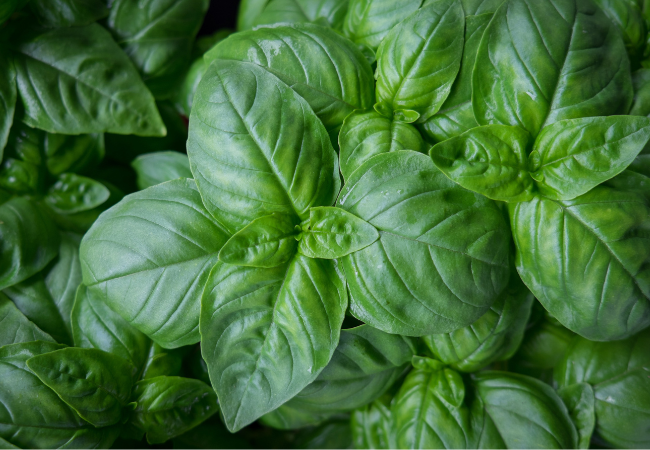
Few herbs capture the essence of summer quite like basil. With its unmistakable fragrance and bright, vibrant flavor, basil is a warm-weather culinary staple—especially in Italian cooking. The herb was so highly regarded by the ancient Romans that it came to symbolize love and fertility.
Sweet basil—the familiar, tender green variety—is the type most commonly found at the farmers market, but this aromatic herb comes in a surprising range of colors and flavors. Purple basil offers a slightly deeper, more intense character with familiar anise-like notes. Thai basil and holy basil, widely used in Southeast Asian cuisines, bring distinctive hints of licorice, spice, and clove to curries, soups, noodle dishes, and stir-fries. Lemon basil, popular in Indonesian cooking, adds a citrusy brightness that pairs especially well with fish, chicken, vegetables, and rice dishes.
Basil is naturally free of fat, cholesterol, and sodium. Although a typical serving is small, fresh basil is particularly rich in vitamin K and also provides vitamins A and C, along with smaller amounts of iron, calcium, and other nutrients.
Fresh Is Best
Dried basil has its place in the pantry, but it cannot match the fragrance or lively flavor of freshly picked leaves. Whenever possible, add fresh basil near the end of cooking so its delicate oils and flavor are not lost to prolonged heat.
Large-leaf varieties also make a wonderful addition to summer salads. Use the leaves whole, gently torn, or mixed with other greens for an aromatic burst of flavor. Basil is also delicious tucked into sandwiches, scattered over grilled vegetables, blended into dressings, or paired with ripe tomatoes, stone fruit, and fresh cheeses.
Selection Tips
Choose basil with vibrant, unblemished leaves and a strong, clean fragrance. Avoid bunches with wilted stems, blackened spots, or brown, dry edges.
Storage Tips
Basil is sensitive to cold, so treat it much like a bouquet of flowers. Trim the stems and place the bunch in a glass of water on the kitchen counter, loosely covering the leaves with a plastic bag. Change the water every day or two.
For longer storage, blend chopped basil with just enough olive oil to form a loose paste, then freeze it in ice cube trays. Once frozen, transfer the cubes to an airtight container. Drop a cube into soups, sauces, pasta, or vegetables whenever you need a burst of summer flavor.
You’ll find fresh basil at KT Farms, Borba Family Farms, Blue Heron Farm, Cabrillo Horticulture, and Spade & Plow Organics.
SEE ALSO:
- Article: 12 Delicious Ways to Use Fresh Basil
- Article: A Guide to Basil Varieties: Sweet, Spicy, Citrusy, and Beyond
RECIPES: Click here for basil recipes