
Sweet potatoes may have humble roots in South America, but their story stretches across oceans and centuries. Cultivated by ancient civilizations throughout the Americas, they eventually traveled across the Pacific to Polynesia, where they became known as kumar. Though they’re often mistaken for potatoes, sweet potatoes come from a completely different plant family and share only distant botanical ties. And the “yam” confusion? That began in the early days of African slavery in the United States, when enslaved people compared the soft-fleshed sweet potatoes they encountered to the true yams they knew from Africa.
Varieties
Sweet potatoes are generally grouped into two main types:
- Firm varieties that hold their shape and have a drier, more starchy texture.
- Soft varieties that turn silky and moist when cooked—these are the ones commonly labeled “yams” in grocery stores.
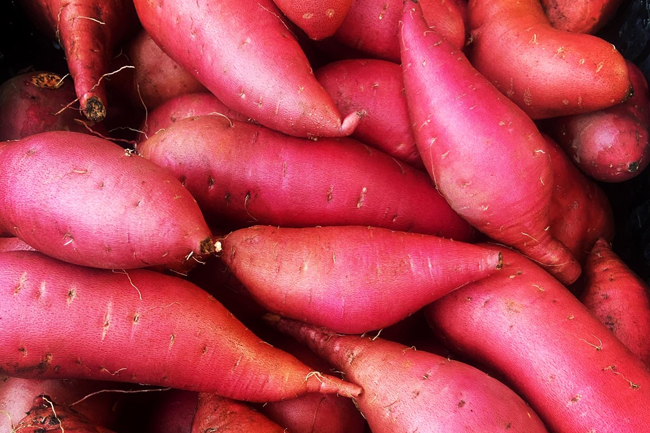
Their colors are just as diverse as their textures. Skins can be red, tan, purple, or creamy white, while the flesh ranges from pale and delicate to vivid orange or deep royal purple. It’s no wonder they’re as beautiful on the plate as they are nutritious.
Where They’re Grown
The United States is among the world’s top producers of sweet potatoes. North Carolina leads the way with its rich, sandy soils, followed by California, Mississippi, and Louisiana. At our farmers’ markets, organic offerings from farms like Sea to Sky Farm and Phil Foster Ranch (Pinnacle) show just how flavorful sustainably grown sweet potatoes can be.
Nutrition
Sweet potatoes deliver far more than comfort-food appeal. They’re loaded with vitamins A, C, B, and B6, along with minerals such as calcium and potassium. Their high fiber content supports digestion, while the antioxidants—especially in orange and purple varieties—help strengthen immunity, reduce inflammation, and promote healthy skin.
How to Select
Choose sweet potatoes that are firm with smooth, unblemished skin. Skip any that show soft spots, cracks, or mold, as these are signs they’ve passed their prime.
How to Store
Keep sweet potatoes in a cool, dark, well-ventilated spot—ideally between 55°F and 60°F. Avoid the refrigerator and plastic bags, which can alter their flavor and texture. With proper storage, they’ll stay fresh for about 10 days.
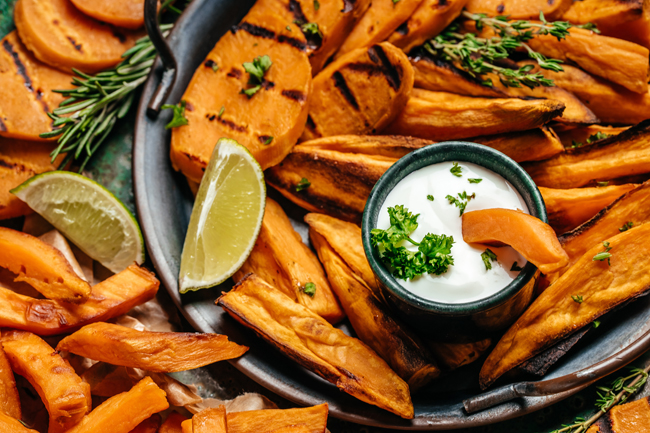
Sweet potatoes are wonderfully versatile. Roast them for caramelized edges, mash them for a cozy side, or spiralize them for a wholesome pasta alternative. Their natural sweetness also makes them perfect for baked goods — from classic pies to tender cakes — adding rich flavor without requiring much added sugar.
RECIPES: Sweet Potato Cornbread with Honey Butter, Sweet Potato Casserole with Toasted Pecan and Coconut Streusel, Indian Yam Curry, Sweet Potato Soup with Maple Croutons, Roasted Sweet Potato Fries, Sweet Potato Soup with Buttered Pecans, Sweet Potato Pecan Pie, Curried Sweet Potato Latkes, Glazed Sweet Potatoes, Caribbean Sweet Potatoes, Scalloped Sweet Potatoes, Sweet Potato Muffins, How to Steam Sweet Potatoes, Sweet Potato and Gouda Gratin, Chili Glazed Roasted Sweet Potatoes, Wild Plum’s Roasted Yam Mash
Photo submitted by Chris Laughlin, Sea to Sky Farm