
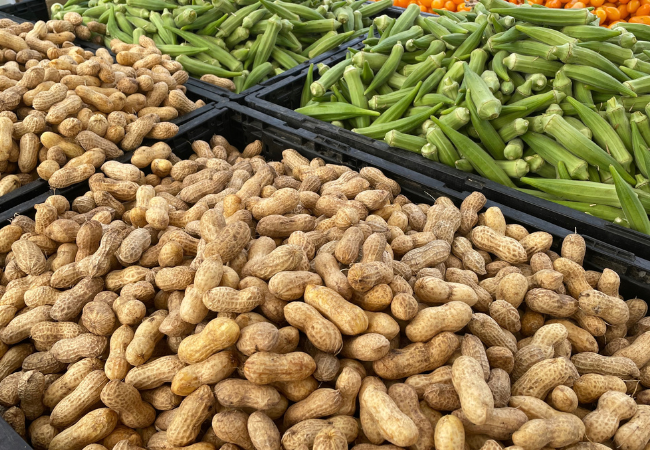
Finding peanuts at a California farmers market is a bit unexpected—which is exactly what makes the fresh peanuts from KT Farms such a treat.
California agriculture seems capable of growing almost anything, but peanuts remain a relatively small specialty crop here rather than one of the state’s major commodities. They thrive in a long, warm growing season and loose, well-drained soil, where something rather remarkable happens: after the plant flowers above ground, slender stems called pegs grow downward into the soil, and the peanut pods develop underground.
And here’s another surprise: despite their name, peanuts aren’t actually nuts. They belong to the legume family, along with beans, peas, and lentils.
Meet the Valencia Peanut
Among the most distinctive peanut types is the Valencia, known for its naturally sweet flavor and pods that typically contain three or more small kernels. Valencias are particularly well suited to roasting, boiling, and making natural peanut butter.
Freshly harvested peanuts are quite different from the familiar roasted peanuts sold in bags and jars. Before commercial peanuts reach the grocery shelf, they are typically dried—or “cured”—after harvest. Fresh or green peanuts, on the other hand, retain considerably more moisture and have a tender texture and mild, almost bean-like flavor when cooked.
That fleeting, just-harvested stage is one reason finding fresh peanuts at the farmers’ market is so much fun.
KT Farms brings fresh peanuts to the market during their relatively short season, giving shoppers an opportunity to experience a crop most of us rarely see before it has been dried and roasted.
What Should You Do With Fresh Peanuts?
First, ask whether the peanuts are fresh/green or raw and cured, because the two behave differently in the kitchen.
Fresh green peanuts are especially good boiled, which transforms them into a tender, savory snack.
Raw peanuts that have been cured and dried can be roasted, producing the familiar crisp texture and deep, nutty flavor we associate with roasted peanuts.
How to Make Boiled Fresh Peanuts
Boiled peanuts are a beloved Southern snack for good reason. Long, slow cooking softens both the kernels and their thin skins while allowing the salty brine to season the peanuts inside their shells.
INGREDIENTS:
1 pound fresh green peanuts, in the shell
Water, as needed
1/4 to 1/2 cup kosher salt, or to taste
Optional additions:
Bay leaves
Garlic cloves
Cajun or Creole seasoning
Dried chiles
Black peppercorns
METHOD:
Rinse the peanuts thoroughly under cool running water, rubbing the shells gently to remove any remaining soil.
Place the peanuts in a large pot and add enough water to cover generously. The peanuts will float, so you may want to place a heatproof plate or lid slightly smaller than the pot on top to keep them submerged.
Add the salt and any seasonings you are using.
Bring to a boil, then reduce the heat to maintain a steady simmer.
Cook for 3 to 5 hours, or until the peanuts are as tender as you like. Very fresh peanuts may cook more quickly, while more mature peanuts can take longer. Add additional hot water during cooking if necessary to keep the peanuts covered.
Taste a peanut toward the end of cooking and adjust the salt if necessary.
When the peanuts are tender, turn off the heat and allow them to rest in the cooking liquid for 30 minutes to an hour for a deeper, saltier flavor.
Drain and serve warm or at room temperature.
How to Roast Raw Peanuts
For the classic crunchy peanut experience, start with raw peanuts that have been dried or cured, rather than freshly dug green peanuts.
INGREDIENTS:
Raw peanuts, in the shell
METHOD:
Preheat the oven to 350°F.
Arrange the peanuts in a single layer on a rimmed baking sheet.
Roast for approximately 20 to 30 minutes, stirring or shaking the pan once or twice during cooking.
Begin checking early. The peanuts should smell deeply nutty and toasted, and the kernels should be lightly golden when you open a shell.
Remove from the oven and allow the peanuts to cool completely. They will become crisper as they cool.
Beyond Snacking
Once you have cooked them, peanuts can go far beyond the snack bowl. Try chopped roasted peanuts over Asian-style noodle dishes, grain bowls, salads, or roasted vegetables. Grind them into fresh peanut butter, add them to cookies and quick breads, or use them in sauces and dressings.
Boiled peanuts are equally versatile. Eat them straight from the shell, add the shelled peanuts to salads or grain dishes, or purée them into a surprisingly creamy hummus-style spread.
But when fresh peanuts first appear at the farmers’ market, there’s something to be said for keeping things simple. Bring home a bag from KT Farms, simmer them with salt until tender, and enjoy one of California agriculture’s more unexpected seasonal pleasures.
SEE ALSO: How to Make Homemade Peanut Butter