
As summer begins to wind down, gardeners on California’s Central Coast get something of a second chance. Fall is often our “second spring.” The soil is still warm, while cooler days make it an ideal time to plant vegetables, herbs, and flowers.
If you’re preparing a fall garden, it’s also a good time to look at what you already have on hand.
Coffee grounds, eggshells, vegetable trimmings, rinse water, and even an old colander can have a second life outdoors. Used thoughtfully, these everyday materials can enrich compost, conserve water, and help build healthier soil.
At the farmers market, we often talk about knowing where our food comes from. There’s another side to that story: paying attention to where our kitchen scraps go when the meal is over.
Feed the Soil First
Healthy plants begin with healthy soil. And healthy soil is alive.
Bacteria, fungi, insects, earthworms, and countless other organisms are constantly breaking down organic material and cycling nutrients.
Instead of trying to “feed” individual plants with homemade remedies, concentrate on building good soil. It is one of the most dependable things a gardener can do.
Coffee Grounds: Best Added to Compost
Used coffee grounds contain nitrogen and organic matter. That makes them a useful addition to the compost pile.
Despite their reputation, brewed coffee grounds are not especially acidic. Still, avoid piling them thickly around plants. The fine particles can compact and interfere with air and water movement.
Mix grounds with leaves, straw, shredded paper, and other compost materials instead.
Eggshells: A Slow Source of Calcium
Eggshells are rich in calcium carbonate, but they decompose slowly.
Rinse and dry them first. Then crush or grind the shells before adding them to compost or garden soil. Smaller pieces will break down more quickly.
Keep in mind that eggshells are a long-term soil amendment, not an instant calcium treatment. Blossom-end rot in tomatoes and peppers, for example, is often linked to uneven moisture and calcium uptake.
Banana Peels: Compost Them
Banana peels contain potassium and other nutrients. However, burying a whole peel beside a plant does not provide an instant dose of fertilizer.
Those nutrients become available only as the peel decomposes.
A better solution is simple: put banana peels in the compost pile. Microorganisms will break them down along with your other kitchen scraps.
Eventually, those nutrients return to the garden as part of a much richer soil amendment.
What About Molasses?
Unsulfured molasses sometimes appears in recipes for actively aerated compost tea. Its sugars provide food for microorganisms.
But more is not better.
There is little reason to routinely pour sugary mixtures around garden plants. Doing so may encourage unwanted microbial growth or attract insects.
Gardeners who already make compost tea may use a small amount of molasses as part of a specific recipe. For everyone else, compost and organic matter offer a simpler way to support soil life.
Give Kitchen Water a Second Life
Some of the easiest garden helpers require no recipe at all.
Rice-Rinsing Water
That cloudy water left after rinsing plain rice does not necessarily need to go down the drain. It contains small amounts of starch and nutrients.
Use it fresh to water outdoor plants or pour it into the compost pile.
Think of rice water mainly as a simple way to conserve water—not as fertilizer. It should also be free of salt, oil, and seasonings.
Vegetable Cooking Water
Water left from steaming or boiling vegetables can also be reused after it has cooled completely.
Again, this is not a miracle plant tonic. It is simply a sensible way to reuse perfectly good water.
Only use plain, unsalted cooking water. Skip anything containing butter, oil, salt, or other seasonings.
Skip the “Vegetable Scrap Tea”
You may have seen suggestions to soak vegetable peelings in water for several days, then pour the liquid around plants.
There is little advantage to doing this.
Scraps sitting in water can begin to ferment. Meanwhile, much of their nutritional value remains in the solid material.
Send those carrot peels, celery ends, onion skins, and other trimmings to the compost pile instead. Nature already has an excellent system for turning them into plant food.
Let the Worms Do the Work
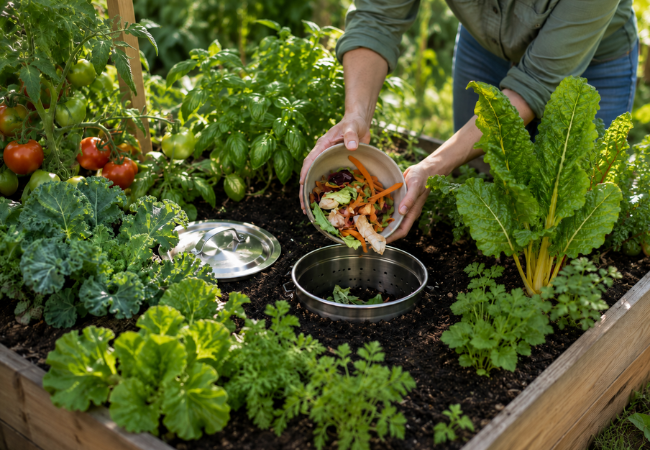
No room for a traditional compost pile? Try a small in-ground worm bin instead.
A perforated stainless-steel container works beautifully. An old colander or pasta-cooker insert is ideal.
Partially bury the container in a raised bed or garden plot. Keep the upper rim slightly above the soil and cover it with a secure lid.
Add modest amounts of fruit and vegetable scraps, coffee grounds, and other compostable trimmings. Earthworms and soil organisms can move through the openings. As they work, the scraps gradually break down and become part of the surrounding soil.
Think of it as a miniature compost station built right into your garden.
Cover fresh scraps with a little soil, dry leaves, or shredded paper. Avoid packing the container too tightly.
Leave meat, dairy products, fats, oils, and heavily seasoned foods out of the bin. These can cause odors and attract unwanted visitors.
Best of all, there is no need to buy a new container.
Check your local Goodwill, thrift shop, garage sale, or secondhand kitchen store. A stainless-steel colander or pasta insert that has seen better days in the kitchen may be perfect for the garden.
Yesterday’s kitchen tool becomes tomorrow’s compost bin.
Natural Pest Control: Start Gently
A healthy garden naturally hosts insects—and many of them are beneficial.
Before reaching for a spray, identify the visitor. Then decide whether it is actually causing enough damage to require treatment.
Sometimes the simplest remedy works best. A strong stream of water, for example, can knock aphids from tender shoots.
Use Insecticidal Soap Carefully
Persistent aphids, mites, whiteflies, and other soft-bodied pests may require more help.
A commercially formulated insecticidal soap can be a useful low-impact option when used according to label directions.
Homemade sprays made with household dish detergent are less predictable. Many detergents contain degreasers, fragrances, or other ingredients that may damage foliage.
Treat only affected plants. Avoid spraying beneficial insects, and do not apply insecticidal soap during the hottest part of the day.
Vinegar Is Not a Garden-Bed Weed Killer
Household vinegar can damage young weeds by burning their foliage.
Unfortunately, it cannot tell a weed from a tomato plant.
Vinegar is non-selective and can injure any green plant it touches. If you use it at all, reserve it for carefully targeted weeds in cracks, gravel areas, or places far from desirable plants.
Inside garden beds, hand pulling, hoeing, and mulch are usually better choices. They are also kinder to the life in your soil.
Compost: The Great Equalizer
When in doubt, compost it.
Fruit and vegetable scraps, coffee grounds, tea leaves, crushed eggshells, and many other kitchen leftovers can become dark, crumbly compost.
That finished compost improves soil structure, helps retain moisture, and supports biological activity.
It may sound less exciting than a homemade “garden tonic,” but it is considerably more useful.
The real magic does not come from any single kitchen ingredient. It happens when many organic materials decompose together and become part of healthy, living soil.
A Kitchen That Feeds More Than the Table
At the farmers market, we see the beginning of the food story.
Farmers grow it. We bring it home. Then we cook it and gather around the table.
The story does not have to end at the kitchen sink or trash bin.
Keep a bowl for compost scraps on the counter. Save usable rinse water. Tuck an old thrift-store colander into a garden bed and let the worms go to work.
Each small habit returns a little of what came from the soil back to it.
This is not about making miracle fertilizer from banana peels or coffee grounds. It is something simpler—and perhaps more meaningful.
Waste less. Pay attention. Participate in the cycle that puts food on our tables in the first place.
The next time you cook, consider setting a little aside for the soil.
Eventually, in one form or another, it may find its way back to your table.