
With so many pear varieties appearing at farmers markets in late summer and fall, it can be difficult to know which one to choose. Some pears are meltingly tender and best eaten fresh, while others have firmer flesh that holds beautifully during baking, poaching, or roasting.
The best pear depends on both your personal taste and how you plan to use it. This quick guide will help you choose the right variety for snacking, salads, desserts, and cooking.
Best Pears for Eating Fresh
Bartlett Pears: One of the most familiar pear varieties, Bartletts become especially juicy, fragrant, and tender as they ripen. Their skin changes from green to yellow as they mature, making them relatively easy to judge for ripeness. They are excellent for eating fresh, adding to salads, or making sauces and preserves.
Comice Pears: Exceptionally sweet and buttery, Comice pears are among the best choices for eating out of hand. Their soft, succulent texture also makes them especially good with cheese.
Asian Pears: Crisp, juicy, and refreshing, Asian pears have a texture more like an apple than a traditional European pear. Unlike most pears, they are best enjoyed while still firm.
Taylor’s Gold Pears: Sweet, aromatic, and juicy, Taylor’s Gold pears have a rich flavor and tender texture that make them particularly enjoyable for fresh eating and cheese boards.
Best Pears for Cooking and Baking
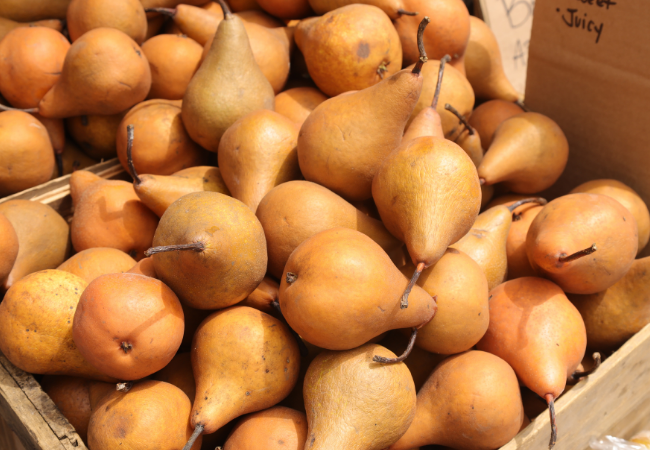
Bosc Pears: One of the best pears for cooking, Bosc pears have dense, firm flesh that holds its shape beautifully when poached, baked, roasted, or grilled. Their slightly spicy flavor also pairs well with warm autumn spices.
Anjou Pears — Green or Red: Anjou pears are wonderfully versatile. Their firm, juicy flesh works well in pies, tarts, salads, roasting, and other cooked dishes.
Asian Pears: Their crisp texture makes Asian pears useful in savory preparations, salads, slaws, stir-fries, and marinades. They remain relatively firm when cooked.
Warren Pears: Warren pears are prized for their smooth, buttery texture and rich sweetness. They are delicious fresh but can also be used in desserts, particularly when they are ripe yet still firm enough to hold their shape.
How to Tell When a Pear Is Ripe
Unlike many fruits, most European pears ripen best after they have been picked. That means a pear that feels firm at the farmers market may simply need a few days on the kitchen counter.
To test for ripeness, gently press the pear near the stem with your thumb. If it gives slightly, the pear is usually ready to eat. This is sometimes called the “check the neck” method.
A ripe pear may also have a noticeable sweet fragrance, although aroma varies by variety.
If your pears are still firm, leave them at room temperature until they ripen. Once ripe, refrigerate them to slow further ripening and enjoy them within a few days.
Choosing Pears for a Recipe
For baking, poaching, roasting, or grilling, choose firmer varieties such as Bosc or Anjou that will hold their shape during cooking.
For salads and cheese boards, look for pears that are ripe but still slightly firm so they slice neatly.
For fresh eating, choose varieties such as Bartlett, Comice, or Taylor’s Gold and allow them to ripen until their flesh becomes juicy and tender.
And don’t be afraid to experiment. Pear varieties can differ dramatically in sweetness, texture, fragrance, and flavor — and discovering a new favorite is one of the pleasures of pear season.
Here’s a link to our favorite recipes with pears!