
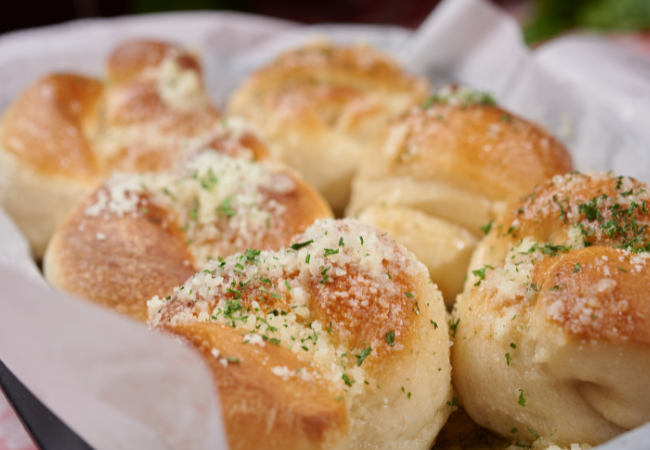
There’s something irresistible about a basket of warm, homemade garlic knots—their golden tops glistening with melted butter, the fragrance of fresh garlic and herbs drifting through the kitchen, and that first wonderful bite of soft, chewy bread. They’re the kind of little indulgence that makes everyone reach for just one more.
These homemade garlic knots begin with a simple yeast dough enriched with olive oil and a hint of garlic. After a short rise, the dough is shaped into charming little knots and baked until lightly golden. The finishing touch is a generous brushing of warm garlic butter, fresh basil, and a sprinkling of Parmesan cheese.
Although garlic knots are a familiar favorite at Italian-American restaurants and pizzerias, they’re surprisingly easy to make at home. No stand mixer is required, and the entire process takes just over an hour.
Serve them alongside pasta, soup, or a Sunday supper, or add them to a holiday breadbasket for something a little different. They’re especially delicious warm from the oven, when the garlic butter soaks into every delicious fold.
INGREDIENTS:
Garlic Knots
2–2 1/3 cups (250–295 g) bread flour, divided
1 package (2 1/4 teaspoons) instant yeast
1 1/2 teaspoons sugar
3/4 teaspoon salt
1/2 teaspoon garlic powder
2 tablespoons olive oil
3/4 cup warm water (105–115°F)
Additional olive oil, for greasing and brushing
Garlic-Herb Butter
4 tablespoons salted butter
3 cloves garlic, finely minced (approximately 1 1/2 tablespoons)
1 tablespoon finely chopped fresh basil
Freshly grated Parmesan cheese, for finishing (optional)
METHOD:
Prepare the Dough
Line a baking sheet with parchment paper and set aside.
In a large mixing bowl, whisk together 1 cup of the bread flour, instant yeast, sugar, salt, and garlic powder.
Add the olive oil and warm water, stirring with a wooden spoon or sturdy spatula until thoroughly combined.
Gradually incorporate another cup of flour, adding a little more as needed, until the mixture forms a soft, cohesive dough. The dough should be elastic and slightly tacky but manageable enough to handle without sticking excessively to your fingers.
Avoid adding too much flour. A soft dough will produce more tender garlic knots.
First Rise
Lightly oil a clean mixing bowl, including the sides. Transfer the dough to the bowl, turning once to coat the surface lightly with oil.
Cover tightly and place in a warm, draft-free location for approximately 30 minutes, or until the dough has doubled in size.
Shape the Garlic Knots
Preheat the oven to 400°F.
Gently deflate the risen dough and transfer it to a lightly floured work surface.
Shape the dough into a log approximately 15 inches long. Divide it into 9 equal portions.
Working with one piece at a time, roll the dough into a rope approximately 8 inches long. Tie each rope into a loose, simple knot, just as you would tie a knot in a piece of string. Tuck the ends slightly underneath if desired.
Arrange the shaped knots on the prepared baking sheet, leaving space between them for expansion.
For a beautifully golden finish, lightly brush the tops with olive oil.
Allow the knots to rest for approximately 5 minutes before baking.
Bake the Knots
Bake at 400°F for approximately 13 minutes, or until the knots are puffed and beginning to turn light golden brown. Avoid overbaking, which can make them dry.
While the knots bake, prepare the garlic-herb butter.
Prepare the Garlic-Herb Butter
In a small saucepan over medium-low heat, gently melt the butter with the minced garlic.
Warm just until the butter is melted and the garlic becomes fragrant. Avoid browning the garlic, which can develop a bitter flavor.
Remove from the heat and stir in the freshly chopped basil.
As soon as the garlic knots come out of the oven, brush them generously with the warm garlic-herb butter, allowing it to settle into the folds of the bread.
Finish with a sprinkling of freshly grated Parmesan cheese, if desired.
Serve immediately while warm and fragrant.
Baker’s Notes:
Bread flour or all-purpose flour? Bread flour gives the garlic knots a pleasantly chewy texture and slightly firmer crust, similar to traditional pizzeria garlic knots. All-purpose flour can be substituted in equal quantities for a softer, more pillowy result.
Instant yeast makes this recipe quick: Instant yeast can be mixed directly with the dry ingredients without dissolving it in water first. Active dry yeast may also be used, but it should be activated in the warm water with a little of the sugar before mixing, and the dough may take longer to rise.
Don’t add too much flour: The dough should remain soft and slightly tacky. Adding excessive flour can produce dry, heavy knots rather than light, tender bread.
Fresh herbs make a difference: Fresh basil brings a lovely aromatic note to the garlic butter. For a more traditional garlic-bread flavor, substitute fresh Italian parsley or use a combination of both herbs.
Make-ahead tip: The dough can be prepared ahead and refrigerated overnight in a lightly oiled, covered container. The following day, allow it to become pliable, shape the knots, and let them rest until slightly puffy before baking. Refrigerated dough may need more time than the original quick-rise method.
Reheating: Leftover garlic knots can be wrapped loosely in foil and warmed in a 300°F oven until heated through. Brush with a little fresh garlic butter before serving.
Serving Suggestions
For an Italian-inspired dinner: Serve alongside lasagna, baked ziti, spaghetti and meatballs, or a hearty vegetable pasta.
With soups and salads: Pair with minestrone, tomato soup, Italian wedding soup, or a crisp green salad.
As an appetizer: Arrange warm garlic knots in a basket with a small bowl of homemade marinara sauce for dipping.
For the holiday table: Add garlic knots to a Thanksgiving breadbasket alongside traditional dinner rolls. Their savory garlic-herb flavor is particularly good with roasted vegetables, hearty vegetable dishes, and a rich holiday meal.
YIELD: 9 garlic knots
SOURCE: Recipe adapted from Sam Merritt of Sugar Spun Run.