
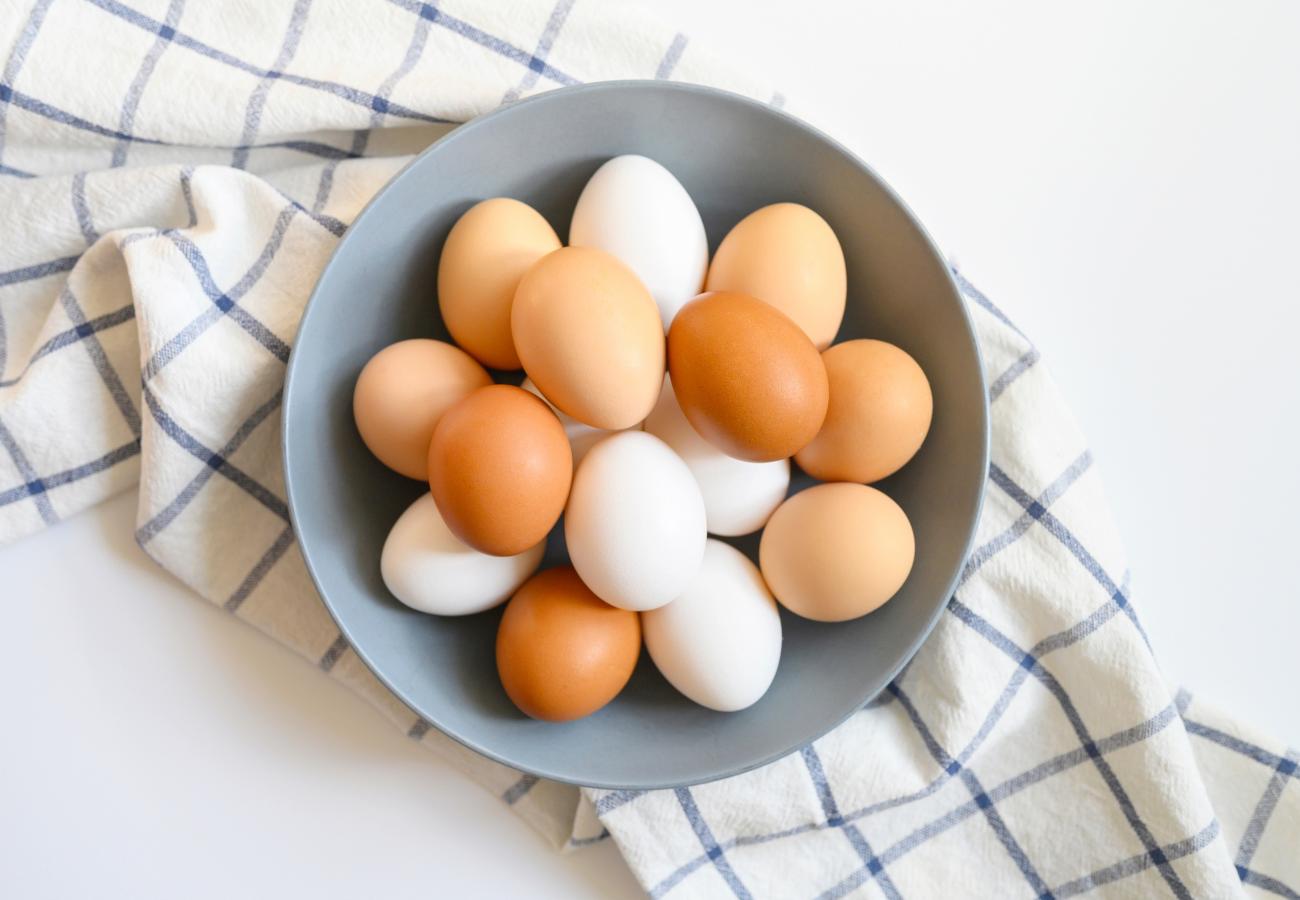
For decades, eggs—especially their golden yolks—were treated as a shortcut to high cholesterol and heart disease. Newer research tells a more complicated and reassuring story: for most people, the egg itself was never the principal problem.
There may be no food that has spent more time in nutritional purgatory than the egg.
For generations, eggs were considered nearly perfect food: inexpensive, satisfying, easy to prepare, and rich in nutrients. Then cholesterol became a household word. Because egg yolks contain a substantial amount of dietary cholesterol, the conclusion seemed obvious: eating cholesterol must raise the cholesterol circulating in the blood.
Eggs—particularly their yolks—were recast as something to limit, avoid, or replace with pale, virtuous egg whites. Breakfast menus began advertising egg-white omelets. Cartons of liquid whites appeared in supermarket refrigerators. People who would happily eat pastries, processed snack foods, or heavily buttered toast worried that one softly cooked egg might be the thing endangering their hearts.
The reasoning sounded sensible.
It was also incomplete.
Today, researchers understand that dietary cholesterol—the cholesterol present in food—is not the same thing as blood cholesterol. For most healthy people, the amount of saturated fat in the overall diet has a greater influence on LDL cholesterol than the cholesterol naturally present in eggs.
That does not mean cholesterol no longer matters, or that everyone should eat unlimited eggs. It means the familiar warning that eggs “cause high cholesterol” is far too simple—and, for many people, unnecessarily frightening.
Food Cholesterol Is Not Blood Cholesterol
Cholesterol itself is not a poison. It is a waxy substance the body needs to make cell membranes, hormones, vitamin D, and bile acids used in digestion.
Most of the cholesterol circulating in our bodies is made internally, primarily by the liver. Only a portion comes directly from food.
The body also has a regulatory system. When dietary cholesterol increases, many people compensate by producing less cholesterol themselves. That response varies from person to person, but it helps explain why eating a cholesterol-containing food does not automatically produce an equal rise in blood cholesterol.
The more important dietary concern for LDL—the cholesterol commonly described as “bad” cholesterol—is often saturated fat. Saturated fat can encourage the liver to produce more cholesterol and reduce the body’s ability to remove LDL from the bloodstream.
Eggs contain dietary cholesterol, concentrated in the yolk, but a large chicken egg contains relatively little saturated fat. The foods frequently served beside eggs may be another matter entirely.
Bacon, sausage, butter, cheese, cream sauces, biscuits, and heavily buttered toast can turn an egg breakfast into a meal rich in saturated fat. Yet for years, the egg received most of the blame.
Perhaps the egg was never the chief offender. It was simply the most visible thing on the breakfast plate.
What the New Egg Study Found
A 2025 randomized crossover study published in The American Journal of Clinical Nutrition attempted to separate the effects of dietary cholesterol from those of saturated fat.
Researchers assigned healthy adults to three different five-week eating plans. Each participant eventually followed all three:
- a high-cholesterol, high-saturated-fat control diet that included no more than one egg per week;
- a high-cholesterol but low-saturated-fat diet that included two eggs per day;
- and a low-cholesterol but high-saturated-fat diet containing no eggs.
The design was important because it allowed researchers to study dietary cholesterol and saturated fat independently rather than treating them as though they always occur together.
The results challenged the old egg narrative. Saturated fat intake was associated with higher LDL cholesterol; dietary cholesterol was not. Compared with the high-saturated-fat control diet, the two-egg-per-day, low-saturated-fat diet lowered participants’ average LDL cholesterol by 5.7 milligrams per deciliter.
That does not prove that eating two eggs every day will lower cholesterol in everyone. The trial was small and relatively short, and the participants were healthy adults rather than people with high cholesterol or cardiovascular disease. The study also received funding from the Egg Nutrition Center, a division of the American Egg Board—a disclosure worth noting whenever industry-supported nutrition research is discussed.
The study nevertheless makes an important point: an egg-rich diet low in saturated fat produced a very different result from a diet high in saturated fat, even when the latter contained little dietary cholesterol.
In other words, looking at the cholesterol number on a single food cannot tell us everything we need to know about the effect of the complete diet.
Why the Advice Changed
Older nutrition recommendations often treated dietary cholesterol as a direct route to high blood cholesterol. Americans were commonly advised to consume no more than 300 milligrams per day. Because one large egg contains roughly 186 to 200 milligrams, a couple of eggs could appear to use up nearly the entire daily allowance.
Federal dietary guidance stopped using that fixed 300-milligram ceiling in 2015, after evidence failed to support one universal numerical limit for everyone. The change did not mean dietary cholesterol had become irrelevant. It reflected a growing recognition that its effect varies among individuals and that overall eating patterns matter more than a single nutrient viewed in isolation.
The American Heart Association has likewise moved away from blanket avoidance. Its guidance says healthy people can generally include up to one whole egg a day as part of a heart-healthy dietary pattern; older adults with healthy cholesterol levels may be able to include two.
That is a much more measured message than either of the extremes commonly found online:
Eggs are not dangerous for everyone. They are also not a magical food that everyone should eat without limit.
The Yolk Is Where Much of the Nutrition Lives
When people discard the yolk to avoid cholesterol, they also discard much of what makes an egg nutritionally valuable.
Eggs provide high-quality protein containing all nine essential amino acids. They also supply vitamin B12, selenium, riboflavin, and iodine. The yolk contains most of the egg’s vitamin A, vitamin D, vitamin E, folate, choline, carotenoids, and fatty acids.
Choline is especially noteworthy. The body uses it in cell membranes, liver function, metabolism, and the production of acetylcholine, a neurotransmitter involved in memory and muscle control. Eggs are among the most concentrated commonly eaten sources of choline.
The yolk’s pigments—particularly lutein and zeaxanthin—are carotenoids associated with eye health. They are also responsible for much of the yolk’s golden color, although yolk color itself depends heavily on what the hen eats and is not a perfect measure of overall nutritional quality.
Egg whites are useful and protein-rich, but they are not nutritionally identical to whole eggs. For most healthy people, there is little reason to believe the white is the only respectable part of the egg.
The Company an Egg Keeps
A more useful question than “Are eggs healthy?” may be: How are the eggs being eaten?
Two eggs scrambled gently in olive oil and served with sautéed greens, tomatoes, mushrooms, herbs, beans, or whole-grain toast create a very different meal from eggs fried in butter and accompanied by bacon, sausage, cheese, and refined-flour biscuits.
The difference is not simply calories. It is the entire dietary pattern: saturated fat, fiber, sodium, vegetables, whole grains, and the types of fats used in cooking.
Fiber-rich foods are particularly valuable because soluble fiber can help reduce the absorption and recirculation of cholesterol. Vegetables, beans, oats, barley, fruit, nuts, and seeds all contribute something the egg does not provide on its own.
The egg does not need to be banished. It needs good company.
A farmers market makes that especially easy. Fold seasonal greens and herbs into an omelet. Top a bowl of beans and vegetables with a poached egg. Add a softly cooked egg to a salad. Serve scrambled eggs with roasted peppers, tomatoes, or mushrooms instead of automatically reaching for processed breakfast meat.
The goal is not an austere “cholesterol diet.” It is a varied, satisfying way of eating in which eggs are one nourishing ingredient among many.
What About Duck Eggs?
At the farmers market, shoppers may find both chicken and duck eggs. Duck eggs offer the same basic culinary possibilities but have their own character.
They are usually larger than chicken eggs, with a proportionately generous yolk and a thicker shell. Their flavor is often described as richer, although the precise taste varies with the bird’s diet. Bakers prize them because the larger yolks add richness and their protein-rich whites can provide structure and lift.
Because duck eggs are larger, they generally contain more calories, fat, protein, and dietary cholesterol per egg than a typical chicken egg. That does not make them inferior; it means a one-egg-to-one-egg comparison can be misleading. Size and serving quantity matter.
In cooking, one large duck egg may replace more than one small chicken egg, depending on the recipe. For forgiving dishes such as scrambles, frittatas, custards, and fresh pasta, the substitution is easy. Precise baking recipes are best adjusted by weight.
Duck eggs can also be especially rewarding where the yolk is the star: fresh mayonnaise, lemon curd, custard, handmade pasta, or a softly cooked egg served over vegetables.
Those who have been told to restrict dietary cholesterol for a medical reason should consider the larger yolk and serving size, but most shoppers can simply regard duck eggs as a richer, more substantial egg rather than as a separate category of “good” or “bad” food.
Eggs Are Not the Same for Everyone
Nutrition headlines often fail because they try to turn population-level research into one rule for every person.
Some people experience a larger rise in blood cholesterol in response to dietary cholesterol than others. People with familial hypercholesterolemia—a genetic condition causing very high LDL—require individualized medical management. Those with cardiovascular disease, diabetes, significantly elevated LDL, or other metabolic risk factors may also receive different recommendations from their physicians or registered dietitians.
Even the 2025 study’s authors cautioned that changes in LDL particle size complicated the results. Although total LDL declined on the low-saturated-fat egg diet, researchers observed shifts among different types of LDL particles, and the long-term significance requires further study.
This is why a careful article should not promise that eggs “lower cholesterol.” The evidence supports a more responsible conclusion:
For most healthy people, moderate egg consumption can fit comfortably within a balanced diet, and saturated fat is generally a more important dietary influence on LDL cholesterol than the cholesterol in eggs.
People managing an existing medical condition should follow guidance tailored to their own laboratory results, family history, medications, and overall risk—not a headline written for the general public.
A Better Way to Think About Eggs
The rehabilitation of the egg is part of a broader shift in nutrition science: away from judging foods by one isolated number and toward evaluating the complete eating pattern.
An egg contains cholesterol. It also contains protein, choline, vitamins, minerals, carotenoids, and satisfying fat. Those facts are not contradictory. Foods are complicated because bodies are complicated.
The better questions are not: “Does this food contain cholesterol?” or “Is this food good or bad?”
They are:
- How much am I eating?
- What am I eating with it?
- What is the rest of my diet like?
- And do I have a medical reason to follow different advice?
For most people, a fresh farmers market egg—chicken or duck—does not need to be approached with fear. Cook it well, give it plenty of seasonal company, and enjoy the yolk.
Its reputation has suffered long enough.
Know Your Food: Chicken Eggs and Duck Eggs
Chicken eggs: Mild, versatile, and suited to nearly every cooking method. Standard recipes are generally written for large chicken eggs.Duck eggs: Larger, richer, and especially prized for baking, custards, pasta, and yolk-forward preparations. Because size varies, use weight rather than a strict one-for-one substitution in precise recipes.
Both: Provide complete protein and valuable nutrients concentrated in the yolk. Keep refrigerated, cook with clean utensils and surfaces, and handle as you would any raw animal food.
NEXT: Ask the Farmer: Does a Pastured Egg Offer More Nutrition?