
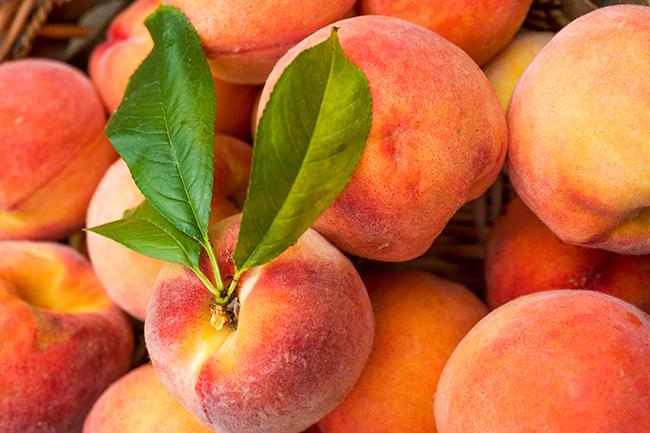
Few fruits capture the essence of summer quite like a perfectly ripe peach. Fragrant, sun-warmed, and heavy with juice, California peaches have rightfully earned a reputation for exceptional flavor—and now is the time to enjoy them.
Yellow or White: Which Peach Is for You?
For those who crave the classic peach experience, yellow peaches are the perfect choice. Their golden flesh is intensely juicy and sweet, balanced by a pleasantly tangy edge. That touch of acidity gives yellow peaches their bright, unmistakable flavor and makes them especially good for pies, cobblers, jams, salsas, and other cooked preparations.
White peaches offer a softer, more delicate experience. Their creamy-white flesh has less acidity, allowing their natural sweetness and floral aroma to take center stage. Tender and exceptionally juicy, they are particularly lovely eaten fresh, sliced into salads, or served simply with yogurt or cream.
Clingstone or Freestone?
A peach’s flesh color—yellow or white—is separate from whether it is classified as clingstone or freestone.
With clingstone peaches, the flesh clings tightly to the pit. These firm, flavorful peaches are commonly used for canning and processing, although early-season clingstones are also delicious eaten fresh.
As their name suggests, the pits of freestone peaches separate easily from the flesh. This makes them especially convenient for slicing, baking, grilling, preserving, and eating out of hand.
California’s Peach Country
Peaches flourish in California’s warm valleys, where abundant sunshine, fertile soils, and a long growing season create ideal conditions for developing their characteristic sweetness and aroma.
California remains by far the nation’s largest peach-producing state, growing roughly three-quarters of the country’s peaches in a typical year. The state leads in the production of both freestone peaches for the fresh market and clingstone peaches grown primarily for processing.
California’s extended harvest season brings a succession of varieties to market. Early peaches begin appearing in late spring, followed by an ever-changing parade of yellow, white, clingstone, freestone, and specialty varieties throughout the summer. California freestone peaches may be harvested from spring into early fall, while the main clingstone harvest generally runs from midsummer through September.
August traditionally marks the heart of the harvest and is celebrated as National Peach Month—a fitting tribute to one of summer’s most anticipated fruits.
How to Select Peaches
Choose peaches that feel heavy for their size and have a rich, fragrant aroma. The background color near the stem should be creamy yellow or golden rather than green.
Because peaches bruise easily, resist squeezing their sides. Instead, press very gently near the stem. If the flesh yields slightly, the peach is ripe and ready to eat.
Avoid fruit with large bruises, wrinkled skin, split areas, or soft, leaking spots. When shopping at the farmers market, ask the grower which varieties are ready to eat immediately and which will benefit from another day or two on the counter.
How to Ripen and Store Peaches
Peaches continue to ripen after harvest. Place firm peaches stem-side down in a single layer at room temperature, away from direct sunlight. For slightly faster ripening, place them loosely in a paper bag.
Check them daily. Once the peaches become fragrant and yield gently near the stem, enjoy them promptly or transfer them to the refrigerator. Chilling slows further ripening and can extend their life for several days, but peaches are most flavorful when allowed to return to room temperature before serving.
Do not wash peaches until you are ready to use them, as added moisture encourages spoilage.
Find Peaches at the Farmers Market
Some of the season’s finest peaches can be found at Kashiwase Farms, Stackhouse Orchards, Minazzoli Farms, and Schletewitz Family Farms. Each farm brings its own succession of varieties to market, so visit often, ask what is at its peak, and enjoy the changing flavors of California’s peach season while it lasts.
RECIPES: Click here for delicious peach recipes!