
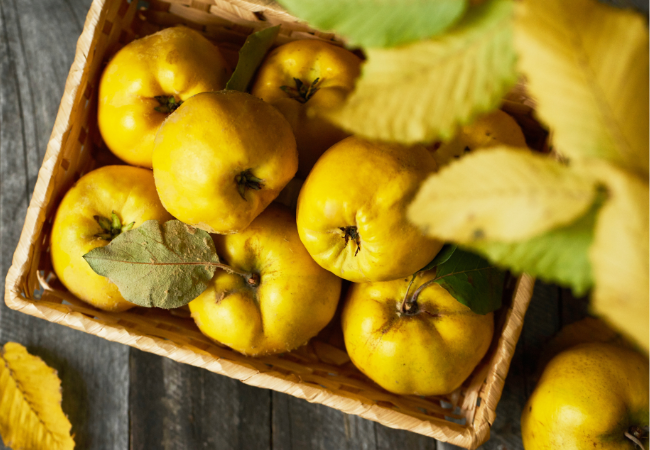
Quince may be one of the most intriguing fruits at the farmers market.
Golden yellow, wonderfully fragrant, and shaped a little like a cross between an apple and a pear, quince has been cultivated for thousands of years. It appears in ancient mythology, wedding traditions, and kitchens throughout Europe, the Mediterranean, and the Middle East. Yet many modern cooks have never tasted one.
Perhaps that’s because quince keeps its charms well hidden.
Bite into one raw and you’re likely to wonder what all the fuss is about. The flesh is firm, dry, tart, and intensely astringent. But apply a little heat and something almost magical happens: quince softens, sweetens, and becomes deeply aromatic, often changing from pale gold to a beautiful rosy pink or ruby red as it cooks.
For adventurous seasonal cooks, quince is a fruit worth rediscovering.
A Fruit with an Ancient Past
Quince has been cultivated since antiquity and has long been associated with love and romance.
Some historians have suggested that the famous “golden apples” mentioned in ancient Greek stories may actually have been quinces. The fruit was closely associated with Aphrodite, the goddess of love, and quince also appeared in ancient wedding traditions as a symbol of love, fertility, and a prosperous marriage.
There has even been speculation that the fruit described as the “forbidden fruit” in the Garden of Eden might have been quince rather than the apple that later became familiar in Western art and storytelling.
Whether or not those legends are literally true, quince has certainly been inspiring cooks, poets, and storytellers for a very long time.
The Remarkable Transformation of Quince
A ripe quince has one of the most distinctive fragrances of any fall fruit — intensely floral, slightly tropical, and reminiscent of apples, pears, citrus, and flowers all at once.
Its raw flesh, however, is dense and sharply tart.
Cooking changes everything.
Slowly poached, baked, or simmered, quince becomes tender and develops a complex sweet-tart flavor along with its characteristic rosy color. Its fragrance becomes even more pronounced, filling the kitchen as it cooks.
That transformation is one reason quince has remained beloved in traditional cuisines from Spain and Portugal to France, Greece, Turkey, Iran, and beyond.
Naturally Made for Preserves
Quince is naturally rich in pectin, which makes it exceptionally well suited for jams, jellies, marmalades, and fruit pastes.
In fact, the word marmalade has historical connections to the Portuguese word marmelo, meaning quince.
One of the best-known preparations is Spanish membrillo, a firm quince paste traditionally served with Manchego and other cheeses. The combination of salty cheese and intensely fruity quince is simple and spectacular — and an excellent addition to a fall cheese board.
Quince can also be made into:
- Jam and jelly
- Chutney and preserves
- Fruit compotes
- Tarts and galettes
- Cakes and pastries
- Poached fruit
- Savory sauces for roasted meats
It is particularly delicious combined with apples or pears, adding fragrance and complexity to familiar fall desserts.
Quince Isn’t Just for Dessert
Although we often think of quince as a preserve or dessert fruit, it has a long tradition in savory cooking as well.
Its tartness pairs especially well with rich meats such as lamb, duck, pork, and turkey. In several Mediterranean and Middle Eastern cuisines, quince is simmered slowly with meat, spices, and sometimes dried fruit to create deeply aromatic sweet-and-savory dishes.
A spoonful of quince chutney alongside roast pork or poultry can be a wonderful introduction if you’ve never cooked with it before.
The Easiest Way to Try Quince
Not ready to make preserves? Start by poaching it.
Peel and core the quince, then cut it into quarters or wedges. Simmer gently in water with sugar or honey and a few warming spices such as cinnamon, star anise, vanilla, or cloves.
After about 30–40 minutes — sometimes a little longer depending on the fruit — the quince becomes tender and beautifully fragrant.
Serve the poached fruit with:
- Greek yogurt
- Vanilla ice cream
- Pancakes or waffles
- Pound cake
- Oatmeal
- Granola
- Soft cheese
And don’t discard the poaching liquid. Reduced slightly, it becomes a fragrant quince syrup that’s delicious spooned over desserts or stirred into sparkling water.
How to Choose Quince
Look for quince that is golden yellow and fragrant, without significant bruising or soft spots. Some varieties may still have a light coating of fuzz, which can simply be rubbed or washed away before cooking.
Quince is quite firm even when ripe, so don’t wait for it to soften like a pear.
Because the fruit bruises easily, handle it gently.
Stored in the refrigerator, whole quince can keep for several weeks. Its powerful fragrance can perfume nearby foods, however, so keeping it in a bag or separate produce drawer is a good idea.
Once cut, quince browns quickly. A little lemon water will help prevent discoloration while you’re preparing the rest of your recipe.
A Farmers Market Treasure
Quince season is relatively short, which makes finding it at the farmers market especially exciting.
This year, look for quince at Prevedelli Farms, as well as Borba Family Farms.
If you’ve walked past quince because you weren’t sure what to do with it, consider this your invitation to bring a few home.
It may not be a fruit you eat out of hand on the drive home from the market — but give quince a little time, heat, and sugar, and one of autumn’s most fascinating fruits reveals itself.
Looking for ideas? Explore our collection of quince recipes on Edible Paradise: Find Quince Recipes