
Few dishes inspire as much affection—or as many opinions—as mashed potatoes. Some people love them light and fluffy, with plenty of butter and just enough warm milk. Others prefer a rich, silky purée made with cream. And then there are those who wouldn’t dream of making mashed potatoes without a generous spoonful of sour cream or a splash of tangy buttermilk.
Whatever your preference, truly wonderful mashed potatoes begin with choosing the right potatoes—and understanding a few simple kitchen techniques.
The difference between potatoes that are light, fluffy, and beautifully creamy and those that turn out heavy, watery, or gluey often comes down to how they’re cooked, mashed, and finished.
Fortunately, making exceptional mashed potatoes isn’t difficult. A few chef-tested techniques can transform this familiar side dish into something truly special.
Choosing the Right Potatoes: The Secret to Fluffy AND Creamy
Yukon Gold potatoes are a favorite for classic creamy mashed potatoes. Their naturally buttery flavor, golden flesh, and moderately starchy texture produce a rich, smooth mash without requiring excessive amounts of butter or cream. They’re also relatively forgiving, making them an excellent choice for everyday cooking and holiday entertaining.
Russet potatoes, sometimes labeled Idaho baking potatoes, have a higher starch content and a drier, fluffier texture. They absorb butter and milk beautifully and are the best choice if you prefer light, airy mashed potatoes.
Our favorite chef’s trick? Combine the two. Using equal parts Yukon Gold and Russet potatoes gives you the best qualities of both: the naturally creamy texture and rich flavor of Yukon Golds, along with the light, fluffy structure of Russets. It’s a particularly good combination for holiday mashed potatoes.
Red potatoes and other waxy varieties have a firmer texture and hold their shape when cooked. Although they’re not ideal for a perfectly smooth purée, they’re excellent for rustic, skin-on mashed potatoes with a little texture and character.
Five Little Secrets for Better Mashed Potatoes
- Cut the potatoes before cooking.
Cut peeled potatoes into evenly sized pieces, approximately 1½–2 inches. Uniform pieces cook at the same rate, so you won’t have some pieces falling apart while others remain undercooked. Start them in cold water for more even cooking. - Salt the cooking water generously.
Potatoes need seasoning, and the cooking water is your first opportunity to build flavor. Salt the water so the potatoes are seasoned as they cook, rather than relying entirely on salt added at the end. - Remove excess moisture after draining.
Once the potatoes are tender, drain them thoroughly and return them briefly to the warm saucepan over very low heat. This allows lingering moisture to evaporate, preventing watery mashed potatoes and helping them absorb butter and milk. - Use a potato ricer for the fluffiest texture.
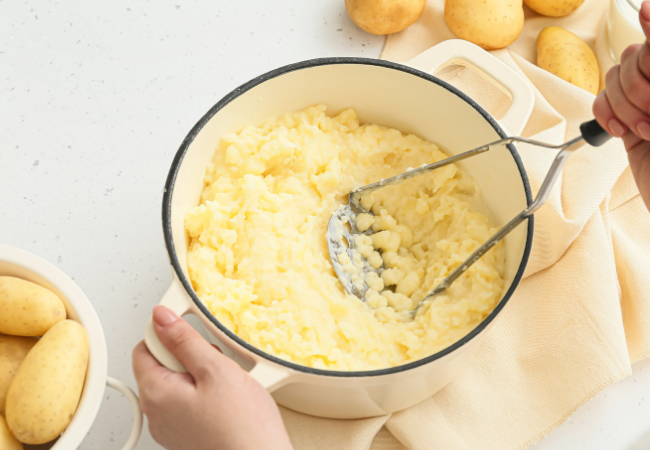
A potato ricer may be the best tool in the kitchen for producing wonderfully light mashed potatoes. Pressing the hot potatoes through its perforated plate breaks them into fine, fluffy pieces without the vigorous mixing that can make potatoes gluey. A food mill produces similarly smooth results, while a traditional potato masher is an excellent choice for a slightly more rustic texture. - Add butter first, then warm milk or cream.
Fold softened butter into the hot potatoes before adding the dairy. Then gradually incorporate warmed milk or cream. Warming the dairy prevents it from cooling the potatoes and makes it easier to achieve a soft, creamy consistency without excessive stirring. - Once the potatoes are mashed, handle them gently. Too much mixing can turn even the best potatoes sticky and heavy.
Classic Creamy Mashed Potatoes
This dependable master recipe makes beautifully creamy mashed potatoes with a light, fluffy texture. For the best of both worlds, we recommend a combination of Yukon Gold and Russet potatoes, although you can use either variety on its own.
INGREDIENTS:
1½ pounds Yukon Gold potatoes, peeled
1½ pounds Russet potatoes, peeled
6 tablespoons unsalted butter, preferably at room temperature
¾ cup whole milk, warmed, plus more as needed
1½ teaspoons kosher salt, plus more for the cooking water and to taste
¼ teaspoon freshly ground white or black pepper, optional
METHOD:
Cut the peeled potatoes into evenly sized pieces, approximately 1½–2 inches, so they cook at the same rate.
Place the potatoes in a large saucepan and cover with cold water by about 1 inch. Salt the water generously. Bring to a boil over medium-high heat, then reduce the heat to maintain a gentle simmer. Cook for 15–20 minutes, depending on the size of the pieces, until the potatoes are completely tender when pierced with the tip of a knife.
Drain the potatoes thoroughly in a colander. Return them to the warm saucepan and place over very low heat for 30–60 seconds, gently shaking the pan to evaporate excess moisture. Remove from the heat.
While the potatoes are still hot, pass them through a potato ricer or food mill for an exceptionally light, smooth texture. Alternatively, use a traditional potato masher for a slightly more rustic result.
Add the softened butter to the hot potatoes and fold gently until melted and incorporated.
Gradually fold in the warmed milk, a little at a time, until the potatoes reach your preferred consistency. You may not need all the milk, or you may prefer a little more. Use a light hand and avoid vigorous stirring.
Season with salt and pepper. Taste and adjust the seasoning as needed. Transfer to a warmed serving bowl, make a few gentle swirls across the surface with the back of a spoon, and finish with a little additional melted butter if desired.
YIELD: 6–8 servings as a side dish
Five Delicious Variations
Rich and Silky Mashed Potatoes with Cream
For a more luxurious version, substitute ½ cup heavy cream and ¼ cup whole milk for the ¾ cup milk in the master recipe. Increase the butter to 8 tablespoons.
For an especially smooth purée, pass the potatoes through a ricer or food mill, then gently incorporate the butter and warmed cream.
This is a wonderful choice for Thanksgiving or a special dinner when you want mashed potatoes with a rich, velvety finish.
Buttermilk Mashed Potatoes
Buttermilk adds a subtle, pleasant tang that balances the richness of the butter.
Prepare the master recipe, substituting ¾ cup well-shaken buttermilk for the whole milk. Use 6 tablespoons butter, or increase to 8 tablespoons for a richer result.
Warm the buttermilk very gently over low heat, just until it loses its chill. Do not boil, as it may separate.
Fold the buttermilk into the hot mashed potatoes a little at a time, adjusting the quantity to achieve the desired consistency.
These are particularly delicious with roasted chicken, pork, or mushroom gravy.
Sour Cream Mashed Potatoes
For a creamy, slightly tangy variation, substitute ½ cup full-fat sour cream and ¼–½ cup warm milk for the milk in the master recipe.
Prepare the potatoes as directed, incorporating the butter first. Fold in the sour cream, followed by enough warm milk to create a smooth, creamy consistency.
Sour cream adds body as well as flavor, making these mashed potatoes especially satisfying.
For a little extra flavor, stir in 2 tablespoons finely chopped fresh chives just before serving.
Rustic Skin-On Mashed Potatoes with Garlic and Herbs
For a more rustic preparation, use 3 pounds small Yukon Gold or red potatoes, leaving their tender skins intact.
Scrub the potatoes thoroughly and cut into evenly sized pieces. Cook as directed in the master recipe, adding 3 peeled garlic cloves to the cooking water.
Drain well, then mash the potatoes and softened garlic together with a traditional potato masher.
Add 6 tablespoons butter and approximately ¾ cup warm milk, adjusting the consistency as desired.
Finish with 2 tablespoons chopped fresh parsley or chives and a teaspoon of finely chopped fresh thyme.
These potatoes have a little more texture and a lovely farmhouse character.
Roasted Garlic and Parmesan Mashed Potatoes
Roasted garlic adds a mellow, slightly sweet richness that complements buttery potatoes beautifully.
Roast one whole head of garlic until the cloves are golden and soft. Squeeze the softened garlic from its papery skins and mash into a smooth paste.
Prepare the master recipe, adding the roasted garlic paste along with the butter.
After incorporating the warm milk, gently fold in ½ cup freshly grated Parmesan cheese.
Taste before adding additional salt, since Parmesan contributes its own seasoning.
For an especially rich version, replace half the milk with heavy cream.
Cook’s Notes: A Few More Kitchen Secrets
The Best Tool for Mashing: A potato ricer or food mill produces beautifully smooth potatoes without excessive handling. A traditional hand masher is excellent for a slightly rustic texture. Avoid using a food processor or blender; their aggressive action can release too much starch and produce an unpleasantly gluey consistency.
Butter First, Then Milk: Adding butter to the hot potatoes before introducing the milk helps produce a rich, creamy texture. Always warm the milk or cream before adding it so the potatoes stay hot.
Don’t Overcook or Overmix: Potatoes should be completely tender but not falling apart in the cooking water. Once mashed, stir gently and only as much as necessary to incorporate the ingredients.
Taste Before Serving: Potatoes need proper seasoning. Salting the cooking water gives you a head start, but always taste the finished potatoes and adjust the salt gradually. A little additional salt can make an enormous difference in the finished flavor.
For a Small Thanksgiving: Halve the master recipe, using ¾ pound each of Yukon Gold and Russet potatoes, 3 tablespoons butter, and approximately 1/3 –3/8 cup warm milk. This makes enough for 3–4 side-dish servings.
Make Ahead: Mashed potatoes are best freshly prepared, but they can be made a day ahead. Cool promptly and refrigerate in a covered container. Reheat gently in a covered baking dish or saucepan, adding a little warm milk or cream to restore their creamy consistency. Reheat thoroughly to 165°F before serving.
Keeping Potatoes Warm: For holiday entertaining, transfer freshly prepared mashed potatoes to a buttered slow cooker set to a food-safe warm setting. Stir occasionally and add a little additional warm milk if needed. Keep the potatoes at 140°F or above until serving.
A Final Word About Mashed Potatoes
Perhaps the nicest thing about mashed potatoes is that there really isn’t one perfect version.
Some families treasure their light, fluffy Russet potatoes, while others love a rich, golden Yukon Gold mash. Combining the two gives you a beautiful balance of textures, while buttermilk, sour cream, roasted garlic, or fresh herbs offer endless opportunities to make the recipe your own.
The real secret is to start with good potatoes, season them well, remove excess moisture, and treat them gently. A potato ricer and a little warm butter and milk can make an extraordinary difference.
And when Thanksgiving comes around, don’t forget to make enough for a generous spoonful of gravy.
Looking for something else? Here are more potato recipes to try!