
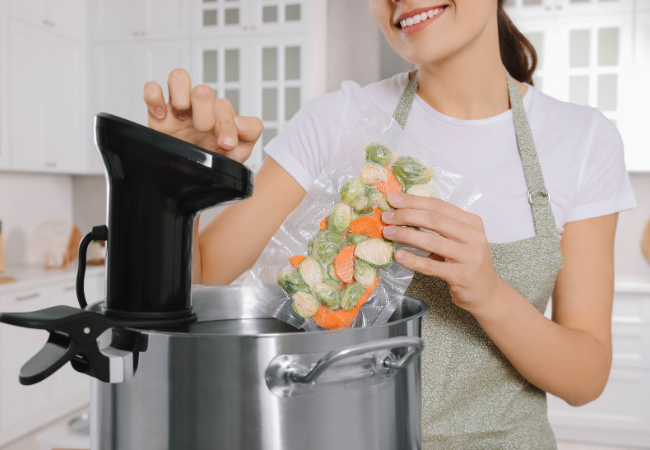
One of the first questions new sous vide cooks ask is simple: What temperature should I use, and how long should I cook it?
The answer is a little more interesting than it appears.
With traditional cooking, we often think primarily in terms of time: roast the chicken for an hour, simmer the vegetables for 20 minutes, bake the custard until set.
Sous vide cooking changes that relationship.
Because the water bath holds food at a carefully controlled temperature, temperature determines much of the final texture and doneness, while time determines how thoroughly the food heats, how tender it becomes, and—in some cases—whether it has been safely pasteurized.
Understanding that distinction is one of the keys to becoming comfortable with sous vide cooking.
Temperature Controls the Result
With sous vide, you generally choose the temperature based on the result you want.
A steak cooked in a 130°F water bath will have a very different texture from one cooked at 140°F. Salmon cooked at a relatively low temperature can remain silky and delicate, while a higher temperature produces a firmer, more traditionally cooked texture.
Even eggs demonstrate how dramatically a few degrees can matter. Slight temperature changes affect the whites and yolks differently, producing textures ranging from loose and creamy to custardy or firm.
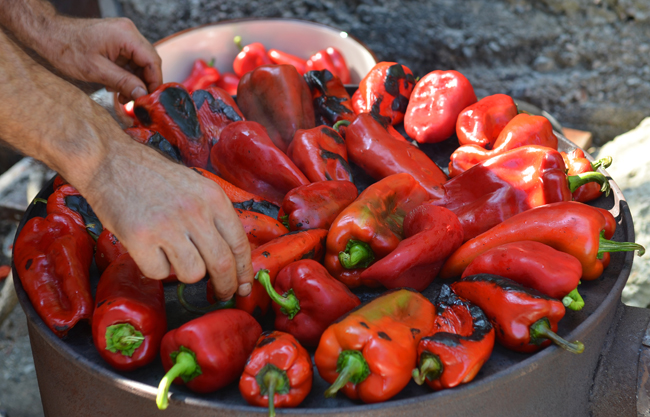
Vegetables behave differently still. Because plant cell walls require more heat to soften, vegetables are generally cooked at much higher sous vide temperatures than meat or fish.
So there is no single “sous vide temperature.”
The correct temperature depends on the food—and the result you want.
Time Does More Than Finish the Cooking
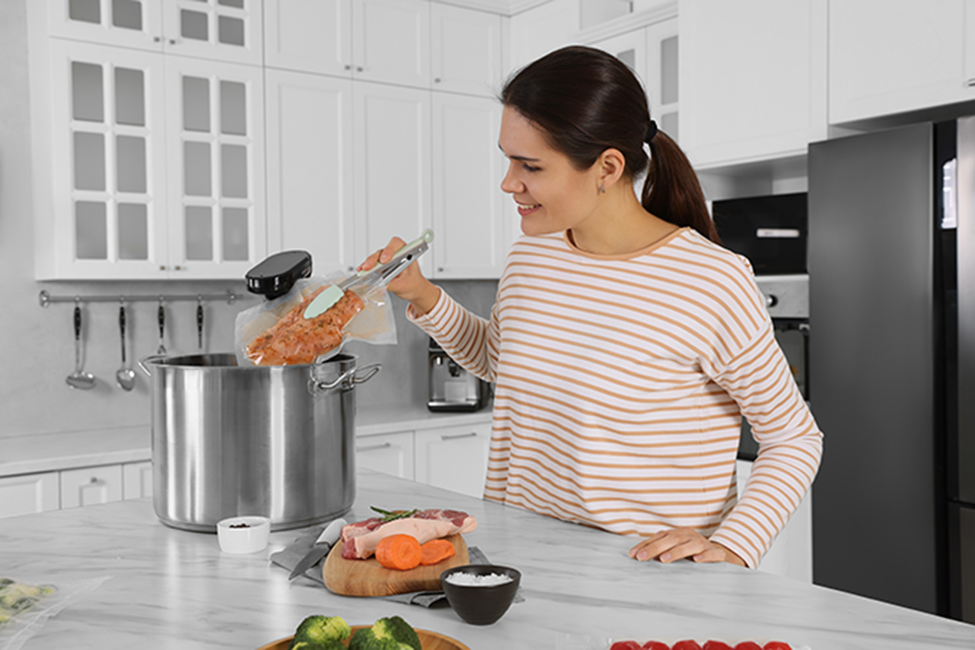
Once the food reaches the temperature of the surrounding water bath, it cannot suddenly become hotter than the bath itself.
That is one reason sous vide offers such a generous cooking window compared with many conventional methods.
But that does not mean time is unimportant.
Time affects several things.
Heating Through
A thin piece of fish comes to temperature much faster than a thick pork chop or large piece of beef.
The thicker the food, the longer it takes for heat to reach the center.
This is especially important when following sous vide safety guidelines, because the entire piece of food must reach the required temperature before any pasteurization holding time can really begin.
Texture and Tenderness
Time can also transform texture.
A tender steak may need only enough time to heat evenly throughout.
A tougher piece of meat, however, may remain in the water bath for many hours. During that extended cooking period, connective tissue gradually softens and the meat becomes increasingly tender.
This is why sous vide recipes for pork shoulder, short ribs, brisket, and similar cuts may call for cooking times measured in many hours rather than minutes.
Longer is not always better, though. Eventually, prolonged cooking can make some foods excessively soft or alter their texture in ways you may not want.
Doneness and Food Safety Are Not the Same Thing
This is one of the most important concepts to understand about sous vide cooking.
A food can reach the texture or doneness you like before it has necessarily been held long enough to meet a particular pasteurization standard.
Traditional food-safety recommendations often specify a temperature that produces rapid pathogen reduction. With sous vide, lower temperatures may sometimes be used because the food can be held at that temperature for a longer period.
In other words, food safety can depend on the combination of:
- Temperature
- Time
- Thickness
- Starting temperature
- Food type
- Handling before and after cooking
That is why a simple statement such as “cook chicken at 140°F” is incomplete.
The temperature may be part of a safe sous vide process, but how long the chicken must remain at that temperature depends partly on its thickness and how long it takes the center to heat.
For beginning sous vide cooks, the safest approach is to use reliable recipes and validated time-and-temperature guidelines rather than improvising with low-temperature cooking.
Why Thickness Matters
Sous vide recipes sometimes give broad cooking windows such as “1 to 3 hours.”
That may seem imprecise for a method famous for precision, but there is a reason.
The bath temperature may remain exact, but food does not heat instantly.
A thin chicken breast or fish fillet will come to temperature much sooner than a thick steak.
This means thickness is often more important than weight when determining minimum sous vide cooking time.
Two steaks may weigh approximately the same amount, but if one is twice as thick, it will take considerably longer for its center to reach the bath temperature.
This becomes especially important when using time-and-temperature combinations intended to achieve pasteurization.
Different Foods Need Different Temperatures
One of the most useful things about a sous vide reference chart is seeing just how dramatically temperatures vary depending on the food.
Meat and Poultry
Tender meats are often cooked at relatively moderate temperatures to achieve the desired doneness.
Tough cuts may use similar or somewhat higher temperatures but remain in the water bath much longer to soften connective tissue.
Poultry requires particular attention to established safety guidelines because lower-temperature sous vide cooking depends heavily on sufficient holding time.
Fish and Seafood
Fish generally cooks at lower temperatures than meat.
Small differences in temperature can noticeably change its texture—from very soft and silky to flaky and firm.
Because seafood is delicate, cooking times are usually much shorter than those used for large cuts of meat.
Vegetables
Vegetables typically require significantly higher temperatures.
Carrots, potatoes, beets, corn, and other vegetables need enough heat to soften their cellular structure.
Sous vide vegetables can be especially flavorful because they cook with their own juices and seasonings rather than losing flavor to a large pot of water.
Eggs
Eggs are a fascinating study in temperature control.
The proteins in the whites and yolks set at different temperatures, which means changing the bath temperature by only a few degrees can produce dramatically different textures.
Yogurt
Yogurt illustrates another side of precision water-bath cooking altogether.
Here, the immersion circulator is not primarily “cooking” the food. Instead, it maintains the warm environment needed for beneficial cultures to ferment the milk.
Holding yogurt at roughly 108–110°F for several hours provides a steady incubation environment that can be difficult to maintain using less precise methods.
Custards and Desserts
Custards also benefit from gentle, predictable heat.
Crème brûlée, pots de crème, cheesecake, and similar desserts can be cooked in small jars in the water bath, where steady temperature helps produce an exceptionally smooth texture.
What About the Cooking Window?
You may notice that sous vide recipes often provide ranges instead of one exact cooking time.
For example: 1½ to 3 hours
That range exists because there is often a minimum amount of time needed for the food to heat through, followed by a period during which it can remain in the water without dramatically overcooking.
This is one of sous vide cooking’s great conveniences.
A steak that might go from perfect to overdone in several minutes in a skillet may have a considerably larger serving window when held in a controlled water bath.
But every food has limits.
Fish, eggs, vegetables, and tender meats can eventually develop undesirable textures if held too long. The water bath prevents them from exceeding the selected temperature, but time continues to affect their structure.
Cooking Now or Cooking for Later
Sous vide is also useful for make-ahead cooking, but food intended for later use requires careful cooling.
If cooked food will not be served promptly, it should be cooled rapidly and refrigerated appropriately rather than left to cool slowly at room temperature.
For many sous vide preparations, this means transferring the sealed package to an ice-water bath to reduce its temperature quickly before refrigeration.
Food-safety procedures for cooking, chilling, storing, reheating, and freezing sous vide foods deserve their own discussion, and we will cover those in greater detail separately.
Think of the Chart as a Starting Point
A sous vide time-and-temperature chart is extremely useful, but it should be considered a reference rather than a universal recipe.
Differences in thickness, food type, desired texture, starting temperature, and whether the food will be served immediately or stored can all affect the appropriate cooking time.
Use the chart to understand the general temperature ranges for different foods, then follow a reliable recipe when preparing something unfamiliar—particularly meat and poultry cooked at lower temperatures.
The more you use sous vide, the more intuitive the relationship between temperature, time, and texture becomes.
And that is when precision water-bath cooking becomes especially useful: instead of simply following a timer, you begin choosing the result you want and using temperature and time to create it.
Sous Vide Time and Temperature Quick Reference
|
FOOD |
BATH TEMPERATURE |
APPROXIMATE TIME |
RESULT/NOTES |
|
Chicken breast |
150°F |
1½–4 hours |
Tender and juicy. Minimum safe time depends on thickness; use validated pasteurization guidance. |
|
Chicken thighs |
165°F |
2–6 hours |
Tender; longer cooking creates a softer texture. |
|
Beef steak |
130°F |
1–3 hours |
Medium-rare. Avoid prolonged cooking at very low temperatures. |
|
|
135°F |
1–4 hours |
Medium-rare to medium; slightly firmer. |
|
Pork chops |
140°F |
1½–3 hours |
Juicy and tender. |
|
Pork shoulder |
165°F |
12–24 hours |
Very tender; suitable for shredding or pulling. |
|
Lamb chops |
131–135°F |
1–2½ hours |
Medium-rare to medium. |
|
Salmon |
122–125°F |
30–45 minutes |
Silky, delicate texture; best served promptly. |
|
Shrimp |
135°F |
30–45 minutes |
Juicy and firm. |
|
Scallops |
123–125°F |
30–40 minutes |
Tender and delicate. |
|
Carrots |
183°F |
1–1½ hours |
Tender with concentrated flavor. |
|
Beets |
185°F |
2–3 hours |
Tender while retaining shape. |
|
Potatoes |
190°F |
1–2 hours |
Tender and creamy. |
|
Asparagus |
180°F |
10–20 minutes |
Tender-crisp; timing varies with thickness. |
|
Corn on the cob |
183°F |
30–45 minutes |
Tender, juicy, concentrated corn flavor. |
|
Soft-cooked eggs |
145°F |
45–60 minutes |
Creamy yolk with a very soft white. |
|
Yogurt — incubation |
108–110°F |
6–10 hours |
Maintains a steady temperature for cultured yogurt. |
|
Crème brûlée / custards |
176–180°F |
About 1 hour |
Cook in heat-safe jars; chill thoroughly. |
|
Fruit |
175–185°F |
30–90 minutes |
Gently tenderizes while helping fruit retain its shape. |
Important: Sous vide safety depends on both time and temperature. For meats and poultry, food thickness and starting temperature also affect the minimum cooking time required for pasteurization. When using temperatures below conventional USDA recommendations, follow validated sous vide time-and-temperature guidelines rather than relying on bath temperature alone.
DOWNLOAD: Sous Vide Time and Temperature Quick Reference Guide