
Here on the Central Coast, the gardening season doesn’t necessarily end when summer does. Fall may be one of the best times to begin.
We are extraordinarily fortunate to live in one of the most abundant agricultural regions in the country.
Week after week, our local farmers bring us beautiful lettuces and greens, apples and pears, winter squash, berries, herbs, root vegetables, brassicas, citrus, avocados, and dozens of other crops throughout the seasons. Shopping at our farmers markets gives us access to food grown remarkably close to home—and to the people who grow it.
But supporting local farmers and growing a little food ourselves are not competing ideas.
They belong together.
A pot of parsley outside the kitchen door will never replace a farm. Neither will a raised bed of lettuce or a backyard patch of kale. But growing even a small amount of our own food teaches us something important about soil, seasons, water, weather—and just how much knowledge and work goes into producing the food we eat.
And it gives us one more small measure of resilience.
Start With the Soil
Before the seed, before the water, before the sun can do its work, a plant needs a healthy place to grow.
For most home gardeners, that begins with soil.
It is easy to think about soil fertility in terms of the familiar three numbers on a fertilizer bag—nitrogen, phosphorus, and potassium, or NPK. Those nutrients are important, but healthy garden soil is much more than a delivery system for fertilizer.
Organic matter helps soil retain water and nutrients and supports the microbes, fungi, worms, and other organisms that make a functioning soil ecosystem possible.
And organic matter is not something we add once and forget.
We build it continually.
Compost, aged plant material, leaf mold, and worm castings all help return organic matter to the soil. Over time, those additions can improve soil structure and help it handle both dry periods and heavy rainfall.
Yesterday’s Scraps Can Help Grow Tomorrow’s Dinner
Every kitchen produces organic material: vegetable trimmings, fruit peels, coffee grounds and other food scraps that once came from the soil.
Whenever possible, some of that material can make its way back.
A backyard compost pile is one option. A compact worm bin is another—and particularly useful for gardeners without much space.
Worm castings can be mixed into container soil, added to raised beds, or used around established plants. Compost can improve garden beds season after season.
There is something wonderfully satisfying about completing that circle: The remnants of yesterday’s dinner help grow tomorrow’s food.
Here, Fall Is Another Growing Season
One of the great gifts of gardening around Monterey Bay is our remarkably long growing season.
While gardeners in colder parts of the country are putting their vegetable beds to sleep for winter, we can often keep planting and harvesting.
UC Master Gardeners for Monterey, San Benito, and Santa Cruz counties recommend fall planting of many cool-season vegetables, including leafy greens, brassicas and root crops. September is an especially good time to begin making the transition from summer vegetables to the fall and winter garden.
Think beyond lettuce.
This is the season for:
- Arugula, spinach, lettuce and mâche
- Kale, Swiss chard, mustard greens and collards
- Bok choy and other Asian greens
- Broccoli, cauliflower and cabbage
- Peas and fava beans
- Carrots, beets, radishes and turnips
- Leeks and onions
- Cilantro, parsley, dill and chervil
Some are best planted from transplants, while quick-growing greens and many root crops can be sown directly into prepared soil. Our many Central Coast microclimates mean that exact timing varies, but fall can provide months of fresh food from even a very small garden.
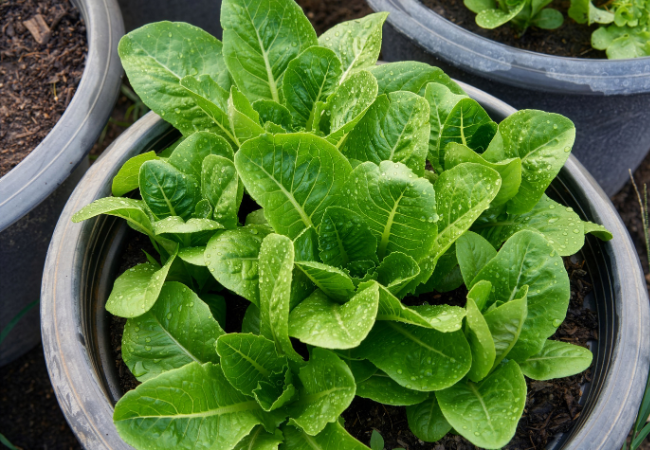
A half-barrel planted with lettuces can produce plenty of salads. Swiss chard can thrive in a large container. Radishes require surprisingly little space. Peas can climb a trellis against a sunny wall.
You do not need a traditional vegetable garden to grow dinner.
And Don’t Forget the Herbs
Fall is also a good time to think ahead to next year’s herb garden.
Instead of waiting until spring and starting from scratch, take cuttings or divide some of the perennial herbs already growing well in your garden.
Rosemary, oregano, sage and several other perennial herbs can be propagated from cuttings, while mint and chives can be divided. Early fall can also be suitable for semi-hardwood cuttings from herbs such as rosemary, thyme and marjoram.
Root them in small pots in a protected area and you may have vigorous young plants ready to move into larger containers or garden beds next spring.
No herbs to propagate?
Look for herb plants and seasonal seedlings from market vendors such as Cabrillo Horticulture and Pacific Rare Plant Nursery. Starting with a healthy transplant is one of the easiest ways for a beginning gardener to get growing.
And culinary herbs may be the ideal gateway garden. A pot of thyme, sage, rosemary, parsley or chives takes little room and can change the way you cook.
Prepare for the Rainy Days, Too
Our mild climate gives us a long gardening season, but it does not give us predictable weather.
This year is an especially good reminder.
NOAA reported on September 10 that El Niño is strengthening, with a greater than 90 percent chance of a very strong event during fall and winter 2026–27. A strong El Niño does not guarantee exceptionally heavy rain in any one location, but it makes preparing for winter weather particularly sensible.
Healthy soil is part of that preparation.
So is good drainage.
Before winter rains arrive, check raised beds and containers to be sure water can drain freely. Clear gutters and drainage areas around garden beds. Avoid leaving pots sitting in saucers filled with water. Add compost rather than repeatedly working wet soil, which can damage its structure.
And mulch bare ground.
A layer of organic mulch helps protect soil from the pounding effect of rain, reduces erosion and weeds, and slowly contributes organic matter as it breaks down.
Preparing for a rainy day is not pessimistic.
It is simply good gardening.
Grow What You Can, Where You Can
Perhaps you have a large vegetable garden.
Wonderful.
But perhaps you have a patio, balcony, sunny front step or only enough room for a few pots.
That counts too.
Plant a bowl of salad greens. Grow parsley outside the kitchen door. Tuck a few radish seeds into a container. Put peas on a little trellis. Start a pot of cilantro for winter cooking.
Or begin even more simply: start making compost.
The goal is not self-sufficiency.
Most of us are not going to grow all—or even a significant portion—of our own food, nor do we need to. We already have something precious here: an extraordinary community of farmers who have spent their lives learning how to grow food exceptionally well.
A home garden complements that local food system.
It teaches children where a carrot actually comes from. It reminds us that lettuce is subject to heat, rain, insects and soil conditions long before it appears in a produce bin. It makes us appreciate why the perfect strawberries or cauliflower or bunch of carrots at the farmers market are something worth celebrating.
And sometimes it gives us dinner.
From Victory Gardens to Climate Gardens
During World War II, millions of Americans planted victory gardens in backyards, schoolyards, vacant lots and community spaces. They grew food because the circumstances of the time called for it.
Our circumstances are different.
Today we contend with drought, heavy rain, heat, water constraints, changing growing conditions and occasional disruptions to the systems that move food from one place to another.
Perhaps our modern version is the climate garden.
Not a garden built from fear, but one built from resilience.
A climate garden can be surprisingly simple:
- Feed and protect the soil.
- Compost what you can.
- Grow foods suited to your season and your space.
- Prepare for both dry weather and wet weather.
- Support the local farmers who grow what you cannot.
- Share what you grow—and what you learn.
One compost bin.
One pot of herbs.
One bed of winter greens.
One backyard garden.
None will feed a community by itself.
But together they create something valuable: households that understand food a little better, waste a little less, grow a little more, and appreciate the farmers around them even more deeply.
What will you grow this fall?
DOWNLOAD OUR FALL GARDEN GUIDE!