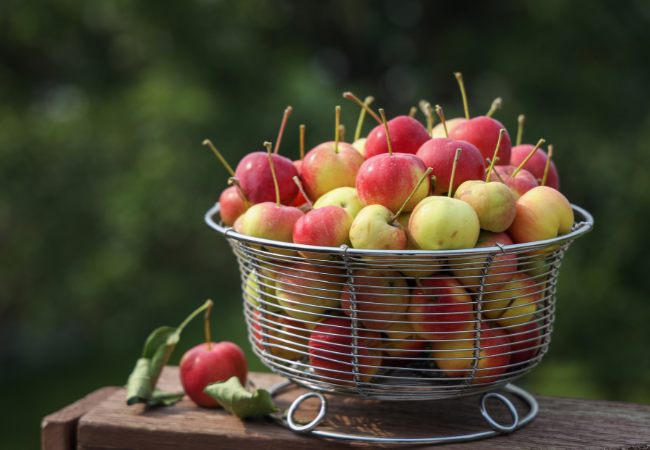

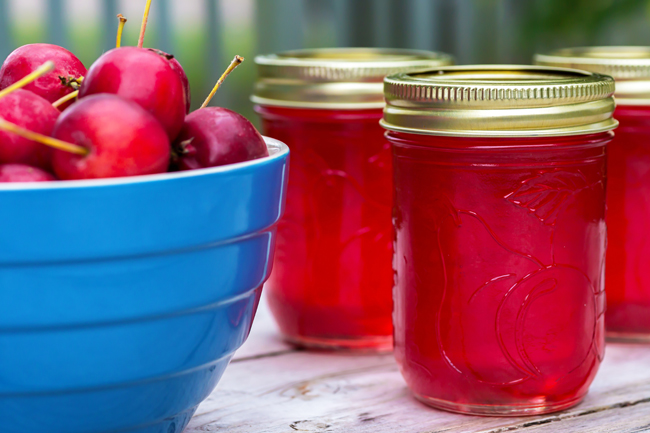
Bright, jewel-colored, and beautifully balanced between tart and sweet, crabapple jelly is an old-fashioned treat that feels both nostalgic and special. These tiny, often-overlooked fruits become an elegant preserve with sugar and a little patience. Spread it on toast, spoon it onto warm scones, or serve it with cheese. It also makes a lovely homemade gift, catching the light in a jar like stained glass.
INGREDIENTS:
3–4 pounds firm, crisp crabapples, enough to produce 4 cups strained juice
3 cups water
4 cups granulated sugar
METHOD:
To Make the Juice
Sort and wash the crabapples, discarding spoiled fruit. Remove the stems and blossom ends, but do not peel or core. Cut into small pieces.
Place the fruit and water in a large pot. Cover and bring to a boil, stirring to prevent scorching. Reduce the heat and simmer for 20–25 minutes, or until the fruit is soft. Avoid prolonged cooking, which can weaken the pectin and diminish flavor and color.
Pour the mixture into a damp jelly bag or a colander lined with a double layer of dampened cheesecloth, positioned over a large bowl. Allow the juice to drain without pressing or squeezing; this helps keep the jelly clear.
Measure exactly 4 cups of strained juice for the jelly.
To Make the Jelly
Prepare a boiling-water canner and hot, sterilized canning jars. Prepare lids according to the manufacturer’s instructions.
Combine the measured juice and sugar in a large, wide pot, leaving plenty of room for the mixture to bubble. Stir over heat until the sugar dissolves, then bring to a full boil.
Cook to the jelly point: 220°F at sea level, or 8°F above the boiling point of water at your elevation.
Cold-Plate Test: Remove the pot from the heat. Place a small spoonful of jelly on a chilled plate and put it in the freezer for a few minutes. If it gels and wrinkles when gently pushed, it is ready. If it remains runny, return the pot to the heat briefly and test again.
Remove from the heat and skim off any foam.
To Fill and Process the Jars
Ladle the hot jelly into hot, sterilized half-pint jars, leaving ¼ inch headspace. Wipe the rims with a clean, damp paper towel. Apply lids and bands according to the manufacturer’s instructions.
Place the jars upright on the canner rack, with water covering the tops by at least 1 inch. Cover the canner and bring the water to a full boil. Begin timing when the water boils, keeping it boiling throughout processing.
Use the following processing times for hot jelly in sterilized half-pint jars:
|
Elevation |
Processing time |
|
0–1,000 feet |
5 minutes |
|
1,001–6,000 feet |
10 minutes |
|
Above 6,000 feet |
15 minutes |
Turn off the heat, remove the canner lid, and wait 5 minutes before lifting out the jars. Place upright on a towel-lined counter, leaving space between them. Cool undisturbed for 12–24 hours.
Check the seals. Refrigerate any unsealed jars promptly. Remove the bands from sealed jars, label, and store in a cool, dark, dry place. Refrigerate after opening.
YIELD: Approximately 5–6 half-pint jars
KITCHEN NOTE: For good setting power, use about one-quarter slightly underripe crabapples and three-quarters ripe fruit. Avoid soft, overripe fruit.
DELICIOUS WAYS TO USE CRABAPPLE JELLY:
- Spread on toast, scones, or biscuits.
- Warm gently and brush onto cooked pork chops or roast pork.
- Melt and brush over an apple or pear tart.
- Serve alongside pâté, sharp cheddar, or a cheese platter.
Preserving method adapted from the National Center for Home Food Preservation’s Crabapple Jelly without Added Pectin.