
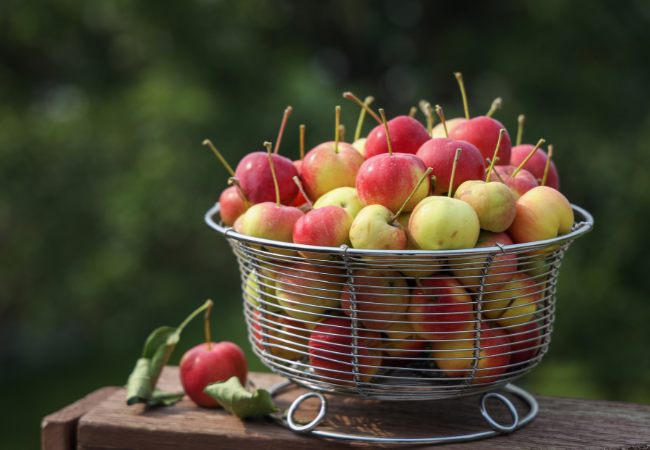
A tree laden with tiny red or golden crabapples is one of autumn’s prettiest sights. But take a bite, and you may wonder whether these little fruits belong in the kitchen—or are better left admired from a distance.
Don’t give up on them just yet. Beneath that mouth-puckering tartness lies the promise of beautiful jelly, fragrant preserves, and a bright counterpoint to rich fall dishes. Sometimes the most overlooked fruit makes the most memorable addition to the pantry.
More Than an Ornamental Fruit
Crabapples belong to the same genus, Malus, as familiar orchard apples. The distinction is largely one of size: apples smaller than about two inches across are generally called crabapples.
Many trees are planted for their generous spring blossoms, but their autumn fruit deserves attention, too. Flavor varies considerably from tree to tree. Some crabapples are intensely sour or astringent; others are pleasantly tart, and a few varieties are sweet enough to enjoy fresh.
For cooking, that lively acidity is an advantage. Sugar softens the sharp edges while allowing the fruit’s distinctive apple flavor to shine.
Small Fruit, Plenty of Possibilities
Jelly may be their best-known use, but crabapples have much more to offer:
-
Jelly and preserves: Their tartness makes a lovely balance for sweetness.
-
Spiced pickled crabapples: A traditional accompaniment to roast meats and autumn meals.
-
Pies and crisps: Mix prepared crabapples with sweeter apples for a more spirited filling.
-
Applesauce and apple butter: Blend them with larger apples to add brightness and depth.
-
Cider: Some varieties contribute acidity and tannin, giving a blend greater complexity.
If you’re harvesting your own, choose sound, firm fruit. Brown seeds are a useful clue that crabapples are mature, even when their flavor remains decidedly tart. Refrigerate after picking and discard bruised or decaying fruit.
Why Crabapples Make Such Beautiful Jelly
Crabapples are naturally rich in pectin, the substance that helps jelly form its delicate gel. With the right fruit and proportions, classic crabapple jelly needs no added commercial pectin.
For a good balance of flavor and setting power, use mostly ripe fruit with a smaller portion of slightly underripe crabapples. Avoid overly ripe, soft fruit.
The process is wonderfully simple: simmer chopped crabapples with water, let the juice drain through a jelly bag, then cook the measured juice with sugar. Leave the skins and cores in place during juice extraction, and resist squeezing the bag—allowing it to drip undisturbed produces clearer jelly.
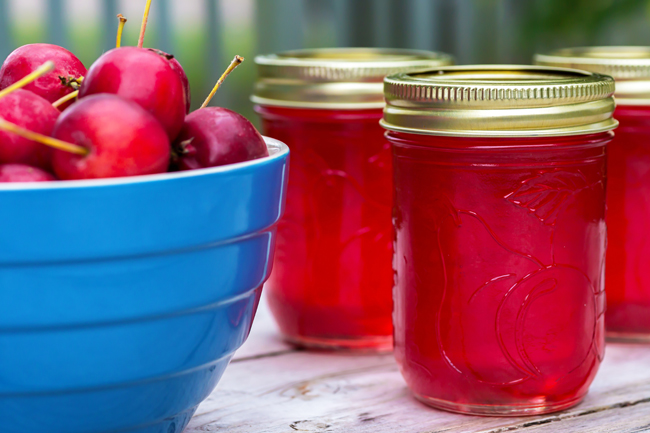
Patience pays off in a jar that catches the light like stained glass.
A Few Tips for a Good Set
A thermometer takes much of the guesswork out of jelly-making. At sea level, the usual setting temperature is 220°F; at higher elevations, the target temperature is lower.
A chilled-plate test offers another useful check. Remove the pot from the heat while testing, place a little jelly on a cold plate, and chill briefly. If it gels and wrinkles gently when nudged, it is ready.
If the jelly remains liquid, avoid simply boiling it indefinitely. Excess cooking can damage pectin and dull the flavor. Follow reliable troubleshooting instructions—or enjoy a softly set batch as a topping for pancakes, waffles, or yogurt.
For jars intended for pantry storage, follow a tested recipe and the boiling-water processing time appropriate to your elevation.
Naturally Jewel-Toned
Part of crabapple jelly’s charm is its beautiful natural color. Depending on the variety, a batch may turn out pale gold, warm amber, rosy pink, or ruby red.
Deeply colored fruit often produces richer hues, but every shade has its own appeal. There’s no need for food coloring: let the fruit give each batch its signature glow.
Beyond the Breakfast Table
Crabapple jelly is delicious on buttered toast, warm biscuits, or a freshly baked scone, but its sweet-tart flavor also belongs on the savory side of the table.
Serve a spoonful alongside sharp cheddar, creamy cheese, or pâté. Warm it gently to glaze roast pork or brush over cooked pork chops. A thin coating also gives an apple or pear tart a beautiful finish.
A few small jars make thoughtful gifts, too—a little autumn color to brighten someone’s winter pantry.
Have a tree full of crabapples? Turn a handful of autumn’s smallest apples into something lovely.
Make our Classic Crabapple Jelly →