
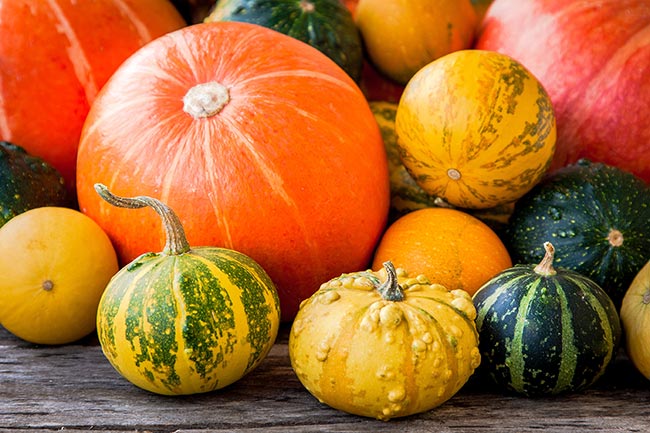
A farmers market table piled with winter squash is one of autumn’s most inviting sights. Buttery tan butternuts, striped delicatas, deep green kabochas, and ribbed acorn squash promise the kind of cooking that cooler evenings call for: fragrant soups, caramelized roasted vegetables, and hearty suppers from the oven.
Each variety has something different to offer. Some turn silky when puréed; others hold their shape beautifully when roasted. Choosing a squash to match your meal—and trying an unfamiliar variety—is part of the pleasure of shopping the fall harvest.
Find Your Favorite Winter Squash
Butternut
With its sweet, orange flesh and smooth texture, butternut is a dependable favorite for soups, risottos, pasta sauces, and roasting. Its long neck yields plenty of flesh with relatively few seeds to work around.
Kabocha
Dense, richly flavored, and reminiscent of sweet potatoes and chestnuts, kabocha is especially delicious roasted in wedges or simmered in curries. Its flesh becomes tender and creamy, while the skin can soften enough to eat when thoroughly cooked.
Acorn
Acorn squash has a mild, gently nutty flavor that welcomes both sweet and savory seasonings. Halve it for roasting, then fill the centers with wild rice, sautéed mushrooms, apples, or sausage for a satisfying autumn meal.
Delicata
This slender, striped squash is an easy choice for busy cooks. Its tender, edible skin needs no peeling—simply halve it lengthwise, scoop out the seeds, and slice into half-moons. Roasting brings out its sweetness and gives the edges a lovely caramelized finish.
Spaghetti Squash
Once cooked, the flesh separates into delicate strands. Toss them with olive oil, garlic, and Parmesan, or serve with a favorite tomato sauce for a lighter vegetable-centered supper.
Choosing a Good Squash
Look for squash that feels heavy for its size, with firm skin and no soft spots, mold, or deep cuts. An attached, dry stem is a useful sign of maturity; handle squash by the body to avoid breaking it off.
Color depends on the variety. A ripe butternut should have an even tan color, while mature kabocha and many acorn varieties naturally retain green skin. A dull rather than glossy rind can help indicate maturity, but color and finish alone won’t tell the whole story. If you’re unsure, ask the grower which squash is ready to cook and which will keep best.
For pre-cut squash, choose pieces with firm, fresh-looking flesh and no drying or discoloration.
Keeping the Harvest
Store whole winter squash in a cool, dry, well-ventilated place, away from direct sunlight. A cool pantry or sheltered storage area is generally a better choice than the refrigerator. Storage life varies considerably by variety and condition, so check your squash regularly and use any showing signs of deterioration promptly. Once cut, wrap and refrigerate it, and use within a week.
Bring Fall Flavor to the Table
Roasting is one of the simplest ways to enjoy winter squash. Toss cubes or wedges with olive oil, salt, and pepper, spread them out on a baking sheet, and roast until tender with browned edges. Finish with fresh sage, thyme, or a little browned butter.
For a fuller meal, fold roasted squash into a grain salad with local greens, toasted nuts, and crumbled cheese. Purée it into a warming soup, tuck it into an enchilada filling, or mash it as a side dish for roast chicken. Sweet, smooth-fleshed varieties also lend themselves beautifully to pies, muffins, and quick breads.
Winter squash needs little embellishment, but it welcomes the flavors of the season: apples, walnuts, mushrooms, rosemary, and warming spices. Bring home an old favorite and one variety you haven’t tried—you may discover a new reason to look forward to fall.
RECIPES: Explore our winter squash recipes | Find pumpkin recipes