
SEPTEMBER PRODUCE AT THE MARKET
Avocados, Basil, Blackberries, Blueberries, Citrus, Eggplant, Figs, Grapes, Melons, Okra, Passionfruit, Plums, Quince, Tomatoes, Winter Squash
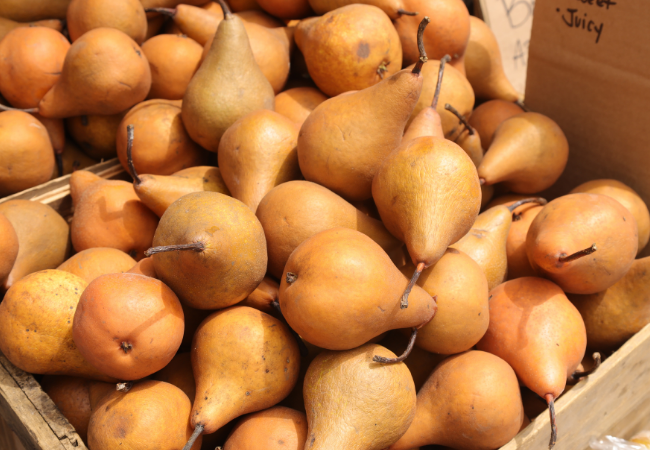
Pears
There is something wonderfully luxurious about a perfectly ripe pear. Fragrant, juicy, and meltingly tender, pears are one of the great pleasures of late summer and autumn — and here on the Central Coast, September brings the beginning of local pear season.
Pears have been cultivated for thousands of years and were prized by ancient civilizations throughout Europe and Asia. Homer famously referred to pears as a “gift of the gods,” while the Romans cultivated dozens of varieties and helped spread the fruit throughout Europe.
Today, pears range from familiar favorites such as Bartlett, Bosc, and D’Anjou to beautiful specialty and heirloom varieties including com ice, Seckel, Taylor’s Gold, Warren, and crisp Asian pears.
Look for Local Pears at Prevedelli Farms
One of the pleasures of shopping at the farmers market is discovering pear varieties you may never encounter at a supermarket.
At Prevedelli Farms in Watsonville, pear harvest begins in September. The fourth-generation certified-organic family farm grows an impressive selection of pears, including Asian, Bartlett, Bosc, Comice, Red D’Anjou, Taylor’s Gold, and Warren.
Their pears are hand-picked at peak ripeness — an important detail for a fruit as delicate as a pear. Different varieties ripen throughout the season, so it is worth checking the farm stand regularly to see what has arrived.
If you spot the unusual Warren or Taylor’s Gold, don’t pass them by. They are wonderful examples of why farmers markets are such exciting places to shop.
A Pear for Almost Everything
Pears are remarkably versatile in the kitchen.
A perfectly ripe pear needs little embellishment — slice it and serve it alongside a favorite cheese, toasted nuts, and perhaps a drizzle of honey. Crisp varieties are excellent in green salads and slaws, while firmer pears such as Bosc hold their shape beautifully when roasted, baked, or poached.
Pears are also delicious in:
- Tarts, cakes, crisps, and galettes
- Jams, preserves, and fruit butters
- Chutneys and savory relishes
- Fresh fruit salsas
- Salads with bitter greens, walnuts, and cheese
- Roasted dishes with pork or poultry
- Smoothies
- Cheese and charcuterie boards
- Wine-poached desserts
And don’t discard a pear simply because it has become very soft. Very ripe pears are wonderfully aromatic and can be blended into smoothies, cooked into sauces, folded into quick breads, or simmered into pear butter.
Pears Are Good for You, Too
Pears offer considerably more than wonderful flavor. According to the California Pear Advisory Board, one medium pear contains about 100 calories and 6 grams of dietary fiber, along with vitamin C and potassium. Pears naturally contain no fat, cholesterol, or sodium.
Because much of a pear’s fiber is found in or just beneath the skin, enjoy the peel whenever possible.
A Guide to Pear Varieties
Asian Pear
Flavor & texture: Exceptionally crisp, sweet, and juicy — almost apple-like in texture.
Best for: Eating fresh, salads, slaws, and cheese boards.
Unlike European pears, Asian pears are generally enjoyed crisp rather than allowed to soften considerably before eating.
Bartlett
Flavor & texture: The classic pear — fragrant, juicy, sweet, and buttery when fully ripe.
Best for: Fresh eating, canning, sauces, preserves, and desserts.
Bartlett pears also make ripeness easy to judge: green varieties gradually turn yellow as they ripen.
Bosc
Flavor & texture: Firm and aromatic with warm, subtly spicy flavor and distinctive bronze-brown skin.
Best for: Baking, roasting, poaching, cheese boards, or fresh eating.
Because Bosc pears retain their shape beautifully when cooked, they are one of the best varieties for elegant poached-pear desserts.
Comice
Flavor & texture: Exceptionally sweet, succulent, and buttery.
Best for: Eating fresh and pairing with cheese.
Often considered one of the finest dessert pears, comice is a particularly lovely partner for creamy or blue cheeses.
Red D’Anjou
Flavor & texture: Juicy and gently sweet with beautiful deep-red skin.
Best for: Fresh eating, salads, and cheese boards.
Its dramatic color makes Red D’Anjou especially attractive when sliced into autumn salads or arranged on a cheese platter.
Taylor’s Gold
Flavor & texture: Sweet, fragrant, smooth, and exceptionally juicy, with russeted golden skin.
Best for: Fresh eating, desserts, and cheese pairings.
Discovered in New Zealand in the 1980s, Taylor’s Gold is thought to be related to com ice and is well worth seeking out when you find it at the market.
Warren
Flavor & texture: Tender, smooth, intensely sweet, and wonderfully juicy.
Best for: Fresh eating and desserts.
An American heirloom pear prized by chefs and pear enthusiasts, Warren has an almost melting texture when perfectly ripe. This is one of those varieties to grab when you see it — it isn’t commonly found in supermarkets.
How Do You Know When a Pear Is Ripe?
Unlike many fruits, European pears are usually harvested before they are fully ripe and finish ripening after picking.
Don’t squeeze the widest part of the pear to test it — you’ll only bruise the fruit. Instead, gently press near the neck or stem end with your thumb. If it yields slightly, the pear is ready to eat.
If your pears are still firm, leave them at room temperature for a few days. Once ripe, refrigerate them to slow further ripening.
And when you find several varieties at the farmers market, try tasting them side by side. A crisp Asian pear, spicy Bosc, buttery comice, and meltingly sweet Warren can taste remarkably different from one another.
That’s part of the pleasure of pear season.
LOCAL MARKET FIND: Look for seasonal pears from Prevedelli Farms and other local growers at Monterey Bay Certified Farmers Markets.
RECIPES: Discover our pear recipes
GUIDE: A Guide to Choosing the Perfect Pear