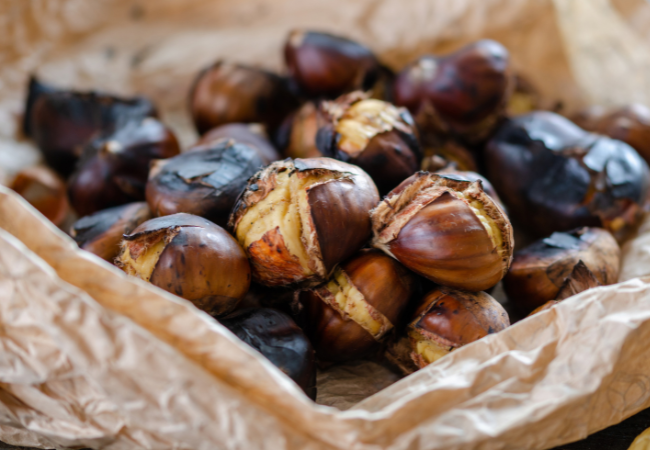

There’s something wonderfully inviting about the aroma of roasting chestnuts. Gently sweet and earthy, with a tender, almost potato-like texture, they’re a seasonal pleasure worth slowing down for. Serve them warm on a chilly evening, or set some aside for holiday stuffing, creamy soups, and rich winter braises.
You don’t need an open fire to enjoy them—your kitchen oven does the job beautifully. The secrets are fresh chestnuts, a carefully scored shell, and peeling while they’re still warm.
Choosing Fresh Chestnuts
Look for chestnuts with glossy, firm shells that feel heavy for their size. Avoid those with cracks, visible mold, or shells that feel unusually light or hollow. Choose nuts of similar size so they roast evenly.
Unlike most nuts, fresh chestnuts contain considerable moisture and should be refrigerated until you’re ready to use them.
Oven-Roasted Chestnuts
INGREDIENTS
Fresh chestnuts, as many as you’d like to roast in a single layer
METHOD
Heat the oven to 400°F. Have a heavy rimmed baking sheet and a clean kitchen towel ready.
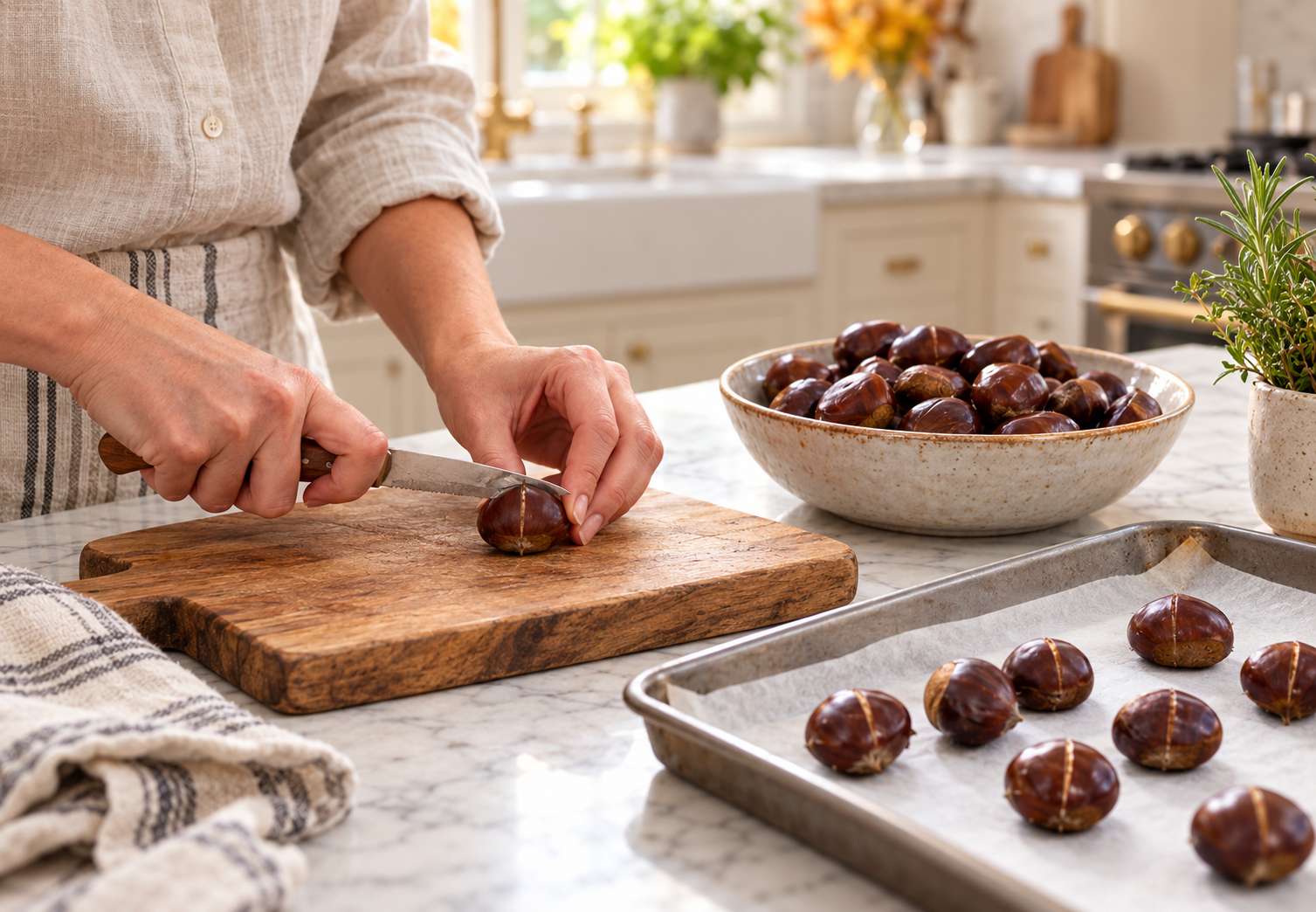
Rinse the chestnuts and pat dry. Place each nut flat-side down on a sturdy cutting board. Using a sharp chestnut knife or small serrated knife, carefully cut an X across the rounded side, cutting through the shell and thin inner skin without cutting deeply into the flesh.
Keep your fingers clear of the blade. Scoring every chestnut allows steam to escape during roasting and helps the shell open for peeling.
Arrange the chestnuts in a single layer, scored-side up. Roast for approximately 15–20 minutes, shaking the pan occasionally. Larger nuts may need a little longer.
The shells should curl back around the cuts, and the flesh should be tender when pierced. Carefully open one to check; shell opening alone doesn’t guarantee the chestnut is cooked through.
Carefully gather the hot chestnuts into the kitchen towel, wrap loosely, and let stand for about 5 minutes. This brief rest helps loosen the shells and inner skins.
Working with a few chestnuts at a time, remove both the hard outer shell and the thin, papery brown skin underneath. Keep the remaining nuts wrapped so they stay warm.
If the last few become difficult to peel, return them to the oven briefly to warm through, then try again. Discard any chestnuts with mold or an unpleasant smell.
A Few Tips for Better Results
- Start with fresh nuts. Older, dried-out chestnuts can be hard and stubborn to peel.
- Work in manageable batches. Peeling is easier before the chestnuts cool.
- Don’t worry about broken pieces. Save the prettiest whole nuts for serving and use the crumbles in stuffing, soups, or sauces.
Delicious Ways to Enjoy Them
Warm roasted chestnuts need very little embellishment, but a small knob of butter and a pinch of salt make a lovely finishing touch.
For cooking, chop them into bread stuffing with mushrooms and herbs, fold them into risotto, or toss with roasted Brussels sprouts. Their mellow sweetness also pairs beautifully with squash soups, braised cabbage, and slow-cooked meats.
Refrigerate cooled, peeled chestnuts promptly in a covered container, or freeze in small portions for future recipes.
Explore more chestnut recipes on Edible Paradise.