
OCTOBER PRODUCE AT THE MARKET
Apples, Blackberries, Blueberries, Brussels Sprouts, Chestnuts, Dried Apricots, Eggplant, Figs, Grapes, Grapefruit, Jujube (Raw Dates),
Little Gem Lettuce, Melons, Microgreens, Okra, Oranges, Passionfruit, Pears, Persimmons, Plums, Pomegranates,
Pumpkins, Quince, Tomatoes, Winter Squash
Pomegranates
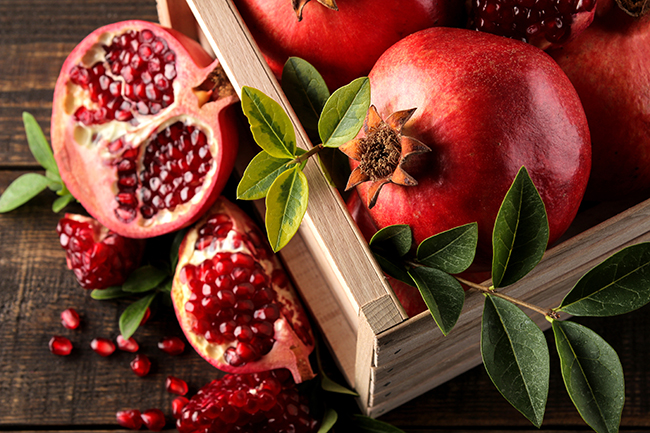
Few fruits announce autumn quite as dramatically as the pomegranate. Beneath its burnished red skin are hundreds of glistening ruby arils — juicy, sweet-tart, and wonderfully crunchy — ready to scatter over everything from morning yogurt to roasted vegetables and holiday salads.
Fresh pomegranates are arriving now from Rancho Padre Farm and Minazzoli Farms at the Aptos and Monterey Farmers Markets. And if separating all those jewel-like seeds isn’t on your agenda, look for freshly pressed pomegranate juice from Rancho Padre Farm, too.
An Ancient Fruit with a California Home
Pomegranates have been cultivated for thousands of years, making them one of the world’s oldest known fruits. Native to a region extending from modern-day Iran into northern India, they eventually traveled throughout the Mediterranean, Middle East, and Asia, becoming symbols of abundance, fertility, prosperity, and renewal along the way.
The word pomegranate comes from the Latin pomum, meaning “apple,” and granatum, meaning “seeded” — essentially, a “seeded apple.”
Spanish settlers introduced pomegranates to California centuries ago, and the fruit proved beautifully suited to the state’s warm, dry growing regions. Today, California produces the vast majority of pomegranates grown commercially in the United States.
Inside the Pomegranate
Break open a pomegranate and you’ll quickly understand why it has inspired artists and cooks for centuries.
Each brilliant aril contains a tiny edible seed surrounded by sweet-tart juice. Both the juicy exterior and the crunchy seed can be eaten, giving pomegranate arils their distinctive combination of flavor and texture.
They’re also one of those wonderful ingredients that can make an ordinary dish look instantly special. Try them:
- Tossed into fall salads with pears, apples, persimmons, walnuts, or feta
- Scattered over roasted squash, carrots, or sweet potatoes
- Spoon over yogurt, oatmeal, or granola
- Folded into grain salads with farro, couscous, or quinoa
- Sprinkled over hummus or other Middle Eastern-inspired dishes
- Added to fruit salads and desserts
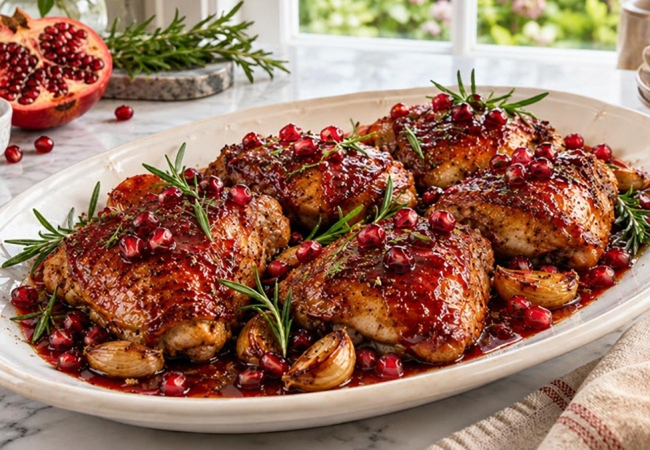
- Used in sauces, vinaigrettes, glazes, and marinades
- Garnished over sparkling water or festive holiday drinks
And, of course, they’re irresistible simply eaten by the handful.
Beautiful — and Nutritious, Too
Pomegranates provide fiber and a variety of vitamins, minerals, and naturally occurring plant compounds. Their vivid red color comes in part from polyphenols — compounds widely studied for their antioxidant properties.
Pomegranate juice has also attracted considerable research interest, particularly for cardiovascular health. Some studies suggest that pomegranate juice or extract may have a modest beneficial effect on blood pressure, although more research is needed and other heart-health claims remain less certain. As with so many fruits and vegetables, perhaps the best reason to enjoy pomegranates is also the simplest: they are a delicious whole food that adds variety, flavor, and color to a nourishing diet.
Choosing a Good Pomegranate
Don’t worry too much about finding the prettiest fruit. A pomegranate’s exterior can be slightly mottled or irregular while the fruit inside is perfectly delicious. Instead:
- Pick it up. Choose a pomegranate that feels heavy for its size — a good indication that it is full of juice.
- Check the skin. It should feel firm and leathery rather than dry or shriveled.
- Look at the shape. As pomegranates mature and the arils expand inside, perfectly round fruit may become slightly squared or angular. That’s perfectly normal.
Unlike peaches or pears, pomegranates do not continue to ripen significantly after harvest, so they’re generally ready to enjoy when you bring them home.
Storing Pomegranates
One of the pleasures of pomegranates is how well they keep.
Whole fruit can sit in a cool spot in the kitchen for several days and will keep considerably longer when refrigerated. Once removed from the fruit, the arils should be refrigerated in a covered container and enjoyed within several days.
For longer storage, pomegranate arils also freeze beautifully. Spread them in a single layer on a baking sheet, freeze until firm, then transfer them to a freezer container or bag. You can scoop out exactly what you need for salads, sauces, baking, or garnishes throughout the season.
The Easiest Way to Remove the Arils
Pomegranates have a reputation for being messy, but there’s an easy way to tackle them.
1. Slice off the crown at the top of the pomegranate.
2. Look for the natural ridges running down the fruit and lightly score the skin along those sections.
3. Gently pull the fruit apart into wedges.
4. Place the sections in a large bowl of cool water and loosen the arils with your fingers.
5. The juicy arils will sink while much of the lightweight white membrane floats to the surface.
6. Skim away the membrane, drain the arils, and they’re ready to eat.
A little patience yields a bowlful of beautiful ruby-red gems.
Celebrate Pomegranate Season
Pomegranate season always seems perfectly timed. Just as autumn foods begin turning deeper, richer, and more comforting, these brilliant little arils provide a welcome burst of acidity, freshness, and color.
Visit Rancho Padre Farm and Minazzoli Farms at the Aptos and Monterey Farmers Markets this month for freshly harvested pomegranates, and look for fresh pomegranate juice from Rancho Padre Farm.
TRY THESE RECIPES: Favorite Pomegranate Recipes